
Luke_Wilbur
-
Posts
3,523 -
Joined
-
Days Won
3
Everything posted by Luke_Wilbur
-
The Homeowner’s HOPETM Hotline provides free, comprehensive foreclosure assistance and housing counseling services around-the-clock. Call now to get assistance with questions you might have about getting help with your mortgage and to see if you qualify for the Making Home Affordable® Program.When you call 1-888-995-HOPE (4673) your call is answered promptly, 24 hours a day, 7 days a week, 365 days a year, in over 170 languages. You will have the opportunity to speak live with a housing expert. Be Prepared Before You Call In order to assist you, the housing expert will need to gather some information from you. Have the following documents handy: Information about your first mortgage, such as your monthly mortgage statement. Information about any second mortgage or home equity line of credit on the house. Information about the monthly gross (before tax) income of all household members contributing to pay the mortgage, including recent pay stubs if you receive them or documentation of income you receive from other sources. Information about your savings and other assets. Account balances and minimum monthly payments due on all of your credit cards. Account balances and monthly payments on all your other debts such as student loans and car loans. Your most recent income tax return. It may also be helpful to have: A letter describing any circumstances that caused your income to be reduced or expenses to be increased (job loss, divorce, illness, etc.), if applicable. I Am Working with My Servicer on a Modification and Need Extra Help If you are currently working with your servicer on a Making Home Affordable Modification and have additional questions or need assistance following up with your mortgage servicer, call 1-888-995-HOPE (4673) and ask for “MHA Help” to escalate your case.
-

Tax amnesty on foreign earnings
Luke_Wilbur replied to Luke_Wilbur's topic in United States Politics
Banks and Corporations need to invest in the United States Business community other than themselves (that includes buying your shares back). The goal would be to stimulate American manufacturing and independent small businesses. They should get a one time amnesty tax of 3% if they invest 100% of their money not being claimed as sitting in the United States (Even though we know it is). 6% amnesty tax break if they invest 75% or more in US Small Business. 9% amnesty tax if they invest 50% or more in US Small Business 12% amnesty tax if invested 25% plus in US Small Business. 15% amnesty tax if invested 10%+ in US SB 18% amnesty tax if invested = 8%+ US SB 21% amnesty tax if invested = 6%+ US SB 24% amnesty tax if invested = 5%+ US SB 27% amnesty tax if invested = 4%+ US SB 29% amnesty tax if invested = 3%+ US SB 31% amnesty tax if invested = 2%+ US SB 33% amnesty tax if invested = 1%+ US SB The corporation or individual gets no amnesty if they make no USA investments. The proceeds would go straight into U.S. Infrastructure and Small Business Loan programs. -
-
Do you think the world is at the right mental state for this? It seems to NWO apocalyptic. http://press.catholi...10.2011&lang=it PRESS CONFERENCE PRESENTATION OF THE NOTE Pontifical Council for Justice and Peace: "FOR A REFORM OF THE INTERNATIONAL FINANCIAL SYSTEM IN THE PERSPECTIVE OF A PUBLIC AUTHORITY universal jurisdiction", 24.10.2011 PRESS CONFERENCE PRESENTATION OF THE NOTE Pontifical Council for Justice and Peace: "FOR A REFORM OF THE INTERNATIONAL FINANCIAL SYSTEM IN THE PERSPECTIVE OF A PUBLIC AUTHORITY universal jurisdiction" At 11.30 am this morning, in the 'John Paul II Hall of the Vatican press office, is presented with the Note of the Pontifical Council for Justice and Peace: "To reform the international financial system from the perspective of a public authority with jurisdiction universal ". Speakers at the press conference: the Em. Kodwo Peter Cardinal Appiah Turkson, Chairman of the Pontifical Council for Justice and Peace, Archbishop Mario Toso, secretary of the Pontifical Council, Prof. Leonardo Becchetti, Professor of Political Economy, University of Rome "Tor Vergata". On 3 and 4 November next, in Cannes, France, will be the sixth meeting of Heads of Government of the G-20, which will meet to discuss major issues concerning the economy and world finance. The Holy Father and the Holy See follow these issues with great attention and constantly exhorting and encouraging not only "the action together," but an action based on a "clear vision of all the economic, social, cultural and spiritual "(Preface). In this spirit of discernment, the Pontifical Council for Justice and Peace, through a note, and shares offer a contribution that can be helpful for the deliberations of the G-20, called for a reform of international financial and monetary system in perspective a public authority to global competence. In the encyclical Pacem in Terris, 1963, Pope John XXIII, had somehow predicted the current globalization in the sense of gradual unification of the world. And in this regard, he felt the need to harmonize policies to progressively larger power needs of the human community (cf. Pacem in Terris, 70). As a result of this understanding, John XXIII called for the formation "world public authority" (ibid., 71-74), which was able - without harming the legitimate sovereignty - always to give priority to political and legal dialogue of reason over violence , given in terms of conflict or social injustice, both in terms of war waged. It is known that the Church, when it intervenes to speak on the social question, it moves on the floor of his expertise in ethics and religion. Therefore, if it addresses the current crisis in the monetary and financial system does not intend to go into purely technical issues, while not ignoring them. In particular, in the reflections of the Pontifical Council is offering a reinterpretation of the serious economic and financial crisis in which we are still immersed, indicating, among other causes, not just ethical, but more specifically ideological ones. This is neo-liberal ideologies, which neoutilitariste and technocratic, while flattening the common good of economic, financial and technical exaggerated, jeopardizing the future of democratic institutions themselves. 3 It should be noted that the considerations presented by the Pontifical Council does not demonize all the money and capital markets, but consider them a "public good": 6 fundamental good then, but not good or ultimate end. For this, they must be functional and ministerial to the realization of the universal common good of the human family, thanks to guidance offered by the various subjects of social policy and civil society, both nationally and internationally. the G20 does not respond fully to the logic of what should be the United Nations. The countries that make up the G20 can not be considered representative of all peoples. Although expanded, the G20, as is well known is not the UN, is always limited and that an informal forum, among other things, shows the loss of efficiency is more expanded. At the present state of things, the G20 lacks legitimacy and a political mandate from the international community. To this we must add that, not changing the situation threatens to delegitimize or to replace the de facto international institutions - such as the International Monetary Fund, World Bank - which, although in need of deep reforms, are able to represent in an institutional manner all countries and not their small number. What, therefore, should be done as soon as possible, the second also say the same G20 leaders, in the Final Declaration of Pittsburgh in 2009, is that you have to have a political thought more appropriate and, finally, put his hand to the reform of ' "global architecture" can not be postponed to meet the needs of the common good of the 21 st century. And that, following "creative and realistic ways that tend to enhance the positive aspects of existing institutions and fora," 11 best, so take that structure and mode of a typical universal jurisdiction, according to the principles of solidarity and subsidiarity, as well as representation. It is therefore necessary to reflect changes on existing systems and on the possibility of achieving one or more institutions that perform "functions of a sort of" global central bank, "to regulate the flow and the system of monetary exchange, like the national central banks rediscovering the underlying logic - the logic of peace, coordination and common prosperity - which led to the Bretton Woods Agreements... STATEMENT BY PROF. LEONARDO BECCHETTI The good thing about crisis is that they are both moments of great opportunity. The global financial crisis is an opportunity to reform the architecture of the global financial system, strengthen the European Union in terms of harmonization of fiscal policies is progressing more quickly towards the goal of political unity, increase discipline policies national tax. The Vatican document focuses on two key issues: i) build a framework of rules of global governance that if you make a frame for the action of global institutions; ii) reform the international financial system with a series of specific proposals. On the first point, the global governance is urgently needed to overcome the asymmetry of the globalization of markets and global institutions and rules that remain predominantly national. Globalization makes us increasingly interdependent and makes it virtually impossible to ignore the problems of other countries once far: stabunt simul simul cadent. Only a few examples, there are six fundamental elements of interdependence between economic and financial systems: i) the U.S. debt crisis is a problem that concerns not only that country but savers around the world who invest in it and among the first large countries like China which has invested in Treasury securities a substantial portion of their reserves, ii) the debt crisis and the likely reduction of Greek nominal value of government securities in the country (between 20 and 60 percent) will result in serious losses survey of French and German banks that had invested more in that financial asset; iii) the presence of a huge mass of poor and underprivileged in the world, willing to work at wages much lower than those of our employees equal qualifications, protected and unionized, represents a formidable threat to the maintenance of the welfare levels of high-income countries, iv) exit the euro would have serious consequences not only for developing countries but also for Germany itself, which for years has enjoyed the advantage to export their goods to market without the cost of the eurozone countries the appreciation of its exchange rate, and v) the coordination of central banks is now increasingly important in a globally integrated world and developing countries have complained several times recently expansive monetary policy that the American and European central banks (quantitative easing) exported inflation in their countries, vi) for some time in the meetings of the G-20 is trying to coordinate the policies of the countries in deficit and surplus of those trying to encourage the latter to adopt more expansionary policies to boost demand in the world... And 'return key finance the real economy. To do this you must: i) reduce the leverage of banks too big to fail (30 to 1 leverage and mismatch between current liabilities and long academic activities are among the main causes of spread of the subprime mortgage crisis in the world). ii) to adopt the so-called Volckerrule that prevent banks from doing proprietary trading with customer deposits. iii) more strictly regulate the derivatives market as insurance instruments that arise. In the real insurance policies you buy if you are in possession of the underlying financial markets and to ensure this happens in no more than 5 percent of cases. There exists here an EU proposal to achieve this goal with respect to credit default swaps on the bonds. A fourth proposal concerns the establishment of a tax on financial transactions for the reasons explained in the paragraph that follows. It 'should ask why the position of economists and civil society (a majority in favor of the EU) against the tax on financial transactions has changed dramatically in recent years. Last year, 130 Italian economists have signed an appeal on his behalf that have been gathered together in the same appeal in 1000 of 53 countries the economists delivered to the finance ministers of the countries of G20in Summit held in Washington on 14 and 15 April 2011 (figures are among the signatories of the first order such as Dani Rodrik, Tony Atkinson, Joseph Stiglitz and Jeffrey Sachs) (http://www.guardian.co.uk/business/2011/apr/13/robin-hood-tax-economists-letter). There are two reasons for this change of opinion: the events of the global financial crisis and more evidence on that has helped to overcome some prejudices. With the global financial crisis on public finances of some major Western countries have been severely weakened to save the banks and subsequently became the new target of speculative attacks. A part of the financial world has so privatized profits, socialized losses and then used the public funds used for their rescue against them saviors. And 'therefore understandable that the majority of public opinion is of the opinion that those who work in the financial markets should help pay the costs of this crisis, for now sheltered on the most vulnerable. From this point of view the FTT responds to an elementary requirement of justice is indeed urgent and seen the most recent events to maintain social cohesion in the Community. The second reason for the increased fee was established by the passing of an injury. Until recently it was considered that it was not applicable if the global pain of capital flight from the country who decided to put it into force. This bias is unfounded because there are today, as documented in a research project of the International Monetary Fund, with 23 countries that unilaterally apply the fee (no more than a contract note) without there having been no capital flight (T. Matheson , Taxing Financial Transactions. Issues and Evidence, IMF WorkingPaper No 11/54, March 2011, 8). The country with the highest fee that applies is the UK StampTax the Duty of a single type of asset (tax of 5 per thousand holders of shares listed on the London Stock Exchange). The fee allows you to raise about 5 billion pounds a year. This evidence because of the introduction of the tax proposal Barroso at EU speaks of "harmonization" at European level of taxes on financial transactions and not of their introduction. London has its own tax generated an interesting example of avoidance: the fee for not paying some of the workers left the stock market to build new OTC derivatives (contracts for differences) consisting of bets on changes in share price. Interesting to note, therefore, that the tax has separated into two different markets really interested to invest in equity securities of companies and operators who play variations on short prices. This type of avoidance is already implicitly considered in the proposed Barroso extending the taxation of derivatives (and thus also to contracts for differences). They can also be countered by banning the contract for differences as it does on a secondary market like the United States. The scientific level, there are numerous works that measure the elasticity of the volume of transactions similar to the introduction of taxes rather than highlighting factors such content and do not support the hypothesis of capital flight. Another reason for which the flight can not happen is that the very high frequency operations to benefit from an advantage of proximity to the physical location of the bag from which the information via the internet (New York Times (2009): Stock Traders FindSpeedPays, in Milliseconds). Move away from the main markets operations would involve the loss of this advantage. Another objection is unfounded is the impact of the tax cost of capital. To set the rate proposed by Barroso calculations based on models of the capitalization of expected future asset values show that this cost is almost zero (see again Matheson 2011). The other objection that the tax decrease the liquidity of markets is also questionable. How much cash do we need? Dean Baker in his commentary on the subject says that the tax would bring us back to transaction costs and liquidity than ten years ago, that a most flourishing period of what we are experiencing The truth is that there is no firm evidence on the effects of tax on cash but only a series of different models that are opposite results depending on the type of microstructure of financial markets and the assumed model of competition between intermediaries. Summing up the four main objections to the institution of the fee (if it can not be imposed on a global level, there would be no revenue for capital flight, tax increases significantly the cost of capital, the tax reduces market liquidity) are false or unsubstantiated or anecdotal evidence (the first two) or for lack of evidence (the latter two). For the above transaction tax (although not of course the panacea for all ills) may represent an important step in that rebalancing of the relationship between financial institutions and other reforms that can help to prevent new financial crises advocated by law-Dodd Frank Vickers or the Board in the United Kingdom (Volckerrule, deleveraging of intermediaries too big to fail, penalizing capital requirements for riskier than ordinary credit) and the restoration of confidence on the part of civil society in the institutions Financial we urgently need.
-
The reviews of the Government Accountability Office revealed that financial disclosure of the financial transactions of the banks board members is hidden from the general public. The Federal Reserve needs to be more transparent and no longer allow conflicts of interest.
-
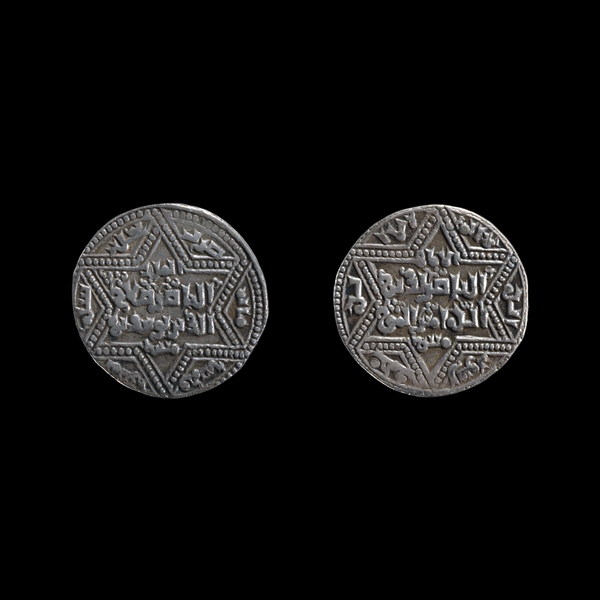
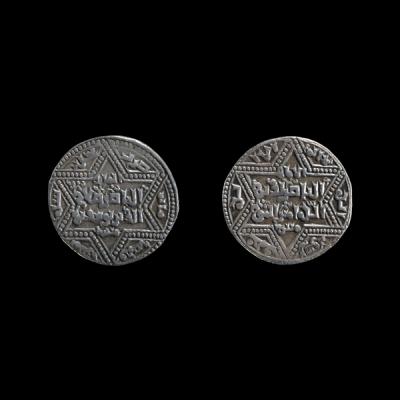
Silver dirham (Arab currency) of Saladin with 6 pointed star. Born in Tikrit, Iraq, Saladin, as he is known in the West,was a Kurd; his Arabic name is Salah ad-Din Yusuf. At the age of14 he joined other members of his family (the Ayyubids) in the serviceof the Syrian ruler Nur ad-Din (1118–74). http://www.britishmuseum.org/explore/highlights/highlight_objects/cm/s/silver_dirham_of_saladin.aspx
-
Here is a little flyer I made up. I will spread the word.

-
News Corp. Hacking Allegation in the U.S. as DOJ Review Begins
Luke_Wilbur replied to a topic in Business
Murdoch's company News America Marketing deliberately stole information and destroyed Floor Graphics business. http://www.cnn.com/2011/10/14/us/news-corp-america/index.html?hpt=hp_t2 As News Corp. shareholders prepare to meet later this month, fallout continues. This week, a top executive resigned amid allegations that The Wall Street Journal's European edition used underhanded methods to increase circulation. Now, one of News Corp.'s U.S.-based subsidiaries is drawing attention with allegations of corporate espionage, computer hacking and threats to destroy its competition. When former News Corp. competitor Antonia DeMatto heard news of the British newspaper phone-hacking allegations, she said she thought it was all too familiar. "It was a little bit like reliving it. It brought back to mind all the times that we'd been through, trying to compete and finding ourselves competing with someone who was competing completely unfairly," DeMatto told CNN. DeMatto was vice president of marketing for a New Jersey start-up called Floorgraphics, which placed ads on the floors of supermarkets and retail outlets. The company was competing against News America Marketing, a subsidiary of News Corp., which handles consumer advertising and promotions in the United States. -
A few privileged individuals have corrupted the American Dream and given the idea of being wealthy a bad name.There is nothing wrong with working hard and being rewarded for your actions. The problem is that we have put the material over the spiritual. We rather converse with a machine than interact with those that love and care for us. We rather look for advice from a search engine than using the knowledge of our parents and elders. We live by polls more that by what we know deep down inside is right. Good people are being manipulated by what special interest groups broadcast to be right. Duty to God, Duty to Family*, Duty to Country. That is my sacred 3. *Family includes friends.
-
The Federal Reserve has an article the substantiates Paul Warburg as the principal architect of the Federal Reserve. http://www.minneapolisfed.org/publications_papers/pub_display.cfm?id=3815 Paul Warburg's Crusade to Establish a Central Bank in the United States Paul Warburg was an advocate for a central bank in the United States and was chosen by President Woodrow Wilson to serve as one of the first members of the Federal Reserve Board. Michael A. Whitehouse Published May 1, 1989 Whitehouse is staff assistant in the Office of the Secretary at the Board of Governors in Washington, D.C. He has written and lectured extensively on the early history of the Federal Reserve System and U.S. banking. In paying tribute recently to Henry Wallich, late member of the Federal Reserve Board of Governors, Bankers Magazine noted that Wallich was a successor, in more than one respect, to Paul Warburg. Both of these board members were emigrants from Germany—and from the higher circles of German and European finance. Warburg, a member of the first Federal Reserve Board, like Wallich, was a staunch advocate of sound finance. Both, having witnessed the strengths and weaknesses of the European banking system during economic debacles as younger men, brought their experience to the United States committed to putting those lessons to use. It's been said that Governor Wallich's speeches and essays represent one of the best financial histories of our time. The same can certainly be said of Warburg's writings, speeches and testimony for the period after the turn of the century. His life's work constitutes perhaps the best history of the development of central banking in the United States and mirrors its controversies, struggles and the final accomplishment. It's seems fitting then, in this 75th anniversary year of the Federal Reserve System, to look at the life of Warburg, one of the System's architects and staunchest proponents. Warburg's Early Banking Experience Paul Warburg was born in Hamburg in 1868. The offspring of a prominent German banking family, he had been trained in banking in the European financial capitals. After attending the university, at age 18 he began his career in London where for two years he worked for a banking and discounting firm, followed by a short stint with a London stockbroker. After that he moved to France and gained additional experience at the Russian bank for foreign trade, which had an agency in Paris. He then traveled to India, China and Japan before returning to Hamburg to become a partner in M.M. Warburg & Co., the family banking firm. Warburg's father had fully expected that Paul would take charge of his family's banking business along with his brothers Aby and Max, but in 1895 Warburg married an American citizen, Nina Loeb, an accomplished violinist, and began to live part of the year in New York. Six years later, at age 34, he left Germany, took up permanent residency in the United States, and accepted a position as a partner at his father-in-law's firm, Kuhn, Loeb and Co.—one of Wall Street's most important and respected banking houses. While adapting quickly to his new business, he still viewed the United States through the eyes of a European banker and was literally shocked at what he considered the primitive status of banking and financial affairs. In the early 1900s, the nation was suffering from periodic liquidity crises. These crises or "panics" occurred because the banking system was fettered with a rigid amount of currency that could not meet unusual demands, and a system of reserves that pyramided up to New York. During these panics businessmen and farmers were unable to obtain credit to finance inventories and the production and transportation of crops. The crises spread across the country and converged upon Wall Street, resulting in plunges in the stock market, a large number of bank and business failures, and a further shortage of currency. Such phenomena deeply affected Warburg, a small unassuming man whose most obvious physical characteristic was a large drooping mustache that gave him more the appearance of a tenor in a barbershop quartet than an important international banker. While small in stature, however, he was hardly tame or timid in his professional assessment of conditions then prevailing in his new country. "The United States," he said, "is at about the same point that had been reached by Europe at the time of the Medicis." Witnessing first-hand a period of high interest rates — "where call money went up to 25 and 100 percent," he felt compelled to "write an article on the subject then and there for [his] own benefit." Warburg thought it a bit presumptuous to attempt to educate a country to which he was so new a resident, so when advised by an associate to put the paper aside, he did so and attended to duties at his firm. However, when the same conditions arose in the beginning of 1907, he could hold his tongue no longer, and he began to circulate his writings for the benefit of others as well. The Panic of 1907 Early in 1907, New York Times Annual Financial Review published Warburg's first official reform plan, entitled "A Plan for a Modified Central Bank," in which he outlined remedies that he thought might avert panics, like the great one that would occur later that year. Furthermore, he identified what he saw as the "evils" of the system in the United States — the "decentralization of reserves and the immobilization of [commercial] paper." To remedy this, he advocated the development of an American discount market and a European-style commercial paper. This system was based partly on a concept known as the "real bills" doctrine, which maintained that the money supply should vary with the short-term "legitimate" needs of business and commerce. By allowing banks to borrow only against short-term loans, the real bills doctrine, in theory, provided liquidity through the discounting (or selling) of loans and at the same time restricted the ability of a central bank to expand the supply of money. Warburg also proposed the creation of a "central reserve" or central bank that would hold the reserve funds of member banks so that collective funds could be made available to a bank in need of liquidity. Both the discounting and reserve concept, he contended, would help make money and credit more elastic and keep interest rates stable. The Panic of 1907 hit full stride in October. The crash was of such severity that it immediately helped focus public awareness on the problems with the monetary and banking system. Although the issue of a central bank was unpopular because of its connotations of powerful central authority, Congress was now forced to act. The Aldrich-Vreeland Act, passed by Congress in May 1908, provided for the issuance of emergency currency and created a bipartisan National Monetary Commission to study central banking and other alternatives for monetary and banking reform. Warburg would serve this committee and, through his efforts for the commission, achieve an influence on subsequent proposals for reform. Warburg Meets Sen. Aldrich Sen. Nelson Aldrich of Rhode Island, chairman of the Senate Finance Committee, was appointed head of the National Monetary Commission. He divided the commission into two groups: one would study the US banking system and compile a report, and the other, headed by the senator himself, would travel to Europe and study the central banking systems in London, Paris and Berlin. Aldrich was a known advocate of the extant bond-backed currency arrangement, which provided that bank notes could only be issued by national banks on the basis of the amount of US government bonds that were held to back them. However, the 67-year-old Aldrich, who was considered the most influential figure in Congress on financial matters, was committed to exploring new ideas for reform. In 1908, he announced that he would not seek office again and instead would devote his full attention to the currency and banking question. Meanwhile, Warburg began to enlarge his circle of professional contacts and have his voice heard throughout the country. However, the German banker still didn't have the ear of the man who mattered most — Aldrich. Aldrich first met Warburg by chance when the senator was preparing for the European trip and visited Kuhn, Loeb and Co. to gather preliminary material about the German banking system. Following that meeting, the German native began writing to Aldrich outlining his proposals, but Aldrich was cool to Warburg's plan and deferred his correspondence to A. Piatt Andrew, a Harvard professor whom Aldrich had appointed official secretary of the National Monetary Commission. As new ideas on banking reform began to crystallize for the senator, Andrew brought the work of Warburg to the senator's attention again and soon Andrew was corresponding with Warburg on behalf of the senator. Warburg was asked to write a study on the "discounting of commercial bills" for the National Monetary Commission, and became an unofficial advisor to the group. However, the banker and the senator still were at loggerheads on the question of what shape the central bank should take in the United States, and on the issue of discounting commercial paper. In his monograph, "The Discount System in Europe," Warburg declared that the effective utilization of the discount policy was one of the most impressive victories for central banks in Europe during the Panic of 1907. The only structure that is safe, he concluded, is one that provides for effective concentration of cash reserves and their freest use in case of need, enabling banks, when necessary, to turn into cash a maximum of their assets with a minimum disturbance to general conditions. He noted further that a central bank is able to guard the cash reserve of the country and accommodate nonreserve banks by accepting prime security, like bank-accepted bills. Warburg, in the meantime, continued his campaign on other fronts. He had followed his first New York Times article with a speech at Columbia University on "American and European Banking Methods and Banking Legislation Compared," and privately published a new, more complete proposal for a US banking system, entitled "A Modified Plan for a Central Bank." In May 1908, the New York Times gave his revised plan prominent coverage. Primarily, Warburg continued to emphasize that the United States must finally develop some sort of central bank system, giving the country an elastic currency based on modern commercial bills payable in gold: a system similar in principle, if not exactly alike in form, to those of the important European central banks. He believed that "no measure that bases currency on a long term basis like the Aldrich-Vreeland Emergency Currency bill, (which allowed banks in regional currency associations to use their aggregate bank balances as the basis for the issuance of currency) can be acceptable." Also, he stressed that issuing notes "must be centralized into a few organs, or if feasible, into one organ to ensure effective expansion and contraction of reserves." The tireless reformer further stated that no central bank could be effective that "vests the powers of a central bank in political officers alone. That power clearly defined, ought to be vested in political officers and businessmen combined, in a way that would render impossible any political or financial abuse." Any hasty decisions on the composition of the directors of a central bank, he said, could stand in the way of the creation of such an organization. Better that those practical and political questions could be worked out after careful consideration. Warburg's Contribution The idea of an "elastic currency," which would expand to meet the legitimate needs of business and commerce, was not new. In fact, Warburg himself claimed no originality for the idea, but through his writings, speeches and counsel to others he began to have a greater impact than anyone else. Warburg did, however, succeed in injecting two new ideas into the discussion: first, shifting of emphasis from the currency problem to the reserve problem; and second, advocacy of the principle of rediscounting a new kind of commercial paper. These ideas were starting to be discussed more seriously throughout the country, and other individuals involved in the banking and currency reform movement began to take note. With both the building momentum of other banking reform advocacy groups and Aldrich's own exposure to the efficient and effective central banking system in Europe, the senator finally opened to these other ideas. The debate on central banking reform was still in full swing several years after the 1907 Panic. Indeed, it began to heat up, with the American Bankers Association standing opposed to "any form of central bank yet suggested by legislators." Meanwhile, Warburg, Aldrich and several other prominent figures intensified their efforts and began to form an alliance that was to last over the coming crucial years of the banking reform movement. Aldrich Reconsiders His Position The European interviews of the National Monetary Commission had a profound influence upon Aldrich. He had a clear plan for reform when he returned from Europe, radically different from his original beliefs. The change in the senator's thinking was so drastic that Aldrich's biographer explained it as an epiphany, saying, "Aldrich was converted on the road to Damascus." When Aldrich and the National Monetary Commission returned from Europe in the fall of 1908, Aldrich asked Warburg to present his own ideas and answer questions regarding the European interviews at a meeting at New York's Metropolitan Club. After Warburg's Metropolitan Club testimony, Aldrich pulled the banker aside and told him that he liked his plan for reform but he was being too timid about it. Warburg was surprised to learn that Aldrich, who before his European travels had not favored centralization and had advocated a national currency backed by government bonds, had changed his thinking and envisioned a European-type central bank for the United States. While Warburg now warned the senator against attempts to establish a full-scale central bank in the European sense—believing it politically unrealistic— he was nonetheless encouraged. A particular key feature of the European systems persuaded the senator to reconsider his thinking. According to commission member Sen. Theodore Burton, the concept of currency backed by commercial assets began to take hold in Aldrich's mind in London, and the interviews in Berlin finally convinced him. Commission Assistant George Reynolds concurred, noting that "the experience and practice of German bankers in meeting the needs of commerce in their country demonstrated to Aldrich the validity of the use of commercial assets as a basis for currency. The idea, formerly so obscure, came home to him in great force from its demonstration in a non-political, practical atmosphere." While Aldrich's conversion was a welcome one to Warburg and other progressive reformers, the very concept of a European-style central bank was still an anathema to a great many bankers and politicians. Bankers wanted reform that would make the banking system more efficient and better coordinated but were fearful of government interference in the management of a central bank. While Reynolds, as president of the American Bankers Association, had traveled to Europe and had become an intimate of Aldrich, his association was not supportive of reform. Moreover, many politicians believed that the geographic size of the United States and its diverse business conditions warranted a different banking system than those existing in Europe. Complicating the matter further was the fact that any plan to which Aldrich attached himself was sure to be attacked by Democrats and others who believed the senator had only the interest of eastern businessmen and bankers in mind. Aldrich had close ties with J. P. Morgan and other important bankers, and his eldest daughter's marriage to John D. Rockefeller Jr. did not help to dispel this suspicion. The Jekyll Island Expedition One evening in early November 1910, Warburg and a small party of men from New York quietly boarded Sen. Aldrich's private railway car, ostensibly for a trip south to an exclusive hunting club on an island off the coast of Georgia. In addition to Warburg and Aldrich, the others, all highly regarded in the New York banking community, were: Frank Vanderlip, president of National City Bank; Harry P. Davison, a J.P. Morgan partner; Benjamin Strong, vice president of Banker's Trust Co.; and A. Piatt Andrew, former secretary of the National Monetary Commission and now assistant secretary of the Treasury. The real purpose of this historic "duck hunt" was to formulate a plan for US banking and currency reform that Aldrich could present to Congress. Even Warburg at first questioned the motives of this gathering, not knowing if he was included because the group knew what he preached and was interested in what he had to offer, or if he was to be involved as a conspirator in order to be muzzled. He soon saw that the Jekyll Island conference was pulled together because, as Warburg later wrote, Aldrich was "bewildered at all that he had absorbed abroad and he was faced with the difficult task of writing a highly technical bill while being harassed by the daily grind of his parliamentary duties." The group was secluded on Jekyll Island for about 10 days. All the participants came to the conference with strong views on the subject and did not agree on the exact shape a US central bank should take. Vanderlip noted: "Of course we knew that what we simply had to have was a more elastic currency through a bank that would hold the reserves of all banks." But there were many other questions that needed to be answered. If it was to be a central bank, how was it to be owned: by the banks, by the government, or jointly? Should there be a number of institutions or only one? Should the rate of interest be the same for the whole nation, or would it be higher in a community that was expanding too fast and lower in another that was lagging? In what open market operations should the bank be engaged? Warburg realized that he had not been able to persuade the senator that if a central banking organization was to be created, it had to be a modified scheme based on the European models. In fact, Warburg, "the best equipped man there in the academic sense," according to Vanderlip, "was so intense ... and apparently felt a little antagonism towards Aldrich," so that there were some moments of strain that had to be eased by the others. Aldrich had his mind set on a European-style central bank, "a model he seemed loath to abandon," according to Warburg, and the senator strongly believed that the proposed central bank should be kept out of politics. Warburg and the others felt that whatever the theoretical justification for such a central bank, American conditions would require some sort of compromise and that concessions should be made considering government influence and representation. Aldrich, yielding somewhat, allowed that the government should be represented on the board of directors and have full knowledge of the bank's affairs, but a majority of the directors were to be chosen, directly or indirectly, by the members of the association. Warburg also didn't agree with Aldrich's position on note issuance, conditions of membership of state banks and trust companies, or on the need for a uniform discount rate. Aldrich insisted, however, that a central bank should maintain a uniform rate of discount throughout the United States. He thought such a measure politically wise because it would refute the charges that other "great financial centres" would attempt to establish favorable rates for themselves in different regions to the disadvantage of other localities in the country. Eventually all of the individuals at the Jekyll Island conference had to modify their views on a central bank plan. Nonetheless, Aldrich got out of the conference just what he intended—a banking scheme that rested upon a consensus of opinion representing the best-informed bankers of this country. The banking bill the group brought north, which came to be known as the "Aldrich Plan," called for the establishment of a central bank in Washington, to be named the "National Reserve Association," meaning a central reserve organization with an elastic note issue based on gold and commercial paper. The association was to have 15 branches at geographically strategic locations throughout the country. The bank was to serve as fiscal agent for the US government and, by mobilizing the reserves of its member banks, become a lender of last resort to the American banking system. The association as a whole was to serve as a bank of rediscount, that is, it was empowered to discount a second time commercial paper that members of the association had already discounted. By rediscounting, the association could issue new money that might stay in circulation so long as the paper for which it was issued was not redeemed. No one person was responsible for the final draft bill that was written. It was a record of their composite views. Yet Vanderlip regarded Warburg as having made significant and important contributions to the final result: "As a philosophical student of banking he was first among us at that time." Warburg was satisfied that the Aldrich Plan was not a central bank in the European sense. "It was strictly a bankers' bank with branches under the control of separate directorates having supervision over the rediscount operations with member banks," he said. Warburg viewed the result of the Jekyll Island meeting as pivotal: "The period during which nonpolitical thought held the leadership in the banking reform movement may be considered as having ended with this conference." Up until then, bank reform had been an educational campaign carried on by individuals and groups; but at that point, the movement assumed a national character. Warburg saw Senator Aldrich as being the standard-bearer of a political proposal for a central bank. Said Warburg: "From then on until the final passage of the Federal Reserve Act, the generalship was in the hands of political leaders, while the role of banking reformers was to aid the movement by educational campaigns and, at the same time, to do their utmost to prevent fundamental parts of the nonpolitical plan from being disfigured by concessions born of political expediency." Aldrich presented his draft plan to the public in January 1911. One year later, on Jan. 19, 1912, the National Monetary Commission presented its report and endorsed the Aldrich Plan. The Final Campaign Warburg playfully described himself as a "fanatic" for what he considered sound finance. He was also pragmatic and sensitive to political realities, however. Thus he tempered his approach to a central bank in the United States, and his campaign over the next several years reflected that position. When he saw the roadblocks that lay ahead with Aldrich attempting to sell his plan to a greater part of the country, Warburg began a formal educational campaign to assist. Warburg believed that "beyond doubt, unless public opinion all over the United States could be educated and mobilized, any sound banking reform plan was doomed to fail." The National Board of Trade appointed Warburg the head of a seven-man committee to set up a national group to promote reform. The group was called The National Citizens League For the Promotion of Sound Banking. It accomplished much of what it set out to do: establishing effective organizations in 45 states, printing a vast amount of educational materials for the businessman and layman alike, and publishing essays in pamphlets and articles in newspapers. Warburg also continued to publish in important journals and lecture before influential groups, doing all he could to help promote sound banking principles and convince larger audiences of the urgency for reform. The Final Plan — The Federal Reserve Act Before the Aldrich Plan could be enacted into law, the Democrats won the White House and took control of the Congress in 1912. The Democratic position called for a divisional reserve bank system, with a number of reserve banks or central banking cities. Nevertheless, President Woodrow Wilson believed that the Aldrich Plan was "60-70 percent correct." As a result, the plan became the basis for constructing the Federal Reserve bill, which began to take shape in Congress with the presentation of a bill proposed by Sen. Robert Latham Owen in May 1913. When the Aldrich bill was rejected and the Democrats began to rework the banking bill, the group of bankers that had worked so hard in support of the Aldrich Plan began to split apart, and many of those bankers refused to consider an alternative plan. Warburg was more conciliatory and remained in contact with prominent Democrats, including Carter Glass, chairman of the House banking committee, and H. Parker Willis, the committee expert, and continued to write and speak on the new legislation. Warburg's reserve and discounting concepts were embraced in the Federal Reserve plan, though the central bank gradually abandoned the emphasis on discounting in favor of open market operations as the major monetary policy tool. Nonetheless, his efforts in educating the country, bringing sound banking techniques to the forefront of debate, were of tremendous importance in final preparation and passage of the Federal Reserve Act. Epilogue Warburg's career didn't end with passage of the Federal Reserve Act. In a sense, the close of this chapter marked the beginning of his next important role as a central banker. He was to wield a tremendous influence on the development of the System he worked so hard to help establish. In spite of vehement opposition from many Democrats and populists, President Wilson asked Warburg to become a member of the first Federal Reserve Board. It appears President Wilson made a wise decision. Once Warburg was appointed to the board, Secretary of the Treasury William McAdoo, who often clashed with Warburg over policy matters, explained Warburg's appointment this way: "It was thought that his technical knowledge in international finance would be useful. It was useful, in some respects it was invaluable." Benjamin Strong, governor of the Federal Reserve Bank of New York, went even further in his estimation of Warburg. Although Warburg was appointed as a member of the board (not as the chairman or vice chairman), Strong called Warburg "the real head of the board in Washington, so far as knowledge and ability goes." But the fact that he was at all chosen to serve on the board seems to have been as much a surprise to the European-born banker as to those who took issue with his nomination. Indeed, he first declined the appointment because of the "rampant prejudice in this country against a Wall Street man," and balked at testifying before the Senate banking committee because other nominees had not been asked to do so. However, when World War I erupted in Europe, Warburg decided to waive all personal considerations "in deference to the president's urgent request and in view of the present urgency which render desirable the promptest organization of the Federal Reserve Board," and appeared before a largely antagonistic committee. With Warburg before them, rather than take advantage of his vast knowledge in central banking to learn how the country would adapt to this new system, the senators chose instead to question the banker on Kuhn, Loeb and Co.'s "money trust" connections. Thus, one of the best opportunities for history to record Warburg's extemporaneous impressions on the final Glass-Owen Federal Reserve bill was lost. But when Warburg was questioned as to his motives for making the sacrifice — financial and otherwise — to become a member of the Federal Reserve Board, the nominee's answer was characteristically to the point: "When President Wilson asked me [again] whether I would take this [on] and make the sacrifice ... I felt that I had no right to decline it; and I will be glad to make the sacrifice, because I think there is a wonderful opportunity for bringing a great piece of constructive work into successful operation, and it appeals to me to do that."
-
http://www.youtube.com/watch?v=bCs8mlwHZCE The October2011.org Movement that is occupying Freedom Plaza, led an impromptu march of 250 people up Pennsylvania Avenue to the U.S.Supreme Court where Dr. Cornel West climbed on the steps of the Supreme Court and denounced court decisions that have produced money-based elections that empower corporations. Dr. West was holding a sign that said "Poverty is the Greatest Violence of All." He was arrested because holding political signs on the Supreme Court steps is illegal. Dr. West spoke to more than 500 people on Freedom Plaza where he said that "if Dr. Martin Luther King, Jr. were alive today, he would be on Freedom Plaza." West described how the struggle against, poverty, war and injustice continues and confidence that the people will succeed. He applauded the occupation as "an inclusive social revolution for all of us" and a "leaderless-leader-filled movement" where people are "finding their own political voices rather than echoing others." Kevin Zeese, an organizer of October2011.org said: "It is a fitting tribute to Dr. Martin Luther King, Jr. for Dr. West and the others to risk arrest protesting the unfair wealth divide and the Supreme Court empowering money over voters. In the battle for a real, participatory democracy getting money out of politics is a critical step." Cornel West was arraigned in DC Superior Court, 500 Indiana Ave. today. He and 14 others of the 17 arrested were held overnight.
-
Looks like Alliance for Global Justice got their act together. Their occupy Wall Street donation now goes to: https://www.wepay.com/xo71ir The money is now being kept in a credit union account at the Amalgamated Bank. They have a branch office at: 1825 K Street, N.W. Washington, D.C. 20006 202.293.9800 MONDAY-FRIDAY 8:30 AM - 5:00 PM > Free Checking > Free Debit Card > Free ATM I might even check them out. I would say that the transaction process looks now safe to donate. I tested it out
-
Crack Down on Chinese currency manipulation
Luke_Wilbur replied to Luke_Wilbur's topic in United States Politics
President Obama and Secretary Geithner are delaying the Treasury's report to Congress to see if diplomacy can work at the G20 Summit while the Speaker Boehner stalls the manipulation bill in the House. -
Crack Down on Chinese currency manipulation
Luke_Wilbur replied to Luke_Wilbur's topic in United States Politics
This bill passed the House last year 348 to 79. http://thomas.loc.go...d111:H.R.2378:# H.R.2378 : Currency Reform for Fair Trade Act H.R.2378 Latest Title: Currency Reform for Fair Trade Act Sponsor: Rep Ryan, Tim [OH-17](introduced 5/13/2009) Cosponsors (159) Related Bills: H.RES.1674, S.1027, S.1254, S.3134 Latest Major Action: 9/29/2010 Referred to Senate committee. Status: Received in the Senate and Read twice and referred to the Committee on Finance. House Reports: 111-646 COSPONSORS(159), ALPHABETICAL Rep Akin, W. Todd [MO-2] - 9/14/2010 Rep Altmire, Jason [PA-4] - 5/13/2009 Rep Andrews, Robert E. [NJ-1] - 3/25/2010 Rep Arcuri, Michael A. [NY-24] - 5/13/2009 Rep Baca, Joe [CA-43] - 7/7/2009 Rep Bachus, Spencer [AL-6] - 12/1/2009 Rep Baldwin, Tammy [WI-2] - 7/19/2010 Rep Barrett, J. Gresham [sC-3] - 5/13/2009 Rep Barrow, John [GA-12] - 3/25/2010 Rep Berkley, Shelley [NV-1] - 9/16/2010 Rep Berry, Marion [AR-1] - 5/20/2009 Rep Bishop, Rob [uT-1] - 5/20/2009 Rep Bishop, Sanford D., Jr. [GA-2] - 9/14/2010 Rep Blumenauer, Earl [OR-3] - 9/15/2010 Rep Boccieri, John A. [OH-16] - 3/25/2010 Rep Boren, Dan [OK-2] - 5/6/2010 Rep Boswell, Leonard L. [iA-3] - 5/13/2009 Rep Boucher, Rick [VA-9] - 5/13/2009 Rep Brady, Robert A. [PA-1] - 4/13/2010 Rep Braley, Bruce L. [iA-1] - 5/13/2009 Rep Brown, Henry E., Jr. [sC-1] - 5/13/2009 Rep Burton, Dan [iN-5] - 5/13/2009 Rep Buyer, Steve [iN-4] - 6/22/2010 Rep Calvert, Ken [CA-44] - 5/13/2010 Rep Carney, Christopher P. [PA-10] - 5/20/2009 Rep Cleaver, Emanuel [MO-5] - 9/28/2010 Rep Coble, Howard [NC-6] - 5/13/2009 Rep Coffman, Mike [CO-6] - 2/23/2010 Rep Connolly, Gerald E. "Gerry" [VA-11] - 3/25/2010 Rep Conyers, John, Jr. [MI-14] - 5/13/2009 Rep Costello, Jerry F. [iL-12] - 5/13/2009 Rep Courtney, Joe [CT-2] - 7/19/2010 Rep Critz, Mark S. [PA-12] - 6/9/2010 Rep Cummings, Elijah E. [MD-7] - 3/25/2010 Rep Dahlkemper, Kathleen A. [PA-3] - 7/7/2009 Rep Davis, Lincoln [TN-4] - 3/4/2010 Rep DeFazio, Peter A. [OR-4] - 5/13/2009 Rep Delahunt, Bill [MA-10] - 3/25/2010 Rep DeLauro, Rosa L. [CT-3] - 9/17/2009 Rep Dent, Charles W. [PA-15] - 3/15/2010 Rep Dingell, John D. [MI-15] - 9/24/2009 Rep Donnelly, Joe [iN-2] - 7/10/2009 Rep Doyle, Michael F. [PA-14] - 7/7/2009 Rep Duncan, John J., Jr. [TN-2] - 4/13/2010 Rep Edwards, Chet [TX-17] - 6/22/2010 Rep Ehlers, Vernon J. [MI-3] - 10/29/2009 Rep Ellison, Keith [MN-5] - 9/14/2010 Rep Ellsworth, Brad [iN-8] - 5/13/2010 Rep Filner, Bob [CA-51] - 10/29/2009 Rep Foster, Bill [iL-14] - 4/28/2010 Rep Fudge, Marcia L. [OH-11] - 9/14/2010 Rep Gerlach, Jim [PA-6] - 3/10/2010 Rep Green, Al [TX-9] - 9/28/2010 Rep Green, Gene [TX-29] - 5/13/2009 Rep Griffith, Parker [AL-5] - 5/25/2010 Rep Grijalva, Raul M. [AZ-7] - 9/14/2010 Rep Gutierrez, Luis V. [iL-4] - 3/25/2010 Rep Hall, John J. [NY-19] - 9/28/2010 Rep Halvorson, Deborah L. [iL-11] - 4/15/2010 Rep Hare, Phil [iL-17] - 5/13/2009 Rep Hastings, Alcee L. [FL-23] - 9/14/2010 Rep Heinrich, Martin [NM-1] - 9/15/2010 Rep Higgins, Brian [NY-27] - 5/13/2009 Rep Hill, Baron P. [iN-9] - 4/20/2010 Rep Hinchey, Maurice D. [NY-22] - 5/26/2010 Rep Hodes, Paul W. [NH-2] - 5/6/2010 Rep Hoekstra, Peter [MI-2] - 5/20/2009 Rep Holden, Tim [PA-17] - 5/13/2009 Rep Holt, Rush D. [NJ-12] - 5/13/2009 Rep Hunter, Duncan D. [CA-52] - 5/20/2009 Rep Inglis, Bob [sC-4] - 5/20/2009 Rep Jackson, Jesse L., Jr. [iL-2] - 5/11/2010 Rep Johnson, Eddie Bernice [TX-30] - 5/13/2009 Rep Jones, Walter B., Jr. [NC-3] - 5/13/2009 Rep Kagen, Steve [WI-8] - 5/13/2009 Rep Kanjorski, Paul E. [PA-11] - 8/10/2010 Rep Kaptur, Marcy [OH-9] - 11/3/2009 Rep Kildee, Dale E. [MI-5] - 5/13/2009 Rep Kilroy, Mary Jo [OH-15] - 3/23/2010 Rep Kissell, Larry [NC-8] - 5/20/2009 Rep Kucinich, Dennis J. [OH-10] - 9/15/2010 Rep Larson, John B. [CT-1] - 3/25/2010 Rep LaTourette, Steven C. [OH-14] - 4/20/2010 Rep Lee, Christopher J. [NY-26] - 5/13/2009 Rep Lipinski, Daniel [iL-3] - 5/20/2009 Rep Loebsack, David [iA-2] - 5/11/2010 Rep Luetkemeyer, Blaine [MO-9] - 6/24/2010 Rep Lynch, Stephen F. [MA-9] - 3/25/2010 Rep Maffei, Daniel B. [NY-25] - 4/29/2010 Rep Manzullo, Donald A. [iL-16] - 5/13/2009 Rep Markey, Edward J. [MA-7] - 9/22/2010 Rep Massa, Eric J. J. [NY-29] - 6/10/2009 Rep Matsui, Doris O. [CA-5] - 9/28/2010 Rep McCarthy, Carolyn [NY-4] - 3/25/2010 Rep McCollum, Betty [MN-4] - 9/14/2010 Rep McCotter, Thaddeus G. [MI-11] - 5/20/2009 Rep McGovern, James P. [MA-3] - 7/19/2010 Rep McHenry, Patrick T. [NC-10] - 5/20/2009 Rep McHugh, John M. [NY-23] - 5/13/2009 Rep McIntyre, Mike [NC-7] - 4/29/2010 Rep Michaud, Michael H. [ME-2] - 5/13/2009 Rep Miller, Brad [NC-13] - 6/10/2009 Rep Miller, Candice S. [MI-10] - 12/1/2009 Rep Miller, George [CA-7] - 7/28/2010 Rep Mollohan, Alan B. [WV-1] - 11/6/2009 Rep Murphy, Christopher S. [CT-5] - 5/11/2010 Rep Murphy, Patrick J. [PA-8] - 4/13/2010 Rep Murphy, Tim [PA-18] - 5/13/2009 Rep Murtha, John P. [PA-12] - 6/4/2009 Rep Myrick, Sue Wilkins [NC-9] - 5/13/2009 Rep Norton, Eleanor Holmes [DC] - 9/22/2010 Rep Olver, John W. [MA-1] - 5/13/2009 Rep Owens, William L. [NY-23] - 9/22/2010 Rep Pascrell, Bill, Jr. [NJ-8] - 9/16/2010 Rep Perriello, Thomas S.P. [VA-5] - 10/29/2009 Rep Peters, Gary C. [MI-9] - 6/4/2009 Rep Petri, Thomas E. [WI-6] - 9/16/2010 Rep Pingree, Chellie [ME-1] - 9/14/2010 Rep Pitts, Joseph R. [PA-16] - 5/21/2009 Rep Platts, Todd Russell [PA-19] - 5/13/2009 Rep Rahall, Nick J., II [WV-3] - 5/18/2010 Rep Richardson, Laura [CA-37] - 7/7/2009 Rep Rogers, Harold [KY-5] - 10/29/2009 Rep Rogers, Mike D. [AL-3] - 11/3/2009 Rep Rogers, Mike J. [MI-8] - 5/13/2009 Rep Rohrabacher, Dana [CA-46] - 5/13/2009 Rep Ross, Mike [AR-4] - 5/18/2010 Rep Rush, Bobby L. [iL-1] - 9/23/2010 Rep Salazar, John T. [CO-3] - 9/23/2010 Rep Sanchez, Linda T. [CA-39] - 5/11/2010 Rep Sanchez, Loretta [CA-47] - 3/25/2010 Rep Schakowsky, Janice D. [iL-9] - 6/28/2010 Rep Schauer, Mark H. [MI-7] - 12/9/2009 Rep Sensenbrenner, F. James, Jr. [WI-5] - 6/4/2009 Rep Sestak, Joe [PA-7] - 7/29/2010 Rep Shea-Porter, Carol [NH-1] - 3/25/2010 Rep Sherman, Brad [CA-27] - 6/10/2009 Rep Shuler, Heath [NC-11] - 5/13/2009 Rep Shuster, Bill [PA-9] - 5/13/2009 Rep Slaughter, Louise McIntosh [NY-28] - 5/21/2009 Rep Souder, Mark E. [iN-3] - 5/13/2009 Rep Space, Zachary T. [OH-18] - 6/26/2009 Rep Speier, Jackie [CA-12] - 9/14/2010 Rep Spratt, John M., Jr. [sC-5] - 10/8/2009 Rep Stark, Fortney Pete [CA-13] - 6/22/2010 Rep Stupak, Bart [MI-1] - 7/13/2010 Rep Sutton, Betty [OH-13] - 5/13/2009 Rep Thompson, Glenn [PA-5] - 5/21/2009 Rep Tonko, Paul [NY-21] - 9/22/2010 Rep Turner, Michael R. [OH-3] - 3/2/2010 Rep Upton, Fred [MI-6] - 9/14/2010 Rep Visclosky, Peter J. [iN-1] - 5/13/2009 Rep Welch, Peter [VT] - 4/13/2010 Rep Westmoreland, Lynn A. [GA-3] - 5/13/2009 Rep Whitfield, Ed [KY-1] - 10/8/2009 Rep Wilson, Charles A. [OH-6] - 5/13/2009 Rep Wilson, Joe [sC-2] - 5/13/2009 Rep Woolsey, Lynn C. [CA-6] - 5/6/2010 Rep Young, Don [AK] - 7/14/2010 -
I spoke with Adbusters, the creators of $OccupyWallStreet. They are telling people to donate to the following organizations. nycga.net occupywallst.org I will check them later.
-
Spoke with Jeremiah today @ e-onlinedata.com also known as PowerPay 320 Cumberland Ave, Portland ME 04101 Toll Free: (877) 877-3737 Local: (207) 775-6900 Fax: (888) 204-4040 info@powerpay.biz The are handling the Occupy Wall Street Donations Payment Process. Jeremiah of PowerPay stated that I should contact the Alliance for Global Justice. I have left three messages to Chuck Kaufman about this. Alliance for Global Justice Headquarters 1247 E St., SE Washington, DC 20003 202-544-9355 afgj@afgj.org Chuck Kaufman National Co-Coordinator (ext. 500) chuck@afgj.org I am going to leave chuck an email. I would beware of donating to this organization until they respond.
-
Should a Canadian magazine be allowed to control all these OccupyWallStreet and other occupy domain names? In my opinion, Adbusters should them over to the movement, otherwise people will view the leaders of this movement as AntiAmerican and just an example of foreign powers trying to directly encroach into American politics.
-
Archive.org had some information about Kevin Zeese http://web.archive.o...tent/view/18/35 Kevin Zeese. Photo: Jefferson Jackson Steele, Baltimore City Paper Highlights 'Peace, Justice, Democracy and Prosperity' I'm running for U.S. Senate because the two major parties no longer represent the interests of most Americans. A recent poll described in July 16 th Economist, asked voters if they thought their elected officials represented their priorities. Only 17 percent said yes. And, if we look at the policies being put in place by those in office we repeatedly see that the American people are correct – their views are unrepresented. Most recently, Hurricane Katrina has painfully exposed years of misplaced priorities and spending. Critical National Guard Troops were diverted to Iraq and unavailable when disaster struck. Billions spent on the war left urgent domestic needs unaddressed – resulting in thousands of lost lives and livelihoods. It is not only the levees in New Orleans which were left to crumble. The American Society of Civil Engineers has reported the entire basic infrastructure of the United States including bridges, roads, sewage systems, and dams is rapidly deteriorating. They give the country's infrastructure a 'D' and describe a "looming crisis that jeopardizes our nation's prosperity and quality of life." Just as lawmakers ignored the coming crisis in Louisiana, and our failing infrastructure, they are ignoring changes in climate which will bring increased frequency and severity of storms like Katrina. Adding to incompetance and neglect, Katrina made longstanding class and racial divides visible to all and highlights the need for a change in the direction of our country. If ever there were a moment to 'throw the bums out', this is it. A majority of Americans -- some polls show up to 60% -- believe the Iraq War was wrong and want the U.S. to start withdrawing our soldiers. Only 35% of Maryland voters think the war in Iraq is worth it. Yet the U.S. Senate voted 99-0 for continuing to fund the occupation and is not even considering an exit strategy. Shouldn't there be at least one Senator that represents the view of a majority of Americans on this critical issue? The same is true on other important issues: Americans want a government of 'we the people' yet we have a government dominated by wealthy interests. 'Big Business Socialism' is disguised in the rhetoric of 'free market.' Americans want an economy that creates prosperity for all – yet we have crippling trade deficits, skyrocketing federal spending, and mushrooming international trade defecits. On the personal level median income is diminishing, poverty is increasing, retirements are insecure and the U.S. has the largest rich-poor divide since the 1920s. Neither major party is willing to face up to these issues because doing so is against the interests of the monied elite who fund their campaigns. Confidence in Maryland's democracy is threatened by paperless electronic voting that does not provide a paper record for open, transparent and independent vote counts. Two-thirds of Marylanders favor ending the failed war on drugs and putting in place treatment not incarceration, yet the two major parties continue to spend $50 billion annually on the failed drug war. These issues need to be debated -- people want choices – but they will not be debated by candidates from the two corporate-dominated parties. This campaign will seek support from voters across the political spectrum whose views are not represented by the two major parties. Third party campaigns are often marginalized and ignored but this is not going to be your typical third party campaign. This campaign will be a Unity Campaign that brings together multiple third parties. Why a "Unity Campaign" and not one party? Each of the parties represent values that are important: The Populist Party stands for economic fairness for working families and recognizes how the U.S. has rigged our tax laws, finance system and corporate welfare to help the wealthiest while shrinking the middle class and undermining those whose work makes our country great. The Libertarian Party emphasizes the central value of liberty – freedom – which is under attack in the United States with laws like the Patriot Act, eminent domain and a government that intrudes into private life. We need to consider the question of liberty in every action the government takes because it is our basic freedoms that unleash the creativity, entrepreneurship and greatness of Americans. The Green Party's ten key values are a common sense outline of where our country needs to go. These values include: grassroots democracy, social justice, ecological wisdom, non-violence, decentralization, community-based economics, feminism, diversity, responsibility and future focus. Many Democrats and Republicans are disenchanted with the direction of their parties' leadership. As a result the United States is going in more wrong directions at once than ever in my lifetime. Many Democrats and Republicans recognize that their parties represent the interests of big business donors, and are thirsting for a new approach to politics. I plan to provide voters with that new approach. Maryland is ready for an independent alternative to the two major parties – a candidate for Senate who is free to serve the people of Maryland without divided loyalties or conflict of interest. Statewide, the fastest growing group of registered voters are independents and non-major party voters, who now make up 15.4% of the electorate. According to a Baltimore City Paper article about the Unity campaign, since the presidential election of 2004, the number of voters who do not affiliate with either party was up by 6,517. During that time, the Maryland Republican Party gained 4,648 new members and the Democratic Party lost 450 members. Please join me in supporting Unity and Democracy. We must end the corruption of our government. Senator John McCain said the electoral system "is nothing less than an elaborate influence-peddling scheme in which both parties conspire to stay in office by selling the country to the highest bidder." This is, in reality, such open corruption that all political commentators and most voters know it. If you know both parties are selling the country to the highest bidder we have a choice – remain silent, be complicit and join the conspiracy by our inaction (or worse) – or challenge the system. I've decided to challenge the system. I am grateful to all those Marylanders who will join me. Kevin Zeese U.S. Senate Campaign Committee Nathan Bahn Co-Chair, Montgomery Greens Rockville, MD Bill Barry Baltimore City Green Party| Baltimore, MD Michael Cornell Co-Chair, Maryland Green Party Howard County, MD Chris Driscoll Chair, Populist Party of Maryland Baltimore, MD Kay Dellinger Coalition Against Global Exploitation, Baltimore Pledge of Resistance, Populist Party of Maryland Central Committee Baltimore, MD Pat Elder Co-founder DC Anti-War Network Iraq Pledge of Resistance Bethesda, MD Tomas Estrada-Palma Libertarian Party of Anne Arundel Annapolis, MD Kristin Famula TrueVoteMD Severna Park, MD Robert Ferraro Eyes Of Paint Branch, TrueVoteMD Colesville, MD Lorenzo Gaztanaga Baltimore Libertarian Party Baltimore, MD Susan Gaztanaga Baltimore Libertarian Party Baltimore, MD Saul Iversion TrueVoteMD Howard County, MD Joseph Klockner Klockner & Company Takoma Park, MD Barry Kissin Attorney Democratic Candidate for Congress (6th District) Frederick, MD Ken Lerch National Association of Letter Carriers President, Local 3825 Rockville, MD Jay Levy Takoma Park City for Peace Takoma Park, MD Robert Lanza Democracy for Maryland Takoma Park, MD Sheldon H. Laskin Baltimore County Green Party Baltimore, MD 21209 Mike Livingston Montgomery County Green Party Silver Spring, MD John Low Principal, Banning+Low Kensington, MD James Madigan Correctional Lieutenant, Maryland Reception Center Baltimore County Green Party Parkville, MD Douglas McNeil Baltimore Libertarian Party Baltimore, MD Dick Ochs Populist Party State Central Committee Member Chair Green Party, Committee on Democratic Reform of Party Processes Baltimore, MD Anne Polansky Energy and Environmental Consultant Takoma Park, MD Linda Schade TrueVoteMD Montgomery County Green Party Takoma Park, MD Joseph Schroeder Populist Party of Maryland Central Committee, Treasurer Baltimore, MD Mounzer Sleiman Vice President, National Council for Arab Americans Poolesville, MD Eileen Scott Co-Chair Maryland Green Party Silver Spring, MD Eric Sterling President, Criminal Justice Policy Foundation Counsel, U.S. House of Representative, Committee on the Judiciary, 1979-89 Chevy Chase, MD Robert Tufts Anne Arundel Green Party Churchton, MD Pam Rasmussen Montgomery County Coalition for Alternatives to War Gaithersburg, MD Virginia Rodino Steering Committee, United for Peace and Justice Baltimore, MD Whitney Trettien Co-chair, Frederick Green Party Frederick, MD Yvonne Wall Montgomery County Coalition for Alternatives to War Montgomery County, MD Bahram Zandi Montgomery County Green Party Gaithersburg, MD Organizations listed are for identification purposes only and does not mean the organization is involved in the campaign in any way.
-
I have been told that you produced 'Never Ever.' The rhythm flow is divine. This piece has soul. Amazing. Tell me the inspiration.
-
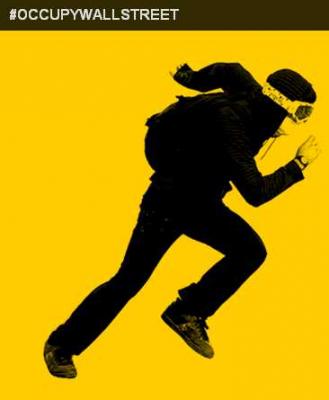
The websites -- occupywallst.org and nycga.cc -- and in person to members of what the movement calls its "Finance Working Group." Here is what the Russian Times is reporting. Where do these Occupy Wall Street protesters come from? Are they just violent slackers who need to lay blame on others? Or do they really represent the 99 percent of society? How reasonable is it to point the finger at Wall Street? And can they become a new force in politics? CrossTalking with Tony Katz, Kevin Zeese and Jason Del Gandio on October 12. CT on FB: http://www.facebook.com/crosstalkrulez
-
Is this the Falcon Punch John? http://www.youtube.com/watch?v=FFtw7qW7Vcw
-
Occupy Wall Street's demands and grievances are numerous and varied, but one general theme is that the coalition believes both public policy and tax law changes in the past 30 years have resulted in a a dysfunctional society. In reality, Occupy America is engaging in the same type of protest phenomenon as the conservative Tea Party faction. I am trying to engage them on fair trade. There will always be consumers looking for the lowest price. Being a dad to a family of 5 (nine including the dog and two cats) I cannot always afford the very best. But, I am trying to better save for things the family needs and wants. I am upset that the value of the dollar is going down the crap hole. I also have another family, which is the people that support my business and other endeavors. These people are ones that I grew up with throughout my life that took a chance on working with me. They have their own welfare to worry about too. Good booze is not cheap
-
I decided to visit Occupy DC this weekend. I found no major standoff between law enforcement and the protestors. In fact, it was the opposite. There was peaceful Americans of ages, creeds, and colors occupying a space. Everything within the movement is done by unanimous consent. Instead of screaming the group has devised wiggling their fingers up for like, down, for dislike, and twisting side-to-side for indifferent. What I liked hearing is at this point is that the Occupy movement is not taking political sides. What I liked even better is Democrats and Republicans at Freedom Plaza were talking about things in common they have with each other, rather than just barking out differences. What I found shocking was how many senior citizens were there. I think they are half the movement. Many of them flew in or took the train from across the country to show their support. At this point, Occupy DC can be found in McPherson Square and Freedom Plaza. There are other groups that share similar beliefs as well. The grievances I found most prevalent were corporate greed, bank bailouts, nationalize the Federal Reserve, and bring back our troops back from Iraq and Afghanistan. I thought entitlements, and outsourcing jobs would be big issues, but there was no media or discussions during my visit. Special thanks for the staff of DCpages helping caption my photos. I think it is important to engage and voice our freedom of speech and assembly in this issue. This is what makes our country great. God Bless America. My journey can be view here. http://www.dcpages.c...-Washington-DC/
-
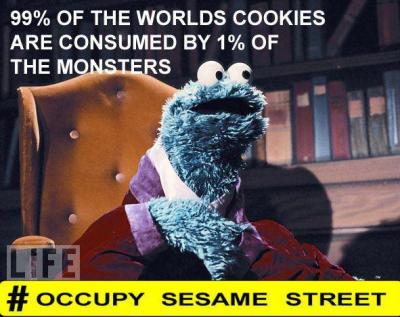
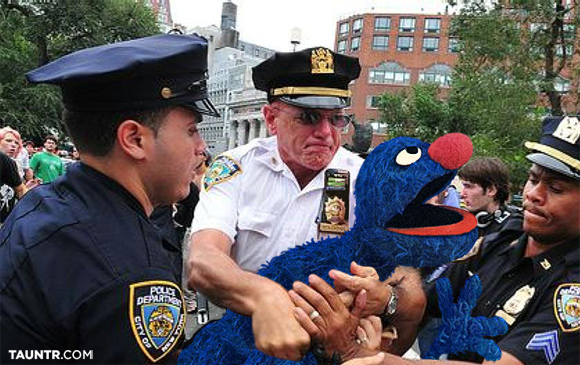
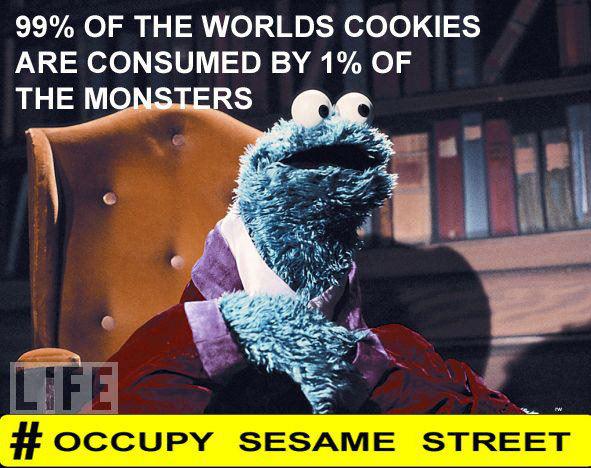
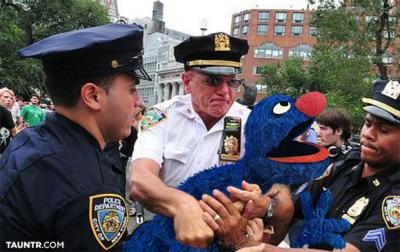
WE WANT COOKIES!!! #OCCUPYSESAMESTREET
-
SHARE THE COOKIES!!!