
Luke_Wilbur
-
Posts
3,523 -
Joined
-
Days Won
3
Everything posted by Luke_Wilbur
-

Where Japanese in Japan would like to go and Retire
Luke_Wilbur replied to Human's topic in Business
I know that the real estate market for northern Australia is high, because many Japanese are buying property there. -
Hey Joe, I am still shearing the trees. The weather is starting to get hot. I should turn Santa's forest into a fat farm Are you taking care of your mom and dad?
-
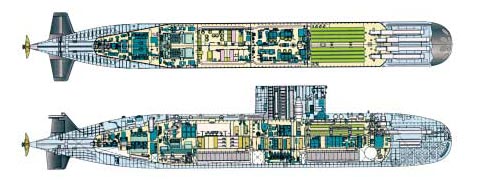
"Admiralty Shipyards" specializes in underwater ship building. To date the company has built 298 submarines (of them 41 atomic). At present on FGUP "admiralty shipyards" on the project TSKB MT. "RUBY" is conducted the building of the neatomnoy submarine of generation "AMUR -1650", intended for the delivery for the export. Admirality Shipyards has improved in the tactical design of the neatomnykh submarines of the previous generation. As a result OF PL "AMUR -1650" acquired the ability to deliver salvo rocket impacts on surface targets both single, and group. Furthermore: There is a reduced the level of the acoustic field of ship, (in comparison with PL of the previous generations - several times); The sub has a new generation of radio-electronic armament; The sub has automated combat and technical equipment; The inertial navigation complex, which makes it possible to ensure safety of navigation and determination of the parameters of motion with necessary for using the rocket weapon by accuracy, is established, being located long time under water; A fully variable propulsion motor of new development is established; storage battery with the increased period of service is established. In the process of building the new forms of productions and the technological processes were mastered: section on the production of nonpenetrating sliding and lift- mast devices is equipped; is developed and mastered the technology of the installation of the highly sensitive hydrophone antenna of hydroacoustic complex "LIRA"; A new generation of antisonar coating "Molniya"; The company is located at: 190121, Saint Petersburg, observer r. of fontanki, 203, the bodies: +7 (812) 714-8863, the fax: +7 (812) 571-1371, e-mail: info@ashipyards.com
-
Astronomers using NASA's Hubble Space Telescope have discovered a ghostly ring of dark matter that formed long ago during a titanic collision between two massive galaxy clusters. The ring's discovery is among the strongest evidence yet that dark matter exists. Astronomers have long suspected the existence of the invisible substance as the source of additional gravity that holds together galaxy clusters. Such clusters would fly apart if they relied only on the gravity from their visible stars. Although astronomers don't know what dark matter is made of, they hypothesize that it is a type of elementary particle that pervades the universe. "This is the first time we have detected dark matter as having a unique structure that is different from both the gas and galaxies in the cluster," said astronomer M. James Jee of Johns Hopkins University in Baltimore, Md., a member of the team that spotted the dark-matter ring. The researchers spotted the ring unexpectedly while they were mapping the distribution of dark matter within the galaxy cluster Cl 0024+17 (ZwCl 0024+1652), located 5 billion light-years from Earth. The ring measures 2.6 million light-years across. Although astronomers cannot see dark matter, they can infer its existence in galaxy clusters by observing how its gravity bends the light of more distant background galaxies. "Although the invisible matter has been found before in other galaxy clusters, it has never been detected to be so largely separated from the hot gas and the galaxies that make up galaxy clusters," Jee said. "By seeing a dark-matter structure that is not traced by galaxies and hot gas, we can study how it behaves differently from normal matter." During the team's dark-matter analysis, they noticed a ripple in the mysterious substance, somewhat like the ripples created in a pond from a stone plopping into the water. "I was annoyed when I saw the ring because I thought it was an artifact, which would have implied a flaw in our data reduction," Jee explained. "I couldn't believe my result. But the more I tried to remove the ring, the more it showed up. It took more than a year to convince myself that the ring was real. I've looked at a number of clusters and I haven't seen anything like this." Curious about why the ring was in the cluster and how it had formed, Jee found previous research that suggested the cluster had collided with another cluster 1 to 2 billion years ago. The research, published in 2002 by Oliver Czoske of the Argeleander-Institut fur Astronomie at the Universitat Bonn, was based on spectroscopic observations of the cluster's three-dimensional structure. The study revealed two distinct groupings of galaxies clusters, indicating a collision between both clusters. Astronomers have a head-on view of the collision because it occurred fortuitously along Earth's line of sight. From this perspective, the dark-matter structure looks like a ring. Computer simulations of galaxy cluster collisions, created by the team, show that when two clusters smash together, the dark matter falls to the center of the combined cluster and sloshes back out. As the dark matter moves outward, it begins to slow down under the pull of gravity and pile up, like cars bunched up on a freeway. "By studying this collision, we are seeing how dark matter responds to gravity," said team member Holland Ford of Johns Hopkins University. "Nature is doing an experiment for us that we can't do in a lab, and it agrees with our theoretical models." Dark matter makes up most of the universe's material. Ordinary matter, which makes up stars and planets, comprises only a few percent of the universe's matter. Tracing dark matter is not an easy task, because it does not shine or reflect light. Astronomers can only detect its influence by how its gravity affects light. To find it, astronomers study how faint light from more distant galaxies is distorted and smeared into arcs and streaks by the gravity of the dark matter in a foreground galaxy cluster, a powerful trick called gravitational lensing. By mapping the distorted light, astronomers can deduce the cluster's mass and trace how dark matter is distributed in the cluster. "The collision between the two galaxy clusters created a ripple of dark matter that left distinct footprints in the shapes of the background galaxies," Jee explained. "It's like looking at the pebbles on the bottom of a pond with ripples on the surface. The pebbles' shapes appear to change as the ripples pass over them. So, too, the background galaxies behind the ring show coherent changes in their shapes due to the presence of the dense ring." Jee and his colleagues used Hubble's Advanced Camera for Surveys to detect the faint, distorted, faraway galaxies behind the cluster that cannot be resolved with ground-based telescopes. "Hubble's exquisite images and unparalleled sensitivity to faint galaxies make it the only tool for this measurement," said team member Richard White of the Space Telescope Science Institute in Baltimore. Previous observations of the Bullet Cluster with Hubble and the Chandra X-ray Observatory presented a sideways view of a similar encounter between two galaxy clusters. In that collision, the dark matter was pulled apart from the hot cluster gas, but the dark matter still followed the distribution of cluster galaxies. Cl 0024+17 is the first cluster to show a dark matter distribution that differs from the distribution of both the galaxies and the hot gas. The team's paper will appear in the June 1 issue of the Astrophysical Journal. CONTACT Donna Weaver/Ray Villard Space Telescope Science Institute, Baltimore, Md. 410-338-4493/4514 Richard White Space Telescope Science Institute, Baltimore, Md. (phone) 410-338-4899 (e-mail) rlw@stsci.edu Myungkook James Jee Johns Hopkins University, Baltimore, Md. (phone) 410-516-5497 (e-mail) mkjee@pha.jhu.edu Lisa De Nike Johns Hopkins University, Baltimore, Md. (phone) 443-287-9906 (e-mail) lde@jhu.edu
-
On Saturday, June 16, the DC Department of Parks and Recreation (DPR) opened five outdoor swimming pools (Barry Farm, Benning Park, Ft. Dupont, Kelly Miller, Banneker), signaling the beginning of the outdoor summer swimming season. Weekend and holiday hours of operation for outdoor pools are 12 pm until 6 pm. DPR’s ongoing partnership with Amerigroup Community Care allows for free swimming for DC residents until September 30, 2007. The following pools will opened this weekend: Barry Farm- (202) 645-5040 Benning Park- (202) 645-5044 Fort Dupont- (202) 645-5046 Kelly Miller- (202)724-5056 Banneker- (202) 673-2121
-
That is pretty cool. Finally some good news
-
Tony looked up and everything went black. I thought something was wrong with my service. I thought the man sitting at the bar and the one that went to the bathroom were going to kill Tony, Anthony Junior, and Carmela. Meadow takes forever to park her car and finally gets to the door. I thought she was going to see her family whacked. But..... Nothing. At least Leotardo had a good finish.
-
John Edwards has a stake in disputed treasure ship found off Spain
Luke_Wilbur replied to Human's topic in World Politics
I tried searching for The two ships, "Odyssey Explorer" and "Ocean Alert," belonging to Odyssey Marine Exploration with the search you gave: http://www.sailwx.info/shiptrack/ I got the following results Here is Odyssy's response to why they are being so "secretive" about the "Black Swan?" -
John Edwards has a stake in disputed treasure ship found off Spain
Luke_Wilbur replied to Human's topic in World Politics
Wiley, I see where you went now last night Anywho, This video is pretty funny also. -
http://www.washingtonpost.com/wp-dyn/conte...l?nav=rss_metro Hundreds Protest Bill on Strip Club Relocation Residents Seek 'Positive Changes' By Yolanda Woodlee Washington Post Staff Writer Thursday, May 31, 2007; B04 More than 300 residents jammed a Ward 5 community meeting last night to protest legislation pending in the D.C. Council that would allow unclothed entertainment clubs to relocate to their Northeast neighborhoods. The bill, introduced by council member Jim Graham (D-Ward 1), is scheduled for a vote Tuesday. It would change regulations for unclothed bars, whose licenses now prohibit them from moving, and allow relocation if the new sites have the same zoning designation: commercial and light manufacturing. Council member Harry Thomas Jr. (D-Ward 5) called the meeting at the Washington Center for Aging Services to rally opposition to the measure. Thomas says the legislation would allow too many clubs, including three in a warehouse district in his ward, close to an area where residents and developers are seeking to improve neighborhood standards. Thomas rejected charges that the community opposes the clubs because many cater to homosexuals. "This is not about whether you're homophobic or against straight clubs. It's about developing a community," Thomas said. "We want a fair-shared process that looks at the whole city." Graham, who did not attend the meeting, says his bill would simply allow the clubs to move from one commercial manufacturing zone to another. "I'm not sending these clubs to Ward 5," Graham said. Acceptable commercial zones are "in every ward of the city," he said. "This has all become all very personalized. I'm not a real estate agent, nor do I assign bars in any location." The clubs were displaced after the District decided to build the Washington Nationals baseball stadium in Southeast Washington. Council member Kwame R. Brown (D-At Large) attended the meeting and said he wanted to show his support for Ward 5 residents. "Kwame Brown does not want nudie bars next to residential homes," he said. The sites under consideration are along streets with warehouses, but some of the clubs would be close to homes, schools and churches. One opponent, the Rev. Michael Kelsey, pastor of New Samaritan Baptist Church, said he had nearly 350 signatures. "In this community, we've been waiting for positive changes for a long time," Kelsey said. "A red light district is not what we consider a positive change."
-
WHAT: Ribbon-cutting ceremony for new Ballou High School science labs and classroom WHEN: Monday, June 4, 2007, 10:00 a.m. to 12:00 noon WHERE: Ballou High School 3401 4th Street, SE Washington, DC 20032 WHO: Mayor Adrian Fenty Members of the Council of the District of Columbia Members of the Board of Education Superintendent Clifford B. Janey Background: The ribbon-cutting ceremony for three new laboratories and a new classroom will take place at Ballou High School. The three new labs, one each for biology, chemistry, and physics, began to be constructed in earnest in October, 2006 and are completely equipped and fully functional. Among the features of the labs are gas accessibility, fume hoods, a lecture area, television and computer wiring, projectors, a preparation area including a dishwasher, refrigerator, cabinets with locks and ventilation for chemicals, and storage cabinets. The furniture is made of solid oak and all top surfaces are chemical resistant. Each lab can serve some 24 students at a time and is handicap accessible. A separate new science classroom near the labs was also built with design input and actual construction and renovation work done by the Construction Services Administration, an arm of the District of Columbia Housing Authority. The new labs will actually open for use for the 2007-2008 school year. For additional information, contact Ms. Monique Peterson at the Ballou science department at (202) 645-3400 or (202) 645-4139.
-
AMERICAN MARKETING ASSOCIATION WASHINGTON DC CHAPTER AWARDS AREA MARKETERS The American Marketing Association DC Chapter (AMA-DC) celebrated its 75th Anniversary with the awarding of the 2007 AMA-DC "M" Awards to Greater Washington D.C. marketers and communications professionals at the fifth annual "M" Awards celebration dinner on May 17. The organization presented the 2007 AMA-DC Hall of Fame Award to Bruce J. Himelstein, Senior Vice President of Sales and Marketing for The Ritz-Carlton Hotel Company. The M Awards is our signature event and the preeminent way for area professionals to gain recognition for outstanding marketing industry achievements, said Pat Lovenhart, AMA-DC President. The M Awards cuts through the hype to demonstrate how the best campaigns achieve measurable results. Himelstein has spent more than 25 years in the hotel industry and was named one of the "Top 25 Most Extraordinary Minds in Sales & Marketing" in 2006 by the Hospitality Sales and Marketing Association (HSMAI). Roger Dow, President and Chief Executive Officer of the Travel Industry Association, presented the award to his long-time friend Himelstein. JDG Communications captured the 2007 Marketer of the Year Award as well as three other M Awards. The AMA-DC M Awards exemplify the highest in marketing excellence in Washington D.C. and JDG is honored to receive this recognition, said Len Johnson, President and CEO of JDG Communications. The M Awards focus intently on effectiveness and results of each individual campaign, with submissions in categories such as Marketing Research, Advertising and Public Relations, among others. Other firms honored were Airlines Reporting Corporation, Approva Corporation, Brand Resources Group, College Hunks for Hauling Junk, Erickson Barnett, Fed Choice FCU, Henninger Media Services, Imre Communications, MacMannes, Inc., Mindshare Interactive Campaigns, National Geographic, O'Keefe and Company, RCN Public Relations, Rosenthal Partners, Sage Communications/Pursuant and the United Negro College Fund. The M Awards are truly a celebration of professionalism, creativity and uniqueness among Washington, DC marketing communications firms, Lovenhart says. The Award supports the Chapter's overall strategy and mission, to serve the needs of our members and the marketing profession and to promote the accomplishments of industry leaders in the region, M AMA-DC adopted its Marketing Rocks! 75th Anniversary theme to highlight the rewards the Chapter has received since its founding in1932. The American Marketing Association boasts 38,000 members nationwide and has honored the Chapter many excellence awards, including highest honors as Best-in-Class and awards in planning, financial performance, member recruitment, chapter management, communications and activities. The Washington D.C. Chapter of the American Marketing Association is the third largest AMA chapter in the country with more than 900 members. AMA-DC serves service and product providers, educators, students and practitioners at all career levels in such diverse fields as media, federal government, associations, universities and non-profits. Members also come from many of the FORTUNE 100 companies, including well known entities as Marriott, AOL, Exxon Mobile, Unisys Corporation, Kaiser Permanente, Discovery Communications, PBS and The Washington Post. AMA-DC provides its members—and the community at large—with a network of contacts and resources, continuing education and professional advancement opportunities throughout the year. For more information, contact the American Marketing Association-DC Chapter (AMA-DC) at 717 Princess Street, Alexandria, VA 22314, info@amadc.org, 703.683.4883 or http://www.amadc.org. Here is the list of this year's winners: Marketing Research – Quantitative Research O’Keefe and Company – Federal Telework; Virtually Working Marketing Research, Mixed Methods Project Sage Communications/Pursuant Corporate Identity, Logo Design National Geographic, Kids Sub-brand Logo System Corporate Identity, Corporate Identity (Three or more) College Hunks Hauling Junk Marketing Campaign, Integrated Marketing Campaign (Retail) Fed Choice FCU – FedChoice Logo Marketing Campaign, Integrated Marketing Campaign (Business to Business) Approva Corporation – Greater Visibility, Better Controls Marketing Campaign, Integrated Marketing Campaign (Nonprofit/Government) JDG Communications – Business.gov (Federal Compliance Website Awareness Campaign) Marketing Campaign, Integrated Campaign, on a Shoestring Budget College Hunks Hauling Junk – Ballin’ on a Budget Direct Marketing Campaigns, Print as the main focus Erickson Barnett – Optinuity DM Campaign Direct Marketing Campaigns, Electronic as the main focus Mindshare Interactive Campaigns – Mindshare Holiday Campaign Marketing Collateral – Printed, Product/Service/Company/Organizational/Catalogue (Single) Imre Communications – Expo Breathe Brochure JDG Communications – APA Database Multi-media and Computer Based Marketing, Website College Hunks for Hauling Junk – “Hunk ‘Haul’ of Fame” Multi-media and Computer Based Marketing, Interactive, Multimedia Marketing Presentation JDG Communications – Involve | Building through Youth Involvement Multi-media and Computer Based Marketing, Animation Henninger Media Services – Animated Holiday Card Multi-media and Computer Based Marketing, Internet Marketing Campaign Rosenthal Partners – Brambleton Online Campaign Multi-media and Computer Based Marketing, Video Mindshare Interactive Campaigns – Easter Seals Holiday Campaign Public Relations, For-profit RCN Public Relations – RCN Public Relations Public Relations, Non-profit Brand Resources Group – Safe Haven Awareness Investor Relations, Annual Report United Negro College Fund – IMPACT: The United Negro College Fund 2006 Annual Report Advertising, Newspaper Rosenthal Partners – Homes/Lattes Advertising, Outdoor Rosenthal Partners – Classically Trained Advertising, Magazine Rosenthal Partners – Homes/Lattes Advertising, Radio Rosenthal Partners – The Next Day Blinds Story Promotional Items, Exhibit Brand Resources Group – Home Safety Council Promotional Items, Promotional Items: MacMannes, Inc. – National Pest Management Association Promotional Items, Trade Show and Special Events Imre Communications – Dynea Trade Show Promotional Items, Special Event Airlines Reporting Corporation (ARC) – Carrier Roundtable Marketer of the Year award JDG Communications – Business.gov Federal Compliance Website Awareness Campaign
-
Ward 5 Councilmember Harry “Tommy” Thomas, Jr. to Hold Follow-Up Town Hall Meeting on Legislation to Relocate Adult-Themed Establishments Legislation is before the City Council to permit a one-time transfer of adult-themed establishments displaced by ballpark development. As currently written, the legislation eliminates the 600-foot minimum distance between establishments that permitnude dancing and may usurp the authority of the Zoning Commission. The purpose of the follow-up Ward 5 Town Hall Meeting is to provide a status report on the establishments' efforts to relocate to Ward 5 and provide residents with an opportunity to share their opinions about the legislation. Who: Ward Councilmember Harry “Tommy” Thomas, Jr. What: Follow-Up Ward 5 Town Hall Meeting Where: Washington Center for the Aging, 2601 18th Street, NE When: Wednesday, May 30, 2007, 7:00 pm to 9:30 pm This was sent to me by the office of Councilmember Harry L. Thomas, Jr.
-
I beginning to think life may not need liquid water? We now realize that organisms can live off chemical reactions. Maybe we will find out that as long as there is an energy source life can thrive.
-
I was watching on the Science Channel that the moon is slowly moving away from Earth. Billions of years from now we will not have a lunar eclipse. Have you heard that theory?
-
Mercy Coogan, of the Public Relations office of Gallaudet University gave this statement.
-
I think this is more of a zoning issue. I contacted the Public Relations Officer, Eric Rogers of the Department of Consumer and Regulatory Affairs. He can be reached at 442-8947. Mr. Rogers stated that he was going to speak with Bill Crews, the DC Zoning Administrator about investigating 2120 West Virginia Ave. He promised to get back with me. On a more positive note. The Washington Times published an article about the unclothed Dancing Bars in Ward 5 today. I could not have stated it better myself. Although, the article failed to mention the fact that having these current establishments breaks DC Zoning Regulation for a C-M 1 Zone. http://washingtontimes.com/metro/20070524-104520-2100r.htm
-
Special thanks to Richard Layman, webmaster of the planning blog Rebuilding Space in the Urban Space, and a local planning and historic preservation advocate for guiding me to District of Columbia Industrial Land Use Study. I have highlighted areas that I have deemed worth really taking a look at. DC has two primary industrial zoning districts: C-M (Commercial-Light Manufacturing) and M (manufacturing). Both districts permit a wide variety of commercial uses (basically everything permitted in the C-1, C-2, C-3 and C-4 zones, which includes a wide variety of retail and service uses, including gasoline service stations) as well as industrial and production uses. Areas of pressure The District’s office development boom and housing market explosion has rapidly utilized many of the most desirable and easily accessible downtown development sites, and now real estate development forces are pressing heavily against industrial districts. Nowhere is this more evident than in those areas near Metro stops and with relatively easily developed lots. North of Union Station towards Florida Avenue, including the market area and the New York Avenue Metro stop, and at each successive Red Line Metro stop—Rhode Island Avenue, CUA/Brookland, Fort Totten, and Takoma—real estate pressures are growing. Rezoning requests trend towards these areas, and some larger initiatives including possible Planned Unit Developments in the NY/Florida Avenue Market area and along Eckington Place, as well as spin-off from large initiatives such as NoMa and the H Street Corridor redevelopment are all increasing real estate values to the point where current PDR business area threatened. Much of the land in question is already occupied by a diverse array of industrial and quasiindustrial users, grouped in this report under the descriptive title of Production, Distribution and Repair businesses (PDR). It makes sense that some of these areas be considered for land use change. In fact it is difficult to argue against well-planned transit oriented development in a relatively built-out city such as DC, where household and job gains are projected to continue relatively unabated over the coming years. However, several areas under development pressure, such as the NY/Florida Avenue Market area, are more appropriate for an evolution or intensification of the existing land use, rather than a land use change. Areas of healthy PDR fabric are shown in blue on Map 3.1. These areas include much of CSX1 - Lamond Riggs south of the Metro, significant portions of Fort Totten and Brookland, and large swaths of New York/Ivy City and New York/Bladensburg. Some of these areas deserve land use protection, and some should be considered for municipal services. None of these, save perhaps a narrow strip of land directly bordering New York Avenue, deserve consideration as land use change areas. Areas of friction Lastly, it is apparent in some areas that PDR businesses and incompatible land uses are located in very close proximity to each other. Nuisance complaints about noise, pollution, and visual blight relating to PDR businesses are likely most prevalent in these areas, and it is logical to assume that expansion or retention of PDR uses in these zones may be difficult. New Zoning Framework A new zoning framework is proposed to overcome the limitations of the current C-M and M districts, including the following: They do not prohibit retail or office uses from overtaking industrial areas and displacing PDR tenants. The bulk standards bear do not reflect the low-scale, high-coverage built environments generally found within these districts. The regulations are somewhat vague as to what precisely is permitted in the M district. The performance standards for industrial areas require modernization. C-M Districts Only minor modifications are proposed to the C-M district regulations. The general intent of the district—to permit a variety of retail, office, and industrial/PDR uses—remains unchanged. However, the following revisions are proposed: Prohibit high-impact industries such as intermediate materials recycling and solid waste handling facilities, to minimize the possibility of land use conflicts. Prohibit certain community uses that detract from the commercial or PDR nature of the area and which present immediate conflicts with their PDR neighbors, specifically, charter schools and emergency shelters. Make retail uses above a certain size (for instance, 30,000 square feet) permitted only by special exception, to provide more control over their siting and location. Typical industrial rents in the District’s industrial areas, at $5 to $15 per square foot, compare unfavorably with residential rents of $25 to $30, retail rents of $25 to $30, and office rents of $30 to $40 per square foot. In addition, given escalating land prices, typical PDR businesses cannot compete at all when land is developed for for-sale products such as condominiums, which often sell for $550 per square foot compared to an average industrial sales price rate of $100 per square foot. Other known development proposals or initiatives that would necessitate rezoning of industrial land include: a townhouse development near the Fort Totten Metro (Sub-area: Fort Totten) a development at Rhode Island Avenue and Reed Street, NE, near the Metro (Sub-area: CSX 1) a large residential development of about 700 units on Eckington Place near Q Street, NE (Sub-area: New York Ave/Florida) a redevelopment of the Capital City/New York/Florida market to include a mix of residential, commercial, hotel, and entertainment space, displacing the market area north of Neal Street (Sub-area: New York Ave/Florida) A proposed development of 3,5000 residential units and 150,000 square feet of retail space for the 16-acre triangular site south of New York Avenue, bordered by Bladensburg Road and Montana Avenue (Sub-area: New York Avenue/Bladensburg) a 120-unit residential development along New York Avenue, south of the railroad tracks, east of Bladensburg (Sub-area: New York Avenue/Bladensburg) The introduction of non-industrial uses into an industrial area changes the land use context, increasing the likelihood of nuisance complaints, land use and traffic conflicts, and additional rezoning requests. District government has historically proceeded cautiously with respect to rezoning its industrial lands for other uses. It must continue to do so. Recognizing that the decision to rezone an industrial area for non-industrial uses is practically irreversible, this study urges the District to undertake only limited and strategic rezonings and to initiate zoning to insulate and protect remaining industrial areas from the private property market. The Study Areas Map shows how the District’s industrially-zoned land is concentrated in a few specific areas, primarily concentrated along several historic rail corridors: The B&O branches in Northeast o one route running approximately north from Union Station through Fort Totten to Takoma at the Maryland border (today this is an active CSX freight and Metro corridor); - another route branching off and running approximately east paralleling New York Avenue to the Maryland border (today this is a CSX freight and Amtrak corridor); - a final route which branches off the New York corridor to roughly parallel Bladensburg Road northeast into Maryland (today is this a CSX freight corridor); - A B&O route along the eastern shore of the Anacostia River, paralleling Minnesota Avenue for much of its route (today this is both a CSX freight and Metro corridor, and may host a portion of a proposed light rail line); - The Baltimore and Potomac Railroad line, which runs through the Southeast and spurred the development of industrial land in the Buzzard Point and Navy Yard areas, and continues east through 11th Street, SE and Water Street, SE before crossing the Anacostia and joining the B&O near Minnesota Avenue and E Street, SE (today this is a CSX freight corridor, and may host a portion of a proposed light rail line). The area of Buzzard Point just east of South Capitol Street and west of the Navy Yard is one of the few areas that saw industrial development exclusively in the 1900s, though even that began as an area of mixed residential and industrial uses. The combined total of DC Village and Blue Plains represents the largest area, although only the eastern half, DC Village, is practically available for industrial development (Blue Plains is a secure limited-access area containing the District’s wastewater treatment plant). The next largest areas are concentrated along the CSX rail corridors and New York Avenue area. The three types of C-M district—C-M-1, C-M-2, and C-M-3—differ in terms of the building bulk permitted. All three permit buildings considerable bulkier than most buildings found in the industrial zones, where tall multi-story buildings are the exception. Even the lowest intensity district permits building bulk of three times the lot area (FAR = 3.0) and three stories/40 feet. The allowed intensities go up from there, to a maximum of 90 feet and 6.0 FAR. Likely only the Hecht building on New York Avenue approaches these densities. The C-M and M districts are part of an ordinance which follows a “pyramid” structure common to older zoning ordinances, whereby each less restrictive district incorporates the all the uses permitted in the more restrictive districts. This is seen in the C-M and M zones, which, in addition to PDR uses, permit neighborhood commercial, community commercial, major business, and central business district uses. Critically, there is nothing in the current ordinance that prohibits the development of retail and office complexes in the industrial zones. Only new residential development is prohibited. To date, retail and commercial pressures have not had a major impact on industrial lands outside of a few developments (such as the Home Depot). However, given the current real estate development climate in DC, pressures are likely to escalate even more in the near future. Permitted Uses in the C-M Zones Uses permitted as of right: Commercial uses up to the C-4 district Pre-existing residential uses Hotel or inn Carting, express, moving or haling terminal or yard Commercial athletic field Experimental research or testing laboratory Incinerator Motorcycle sales and repair Laundry or dry-cleaning Public utility pumping station Repair garage Wholesale or storage establishment, including open storage, but no junk yards Any light manufacturing, processing, fabricating or repair establishment Temporary detention or correctional institution on leased property for a period not to exceed three years Electronic Equipment Facilities (EEF) (i.e. data switches, telco hubs, data centers, etc.) subject to limitations on location Special exception uses: Massage parlors Intermediate materials recycling facilities Solid waster handling facility An EEF not permitted as of right Concrete or Asphalt plant C-M DISTRICTS Only minor modifications are proposed to the C-M district regulations. The general intent of the district—to permit a variety of retail, office, and industrial/PDR uses—remains unchanged. However, the following amendments are proposed: Prohibiting high-impact industries such as intermediate materials recycling and solid waste handling facilities, to limit the possibility of land use conflicts. Prohibiting certain community uses that detract from the commercial or PDR nature of the area and which present immediate conflicts with their PDR neighbors, specifically, charter schools and emergency shelters. Making retail uses above a certain size (say, 50,000 square feet) special exception uses to provide more control over their location. Area 1 corresponds to the southern portion of CSX1 Lamond Riggs, and includes Chillum Place. This area deserves consideration because of it is intensively used by PDR businesses. It is zoned C-M-1. There are very few vacancies in this area, and the building and site conditions are all favorable for PDR businesses. Area 2 corresponds to the southern stretch of CSX1 Fort Totten, and includes heavy industries (asphalt and cement), light fabrication businesses, and support services such as warehousing. It is zoned FT/M, FT/C-M-1, and R-5-A. Site conditions are generally fair, but residential buffering should be sought. Area 3 is the same as Scattered Site 3. Located near Howard University, Area 3 presents an opportunity to build on the Hospital and other investments made by the University and reinforce the medical research industry in the District. The area boasts a top employer (the University Hospital), well-paying jobs, and easy access. Also considering that several large buildings are ripe for re-use and that real estate pressure in this area are growing, this area needs PDR protection. It is now zoned C-M-2 and C-M-3. Area 4 includes the southern part of CSX 1 Brookland and a portion of CSX 1 north of Rhode Island Avenue. Uses found here include catering, a bakery, and variety of PDR support services: commercial uniforms, storage, industrial hardware, auto repair, and construction contracting. Area 5, the northwestern portion of New York Avenue/Ivy City, is home to a concentration of television and telecommunications businesses, including Verizon and BET (Black Entertainment Television). This area is zoned M. It offers a combination of large sites and relatively difficult access, which actually works well for its current users—remote and guarded areas provide good security for high value equipment like satellite/microwave receivers. Area 6, the northern and eastern portions of New York Avenue/Florida, also merits retention as industrial. These are zoned C-M-2, M, and C-M-1, and are home to a concentration of transportation uses, including busing and taxi/limo maintenance, electrical and building trades, and the New York/Florida Wholesale Market. The Wholesale Market area creates value for the District and should continue to benefit from its proximity to the New York Avenue Metro. This is prime example of where policies encouraging shared loading, docking, parking, and security could benefit all businesses. This wholesale market is a major source of employment, important to the cost-effectiveness of the hospitality and restaurant sectors. Area 7, encompassing most of New York Avenue/Bladensburg north of the CSX/Amtrak rail line, should be reinforced as a PDR zone. Zoning is now M, C-M-1, and C-M-2. V Street, NE, in particular represents an exciting, vibrant PDR zone—businesses include light industrial, building support services such as electrical contracting, several medical offices and research labs such as the police forensics and crime scene lab, a large beer storage and distribution warehouse, and catering and food distribution services. Other users include the DC Fire Department (supply and storage), Washington Hospital (printing services), and a creative arts center. You can find the District of Columbia Industrial Land Use Study pdf at: http://newsroom.dc.gov/show.aspx?agency=pl...y%2520Final.pdf
-
I viewed a lunar eclipse once. It was amazing.
-
Artists, musicians and artisans have always been a part of the traditional "marketplace," and the Saturday festival on the Gallery's North Plaza was begun in 1978 to return this tradition to Eastern Market. The festival features painters, potters, jewelers, silversmiths, musicians, clothing designers, street performers, and other creative people who are not typically exhibited in concert halls or commercial galleries and gives them the opportunity to perform and sell their work. Other markets include South Hall and Market 5 Gallery, both open all day Tuesday through Sunday. Eastern Market 7th Street, SE Between Pennsylvania Avenue and N. Carolina Avenue, SE Washington, DC
-
I just spoke with Charles Allen, Chief of Staff for Councilmember Tommy Wells. He stated that Councilmember Wells is still undecided about unclothed Bars in Ward 5. You can contact Councilmember Wells at: 1350 Pennsylvania Ave, NW, Suite 408 Washington, DC 20004 Phone: 202-724-8072
-
I read the City Paper article Carolyn C. Steptoe sent to me about this subject. Luciana Mashore also sent me a message as well. Luciana also wrote this article.
-
Here is a message sent to me by Carolyn C. Steptoe:
-
Human, Its great to see you again. I just got back from West Virginia. I purchased a Christmas Tree farm in a town right outside of a town called Ripley. The farm is beautiful. My new staff had me working hard. Right now we are mowing grass. Jenna and I have to get Hughes Net internet access at our cabin. How is life on your end?
-
I think you are wrong. Why do you jump to conclusions? This issue is complex. The city made promises to these establishments. I am just hoping the this can be solved in a civil manner with all the factors clearly understood by the community. Rick Rosendall just responded to my email. Here is his response.