
Luke_Wilbur
-
Posts
3,523 -
Joined
-
Days Won
3
Everything posted by Luke_Wilbur
-
Manufacturing production, which accounts for about 82 percent of all industrial output, rose 4.1 percent at an annual rate in the third quarter of 2007, following a 4.3 percent increase in the second quarter. A strong gain in the output of high-technology goods led the overall manufacturing increase. The output of high-technology goods (computers, communications equipment, and semiconductors) grew by 28.5 percent at an annual rate, up from the second quarter’s 16.6 percent pace. Production of motor vehicles and parts–which can be very volatile–was up 1.3 percent at an annual rate after growing 13.3 percent at an annual rate in the second quarter of 2007. In the 12 months through October, output of motor vehicles and parts was up 0.9 percent. Apart from automobiles, manufacturing output increased at a 4.3 percent annual rate in the third quarter of 2007. http://fms.treas.gov/bulletin/index.html
-
As of 01/31/2008 Total Public Debt Outstanding 9,238,008,288,942.11 http://www.treasurydirect.gov/NP/BPDLogin?application=np Monthly Interest on the Public Debt $106,138,177,851.45 Congressional Budget Office estimates that if today’s laws and policies did not change, federal spending would total $2.9 trillion in 2008 and revenues would total $2.7 trillion, resulting in a budget deficit of $219 billion. That deficit could increase significantly if legislation is enacted to provide economic stimulus—as is currently under consideration. Furthermore, additional funding that is likely to be needed to finance military operations in Iraq and Afghanistan could add $30 billion to outlays this year. http://www.cbo.gov/ftpdocs/89xx/doc8933/01...Testimony.shtml
-
INSTALLED U.S. WIND POWER CAPACITY SURGED 45% IN 2007: AMERICAN WIND ENERGY ASSOCIATION MARKET REPORT Industry calls prompt extension of federal renewable energy incentive ‘vital’ to sustain momentum, strengthen economy Shattering all its previous records, the U.S. wind energy industry installed 5,244 megawatts (MW) in 2007, expanding the nation’s total wind power generating capacity by 45% in a single calendar year and injecting an investment of over $9 billion into the economy, the American Wind Energy Association (AWEA) announced today. The new wind projects account for about 30% of the entire new power-producing capacity added nationally in 2007 and will power the equivalent of 1.5 million American households annually while strengthening U.S. energy supply with clean, homegrown electric power. “This is the third consecutive year of record-setting growth, establishing wind power as one of the largest sources of new electricity supply for the country,” said AWEA Executive Director Randall Swisher. “This remarkable and accelerating growth is driven by strong demand, favorable economics, and a period of welcome relief from the on-again, off-again, boom-and-bust, cycle of the federal production tax credit (PTC) for wind power.” “But the PTC and tax incentives for other renewable energy sources are now in danger of lapsing at the end of this year—and at the worst moment for the U.S economy,” added Swisher. “The U.S. wind industry calls on Congress and the President to quickly extend the PTC—the only existing U.S. incentive for wind power—in order to sustain this remarkable growth along with the manufacturing jobs, fresh economic opportunities, and reduction of global warming pollution that it provides.” The U.S. wind power fleet now numbers 16,818 MW and spans 34 states. American wind farms will generate an estimated 48 billion kilowatt-hours (kWh) of wind energy in 2008, just over 1% of U.S. electricity supply, powering the equivalent of over 4.5 million homes. This wind power also: Helps protect consumers from increases in electricity costs due to volatile fuel prices and supply disruptions: by reducing the use of natural gas and other fuels used for electricity generation, and lowering the pressure on their price, wind can save consumers money, even in regions with low or no wind resources. Reduces global warming emissions: To generate the same amount of electricity using the average U.S. power plant fuel mix would cause over 28 million tons of carbon dioxide (CO2) to be emitted annually. Conserves precious water resources: Wind farms don’t need water for steam or for cooling, a benefit that is increasingly valuable in arid areas and in times of drought. Wind power’s strong performance is expected to continue this year, with AWEA’s initial estimates indicating that 2008 could equal 2007 in new wind capacity installed. Developers report that with strong demand for wind power across the country, wind turbines are sold out for the year. However, AWEA projects that with more companies entering the market, more turbines will become available. The pace of growth in 2008 and beyond is expected to largely depend, not on turbine availability, but on the timing and duration of an extension of the federal production tax credit. Report highlights include: Installations in the last quarter of 2007 alone (2,930 MW) surpassed the amount installed in all of 2006 (2,454 MW). Texas consolidates its lead; wind power also expands at a strong pace in Midwest and Northwest. The states with the most cumulative wind power capacity installed are: Texas - 4356 MW California - 2439 MW Minnesota - 1299 MW Iowa - 1273 MW Washington - 1163 MW Investment is flowing into the wind power supply chain. At least fourteen new manufacturing facilities opened or were announced in 2007, according to initial AWEA estimates. Companies are opening new manufacturing plants and expanding existing ones, creating new jobs and business opportunities across the country, even in states that do not have a large wind resource. GE Energy continued to lead in wind turbine sales, with 45% of the market in terms of new capacity installed. FPL Energy remained atop the list of wind project developers, with 956 MW of new development in 2007 alone. The full annual report is available on the AWEA Web site at www.awea.org/Market_Report_Jan08.pdf and a state-by-state listing of existing and proposed wind energy projects is available at http://www.awea.org/projects
-
The Department of Treasury, the Internal Revenue Service and scores of community partners nationwide today kicked off EITC Awareness Day to promote the refundable tax credit for low-wage workers and options for free tax preparation. January 31, designated as EITC Awareness Day by the IRS, also marks the deadline for employers sending Forms W-2 to employees which enable them to file their tax returns. More than 60 percent of tax returns claiming the Earned Income Tax Credit are filed during the month of February. More than 22.4 million taxpayers received more than $43.7 billion in EITC on their 2006 federal income tax returns. The IRS estimates that approximately one in four eligible taxpayers fails to claim EITC. Eligibility requirements for the credit can be complex. Also, people who have earned income but may not have a filing requirement, non-English speakers, non-traditional families, the homeless, childless workers and rural residents are among those who may not realize they qualify. “Ensuring that more eligible families receive their EITC is important this year, as it is every year. I encourage people all across America to check to see if you are eligible for the Earned Income Tax Credit,” said Treasury Secretary Henry M. Paulson, Jr. “Believe it or not, there are many taxpayers who are eligible to receive the Earned Income Tax Credit, but fail to claim it simply because they are not informed. That is why the many partners involved in today’s effort — from Congress, to state, local and community leaders — are so critical,” said U.S. Treasurer Anna Escobedo Cabral. “The IRS wants all eligible taxpayers to claim this important tax credit. We also want people to know that free help is available. There are volunteers staffing free tax-help sites nationwide. Free File at IRS.gov offers free software and e-filing. And, many professional tax preparers also donate their time and services to low-income taxpayers,” said Acting IRS Commissioner Linda Stiff. Many organizations offering free tax help also are encouraging taxpayers to save a little money or open a bank account. The IRS has helped in this effort by creating a split-refund program that allows all taxpayers to divide their refunds among up to three financial accounts, such as checking, savings and retirement. More than 150 coalitions and partners across the nation will mark EITC Awareness Day with a series of news conferences or news releases promoting this refundable tax credit for low-wage taxpayers. These organizations operate free tax preparation sites for low-income individuals, for seniors and for other eligible taxpayers. EITC claimants are eligible for free tax preparation services provided at nearly 12,000 volunteer sites nationwide. They can also link to Free File through IRS.gov if they wish to prepare their own returns. Many tax professionals also offer free service as part of their pro bono requirements. The credit was created in 1975 in part to offset the burden of Social Security taxes and to serve as a work incentive. The amount of the credit varies but it is generally determined by income and family size. Some states also have a local version of EITC also can increase a taxpayer’s refund. For the 2007 tax year, the maximum credit is $4,716 for a family with two or more children; $2,853 for a family with one child and $428 if the taxpayer does not reside with children. The maximum amount of earned income allowed is higher for tax year 2007 than it was for 2006. Please see Fact Sheet 2008-11 for all eligibility requirements. Generally, a taxpayer may be able to take the credit for tax year 2007 if the taxpayer: has more than one qualifying child and earns less than $37,783 ($39,783 if married filing jointly), has one qualifying child and earns less than $33,241 ($35,241 if married filing jointly), or does not have a qualifying child and earns less than $12,590 ($14,590 if married filing jointly). The maximum amount of investment income also increased to $2,900 for tax year 2007. For families, there also are certain requirements for child residency that must be met. Nearly 70 percent of all EITC returns are prepared by a third party or tax professional. The IRS reminds tax professionals that they must perform due diligence when preparing an EITC tax return. To help, the IRS created an EITC Tax Preparer Electronic Toolkit which is available at www.eitcfortaxpreparers.com. Taxpayers should seek out reputable tax preparers. People should be wary of tax preparers who offer larger refunds based on ETIC fraud or make other enticements based on EITC. False EITC returns have serious consequences and deliberate inaccuracies can result in a lengthy ban on eligibility. This year, the IRS also will keep 70 Taxpayer Assistance Centers open the first three Saturdays during February to help prepare EITC returns. These will be located in areas underserved by volunteer tax preparation sites. Tax preparers and taxpayers can find a wealth of information on this Web site. Both can use the EITC Assistant at www.irs.gov/eitc, which is an easy-to-use interactive tool to help determine if the taxpayer is qualified for EITC. This step-by-step online program helps answer questions about eligibility, filing status, qualifying children and credit amount. The EITC Assistant also is available in Spanish. http://www.irs.gov/app/freeFile/jsp/index.jsp?dcpages
-
 The Internal Revenue Service today warned taxpayers to beware of several current e-mail and telephone scams that use the IRS name as a lure. The IRS expects such scams to continue through the end of tax return filing season and beyond. The IRS cautioned taxpayers to be on the lookout for scams involving proposed advance payment checks. Although the government has not yet enacted an economic stimulus package in which the IRS would provide advance payments, known informally as rebates to many Americans, a scam which uses the proposed rebates as bait has already cropped up. The goal of the scams is to trick people into revealing personal and financial information, such as Social Security, bank account or credit card numbers, which the scammers can use to commit identity theft. Typically, identity thieves use a victim’s personal and financial data to empty the victim’s financial accounts, run up charges on the victim’s existing credit cards, apply for new loans, credit cards, services or benefits in the victim’s name, file fraudulent tax returns or even commit crimes. Most of these fraudulent activities can be committed electronically from a remote location, including overseas. Committing these activities in cyberspace allows scamsters to act quickly and cover their tracks before the victim becomes aware of the theft. People whose identities have been stolen can spend months or years — and their hard-earned money — cleaning up the mess thieves have made of their reputations and credit records. In the meantime, victims may lose job opportunities, may be refused loans, education, housing or cars, or even get arrested for crimes they didn't commit. The most recent scams brought to IRS attention are described below. Rebate Phone Call At least one scheme using the word “rebate” as part of the lure has been identified. In that scam, consumers receive a phone call from someone identifying himself as an IRS employee. The caller tells the targeted victim that he is eligible for a sizable rebate for filing his taxes early. The caller then states that he needs the target’s bank account information for the direct deposit of the rebate. If the target refuses, he is told that he cannot receive the rebate. This phone call is a scam. No legislation has yet been enacted that would allow the IRS to provide advance payments to taxpayers or that determines the details of those payments. Moreover, the IRS does not force taxpayers to use direct deposit. Those who opt for direct deposit do so by completing the appropriate section of their tax return, with bank routing and account information, when they file; the IRS does not gather the information by telephone. Refund e-Mail The IRS has seen several variations of a refund-related bogus e-mail which falsely claims to come from the IRS, tells the recipient that he or she is eligible for a tax refund for a specific amount, and instructs the recipient to click on a link in the e-mail to access a refund claim form. The form asks the recipient to enter personal information that the scamsters can then use to access the e-mail recipient’s bank or credit card account. In a new wrinkle, the current version of the refund scam includes two paragraphs that appear to be directed toward tax-exempt organizations that distribute funds to other organizations or individuals. The e-mail contains the name and supposed signature of the Director of the IRS’s Exempt Organizations business division. This e-mail is a phony. The IRS does not send unsolicited e-mail about tax account matters to individual, business, tax-exempt or other taxpayers. Filing a tax return is the only way to apply for a tax refund; there is no separate application form. Taxpayers who wish to find out if they are due a refund from their last annual tax return filing may use the “Where’s My Refund?” interactive application on this Web site, IRS.gov. The only official IRS Web site is located here at www.irs.gov. Audit e-Mail Another new scam brought to IRS attention contains features not seen before by the IRS. Using a technique calculated to get almost anyone’s attention, the e-mail notifies the recipient that his or her tax return will be audited. This is the first scam of which the IRS is aware that uses this to get the victim to respond. Unusual for a scam e-mail, it may contain a salutation in the body addressed to the specific recipient by name. Most scam e-mails seen by the IRS are sent using the same technique used by spammers, in which hundreds of thousands of messages are sent to potential victims based on Internet address. Because of the volume, the typical scam e-mail is not personalized. This e-mail instructs the recipient to click on links to complete forms with personal and account information, which the scammers will use to commit identity theft. This e-mail is a phony. The IRS does not send unsolicited, tax-account related e-mails to taxpayers. Changes to Tax Law e-Mail This bogus e-mail is addressed to businesses, accountants and “Treasury” managers. It instructs them to download information on tax law changes by clicking on a series of links to publications on businesses, estate taxes, excise taxes, exempt organizations and IRAs and other retirement plans. The IRS believes that clicking on a link downloads malware onto the recipient’s computer. Malware is malicious code that can take over the victim’s computer hard drive, giving someone remote access to the computer, or it could look for passwords and other information and send them to the scamster. There are other types of malware, as well. The urls contained in the link are not legitimate IRS Web addresses. All IRS.gov Web page addresses begin with http://www.irs.gov/. Paper Check Phone Call In a current telephone scam, a caller claims to be an IRS employee who is calling because the IRS sent a check to the individual being called. The caller states that because the check has not been cashed, the IRS wants to verify the individual’s bank account number. The caller may have a foreign accent. In reality, the IRS leaves it entirely up to the individual to choose to cash or not cash a paper check. The IRS has no business need to know, and does not ask for, bank account or similar information, except when taxpayers indicate on their tax return that they are opting for the direct electronic deposit of their refund. In that case, however, it is the individual’s responsibility to provide the IRS with the correct bank routing and account numbers on the tax return; the IRS does not contact taxpayers to verify the information. What to Do Anyone wishing to access the IRS Web site should initiate contact by typing the IRS.gov address into their Internet address window, rather than clicking on a link in an e-mail or opening an attachment. Those who have received a questionable e-mail claiming to come from the IRS may forward it to a mailbox the IRS has established to receive such e-mails, phishing@irs.gov, using instructions contained in an article titled “How to Protect Yourself from Suspicious E-Mails or Phishing Schemes.” Following the instructions will help the IRS track the suspicious e-mail to its origins and shut down the scam. Find the article by visiting IRS.gov and entering the words “suspicious e-mails” into the search box in the upper right corner of the front page. Those who have received a questionable telephone call that claims to come from the IRS may also use the phishing@irs.gov mailbox to notify the IRS of the scam. The IRS has issued previous warnings on scams that use the IRS to lure victims into believing the scam is legitimate. More information on identity theft, phishing and telephone scams using the IRS name, logo or spoofed (copied) Web site is available on this Web site. Enter the terms “phishing,” “identity theft” or “e-mail scams” into the search box in the upper right corner of the front page.
 -
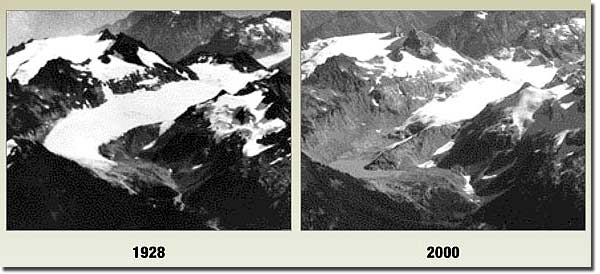
The Rocky Mountains have warmed by 2 degrees Fahrenheit. The snowpack in the Sierras has dwindled by 20 percent and the temperatures there have heated up by 1.7 degrees Fahrenheit. All could lead to dire consequences for the water supply in the Western United States, including California. Scientists have noted that water flow in the West has decreased for the last 20 to 30 years, but had never explained why it was happening. Until now. Scientists from Lawrence Livermore National Laboratory’s Program for Climate Model Diagnosis and Intercomparison in collaboration with Scripps Institution of Oceanography, have pinpointed the cause of that diminishing water flow on a regional scale: humans. The research appears in the Jan. 31 online edition of Science Express. The findings also were presented at last year’s annual fall meeting of the American Geophysical Union. “We looked at whether there is a human-caused climate change where we live, and in aspects of our climate that we really care about,” said Benjamin Santer of LLNL and co-author of the paper. “No matter what we did, we couldn’t shake this robust conclusion that human-caused warming is affecting water resources here in the Western United States.” By looking at air temperatures, river flow and snowpack over the last 50 years, the team determined that the human-induced increase in greenhouse gases has seriously affected the water supply in the West. And the future brings more of the same. “It’s pretty much the same throughout all of the Western United States,” said Tim Barnett of Scripps and a co-author of the paper. “The results are being driven by temperature change. And that temperature change is caused by us.” The team scaled down global climate models to the regional scale and compared the results to observations over the last 50 years. The results were solid, giving the team confidence that they could use the same models to predict the effects of the global scale increase in greenhouse gases on the Western United States in the future. The projected consequences are bleak. By 2040, most of the snowpack in the Sierras and Colorado Rockies would melt by April 1 of each year because of rising air temperatures. The earlier snow melt would lead to a shift in river flows. The shift could lead to flooding in California’s Central Valley. Currently, state reservoirs are filled during the rainy season. As the water is drawn down, the reservoirs are replenished with snow melt from the Sierras. If that snow melts earlier, as predicted in the climate models, the reservoirs could overflow. “We are headed for a water crisis in the Western United States that has already started,” Barnett said. “A couple of decades ahead, we might not have that snowpack, making us more susceptible to flooding.” Santer said the increase in predicted river flow should be a wake- up call to officials that the water supply infrastructure needs to be updated now, as opposed to waiting until the situation is urgent. As for the warming, with the existing greenhouse gas in the atmosphere, the Earth will continue to warm for the next 80-100 years. “For someone who has seven grandchildren, that scares the hell out of me,” Barnett said. “I’ve seen the future and I don’t like it.” Other Livermore contributors included Celine Bonfils, Govindasamy Bala and Art Mirin. Founded in 1952, Lawrence Livermore National Laboratory is a national security laboratory, with a mission to ensure national security and apply science and technology to the important issues of our time. Lawrence Livermore National Laboratory is managed by Lawrence Livermore National Security, LLC for the U.S. Department of Energy's National Nuclear Security Administration. For more information contact Contact:Anne M. Stark Phone: (925) 422-9799 E-mail: stark8@llnl.gov
-
Virgin Galactic herald's 'The Year of the Spaceship with the unveiling of the designs of SpaceShipTwo and WhiteKnightTwo. Virgin Galactic today unveiled the design of its new, environmentally benign, space launch system based on the X Prize winning technology of SpaceShipOne, which successfully flew into space for the third time in October 2004 and won the $10m Ansari X Prize. The construction of the White Knight Two (WK2) mothership, or carrier aircraft, is now very close to completion at Scaled Composites in Mojave, CA and is expected to begin flight testing in the summer of 2008. It is the world’s largest, all carbon composite aircraft; it has a unique high altitude lift capacity, capable of launching SpaceShipTwo and its eight astronauts into sub-orbital space flight. The WK2 mothership is powered by four Pratt and Whitney PW308A engines which are amongst the most powerful, economic and efficient engines available. The WK2 mothership has also been designed to be capable of lifting other payload and launching it into space. Whilst the two vehicles comprising the space launch system have been under construction, Virgin Galactic’s cadre of future astronauts has continued to grow strongly to well in excess of 200 individuals with around 85,000 registrations of interest to fly. Astronaut orientation for spaceflight is progressing well and already 80 of SpaceShipTwo’s first passengers have been through medical assessment and centrifuge training at the NASTAR facility in Philadelphia. Commenting on the unveiling, Burt Rutan, CEO of Scaled Composites, said: “Virgin Galactic produced a demanding output specification for the world’s first private human and payload space launch system. This required us to produce a safe but flexible design capable of multiple applications in new market sectors. I am confident that these vehicles, now in an advanced stage of construction, will achieve just that. I would like to take this opportunity to thank the whole team at Scaled Composites. "Looking up" way up!" is an expression we have shared since the X Prize began and now we are all excited that this year the dream will start to become a very tangible reality for everyone involved." Sir Richard Branson, Founder of Virgin Galactic, added: “The designs of both the mothership and the new spaceship are absolutely beautiful and surpass any expectations for the future of commercial spaceflight that we had when first registering the name Virgin Galactic in 1999. Burt and his team have done a fantastic job and I am also delighted with the wonderful vision that Foster and Partners, working with URS, have shown in the final designs for Spaceport America in New Mexico. Finally, we are all very excited about the prospect of being able to develop a bio-fuel solution for the space launch system and we are looking forward to working with Pratt and Whitney and Virgin Fuels to trial an appropriate bio mix for the PW308A engines that will be powering our new carrier aircraft.” Virgin Galactic will make further announcements regarding the progress of the launch system, development of its markets, the test flying program and start of commercial operations at Spaceport America in due course.
-
I thought you all would like this quote:
-
Soon he will have is own reality show.
-
I heard Osama Obama is an Islamic Fundamentalist
Luke_Wilbur replied to a topic in Campaigns and Elections
This is a bad joke. Barack Obama is Christian and not Islamic. Even if he was Muslim it should not matter. There are many good Muslim people. -
Positive Stories About Iraq Reconstruction
Luke_Wilbur replied to Luke_Wilbur's topic in Middle East Politics
Iraq’s infrastructure is continuing to improve and U.S. assistance projects are having a real impact on the lives of Iraqis, rebuilding vital public service facilities, supporting the emergence of democracy, and establishing a foundation for a strong economy. At a cost of $13.4 billion, in a building program the size of which has not been seen since the reconstruction of central Europe under the post-WWII Marshall Plan, USACE is jumpstarting reconstruction by tending to critical repairs and improvement projects in oil, electricity, potable water and sewerage; much needed facilities for healthcare, education, governance and security; and transportation improvements for roads, railways, bridges, air and sea ports. The World Bank 2004 estimate to rebuild the electrical system is $20 billion. With a U.S. IRRF funding allocation of $4.3 billion, USACE has achieved program goals for providing more power more equitably across Iraq through key infrastructure improvement in electrical generation, transmission, and distribution. Peak daily power generated has exceeded the pre-war level of 4,300 megawatts and is exceeding 9,500 megawatts as more generation is brought on line. Work in the oil sector carried out by USACE at a cost of $1.7 billion has ensured the Iraqi oil industry has the capacity to produce 3 million barrels per day of oil, natural gas production capacity of 800 million standard cubic feet per day, and liquefied petroleum gas (LPG) production of 3,000 metric tons per day to meet domestic need. Projects included key repairs at refineries and gas-oil separation plants, repairing pipelines, reworking oil wells, and overhauling the Al Basrah Oil Terminal offshore in the Arabian Gulf. The Coalition Provisional Authority estimate to rebuild the oil infrastructure in Iraq was $8 billion. The remaining shortfall is being addressed by the Iraqi Ministry of Oil, the South Oil Company and North Oil Company. In the water sector, the goal of 1.1 million cubic meters per day of potable water as the GRD portion set by the Iraq Relief and Reconstruction Fund has almost been reached. An estimated 3.8 million more Iraqis have access to potable water than did before the start of the program. USACE projects range from multimillion dollar water treatment plants--like those completed at Erbil and Nasiriyah--to compact water units provided to rural communities. Across Iraq, 908 water projects are improving living conditions for Iraqis. Currently 718 of the projects have been completed. They range from new wastewater treatment plants, such as the $78 million Phase II of the Fallujah Wastewater System project, to rehabilitation of preexisting facilities and lift stations. -
I like this clip from a gig they did at Wilmer's Park in 1993.
-
Many organizations that I meet are internally driven and are not peering out on what is happenning in their market place. Marketing is very relevant for all business leaders as the principle of knowing who your customer is and pleasing them is important whatever field you work in. Companies need to explain the benefits of their products to their customers and the right marketing tools can help to increase the success of products.
-
Here is a press release from the Satish Dhawan Space Centre, SHAR Antrix Corporation is happy to announce that its second full-fledged commercial launch has been successfully completed today. After the final count down, PSLV-C10 lifted off from the First Launch Pad (FLP) at SDSC SHAR at 09:15 Hrs with the ignition of the first stage. Incidentally this is the 25th Satellite Launch Mission from SDSC, SHAR. The launch of TECSAR was executed under a commercial contract between Israel Aerospace Industries (IAI) and ANTRIX Corporation. It may be recalled that the first major commercial launch of PSLV (PSLV-C8) took place on April 23, 2007, when it successfully launched an Italian astronomical satellite, AGILE. The 300 kg TECSAR satellite was placed into its intended orbit with a perigee (nearest point to earth) of 450 km and apogee (farthest point to earth) of 580 km with an orbital inclination of 41 deg with respect to the equator. TECSAR was placed in orbit 1185 sec after lift off. PSLV has emerged as the workhorse launch vehicle of ISRO with eleven consecutively successful flights so far. Since its first successful launch in 1994, PSLV has launched eight Indian remote sensing satellites, an amateur radio satellite, HAMSAT, a recoverable space capsule, SRE-1, and two primary satellites and six small satellites for foreign customers. Besides, it has launched India’s exclusive meteorological satellite, Kalpana-1, into Geosynchronous Transfer Orbit (GTO). PSLV is also slated to launch India’s first spacecraft to moon, Chandrayaan-1, in 2008. http://www.isro.org/pressrelease/Jan21_2008.htm
-
Management of Israel Aerospace Industries Ltd. (IAI) announced that an advanced imaging satellite produced by IAI, employing synthetic aperture radar (SAR) technology, was successfully launched into orbit today (January 21, 2008, 05:45 Israel time) on an Indian Polar Satellite Launch Vehicle (PSLV). The satellite, under the brand name TECSAR, was launched at the SHAR test field in southeast India in collaboration with a team of Indian and Israeli experts. The launch was carried out in accordance with a cooperation agreement between the Government of India and IAI relating to space activities. The TECSAR's signal was received at the IAI ground station 80 minutes after launch (07:10 Israel time), immediately upon its reaching the station communication range. By all indications so far, the satellite is functioning properly. The satellite is now orbiting the Earth, and IAI's engineers and scientists have commenced the prescribed series of in-orbit tests to verify its performance. Due to the complexity of the TECSAR, as compared to satellites previously produced by IAI, the in-orbit tests are scheduled to continue for several weeks, and the first images are scheduled for receipt 14 days after launch. The TECSAR is the first satellite of its kind developed in Israel, and ranks among the world's most advanced space systems. It carries a SAR payload, designed to provide images during day, night and all weather conditions, including under cloud cover. The satellite is controlled and monitored by an IAI-based ground station. This satellite was designed, built and integrated by IAI's scientists and engineers, with the MBT Space division acting as prime contractor and Elta Systems Ltd., an IAI subsidiary, provided the SAR payload. The project included contributions from other IAI divisions, as well as from leading Israeli hi-tech companies such as Rafael, Tadiran-Spectralink and Rokar. The TECSAR joins an impressive list of satellites developed, produced and launched by IAI. As of today, 11 satellites from the Ofeq, EROS and Amos brands have been launched, including seven satellites currently in orbit. These successes contributed to IAI's recent award of a material contract to develop the Amos 4 communications satellite. Itzhak Nissan, IAI's President & CEO said: "IAI's management is very proud of this achievement, which serves as additional proof of IAI's great technological and administrative capabilities, and of IAI's leadership in the Israeli space industry and other areas of advanced technology." http://www.iai.cospam/sip_storage/files/4/35694.wmv
-
Rob is the only man that I will trust to do electrical work in my home. He is a certified Master Electrician. Better yet, he is a hard and honest worker. I just want to spread the good word. RJBeasley Electric, LLC PO Box 1073 Stevensville, MD 21666 410/604/3950 P 410/604/3948 F
-
Would you want John McCain over Hillary Clinton? Barack Obama? John Edwards?
-
This simple video explains it all. The heart of the issue for striking writers is securing payments from DVD sales and "new media" such as internet downloads of television programs, which most industry experts believe will become the dominant delivery platform within a decade. Maybe we should look at the strike is an opportunity for Americans all over the country to get off their couches and do something more productive with our lives.
-
What do you not like about John McCain?
-
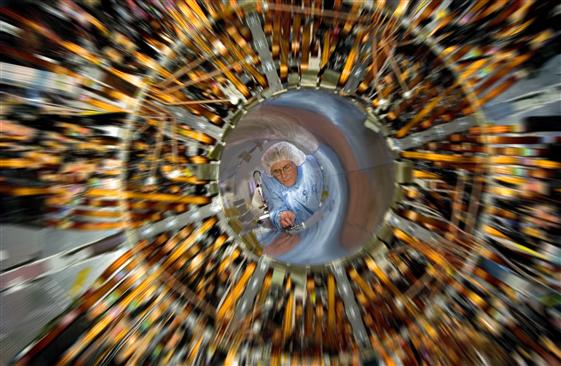
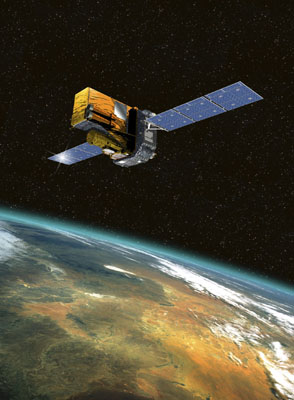
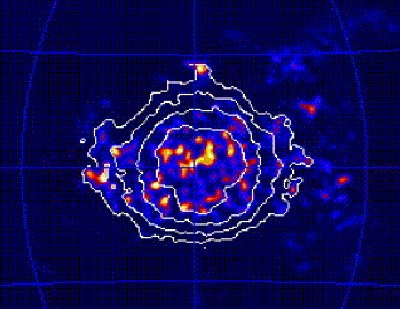
Antimatter, which annihilates matter upon contact, seems to be rare in the universe. Still, for decades, scientists had clues that a vast cloud of antimatter lurked in space, but they did not know where it came from. Science Fiction Shapes the Future One of the best attempts for the public to understand this concept was Star Trek's "Mirror Universe" was first recorded as visited by James T. Kirk and several officers from the USS Enterprise in 2267. This parallel universe coexists with our universe on another dimensional plane. The universe was so named because many people and places seemed to be the exact opposites of their "normal" selves in "our" universe, but with numerous "good" aspects now "evil", and vice versa. Mirror-universe Spock While antimatter propulsion systems are so far the stuff of science fiction, antimatter is very real. The mysterious source of this antimatter has now been discovered "stars getting ripped apart" by neutron stars and black holes. CERN, the European Organization for Nuclear Research, is one of the world's largest and most respected centres for scientific research. Its business is fundamental physics, finding out what the Universe is made of and how it works. At CERN, the world's largest and most complex scientific instruments are used to study the basic constituents of matter - the fundamental particles. By studying what happens when these particles collide, physicists learn about the laws of Nature. The Large Hadron Collider (LHC) is a gigantic scientific instrument near Geneva, where it spans the border between Switzerland and France about 100 m underground. It is a particle accelerator used by physicists to study the smallest known particles – the fundamental building blocks of all things. It will revolutionise our understanding, from the miniscule world deep within atoms to the vastness of the Universe. Within the LHC, the world's largest particle collider, protons do not race around the 27 km ring at near the speed of light of their own accord. Instead they are guided by huge 1700 magnets have been connected together, implying a total of about 40 000 leak-tight welds (1 0km worth!) and 65 000 electrical 'splices' of superconducting cables through eight separate sectors. Each of these sectors must be sealed in a vacuum and cooled to a freezing '271.3°C, just 1.9 degrees above absolute zero. In fact the whole ring consists of a wealth of electrical lines and piping forming an intricate system running the full 27 km of the LHC, which must connected before the beam can run. Two beams of subatomic particles called 'hadrons' - either protons or lead ions - will travel in opposite directions inside the circular accelerator, gaining energy with every lap. Physicists will use the LHC to recreate the conditions just after the Big Bang, by colliding the two beams head-on at very high energy. Teams of physicists from around the world will analyse the particles created in the collisions using special detectors in a number of experiments dedicated to the LHC. What Antimatter All elementary particles, such as protons and electrons, have antimatter counterparts with the same mass but the opposite charge. For instance, the antimatter opposite of an electron, known as a positron, is positively charged. Antimatter is the extension of the concept of the antiparticle to matter, whereby antimatter is composed of antiparticles in the same way that normal matter is composed of particles. For example an antielectron (a positron, an electron with a positive charge) and an antiproton (a proton with a negative charge) could form an antihydrogen atom in the same way that an electron and a proton form a normal matter hydrogen atom. Furthermore, mixing of matter and antimatter would lead to the annihilation of both in the same way that mixing of antiparticles and particles does, thus giving rise to high-energy photons (gamma rays) or other particle-antiparticle pairs. The particles resulting from matter-antimatter annihilation are endowed with energy equal to the difference between the rest mass of the products of the annihilation and the rest mass of the original matter-antimatter pair, which is often quite large. There is considerable speculation both in science and science fiction as to why the observable universe is apparently almost entirely matter, whether other places are almost entirely antimatter instead, and what might be possible if antimatter could be harnessed, but at this time the apparent asymmetry of matter and antimatter in the visible universe is one of the greatest unsolved problems in physics. When a particle meets its antiparticle, they destroy each other, releasing a burst of energy such as gamma rays. In 1978, gamma ray detectors flown on balloons detected a type of gamma ray emerging from space that is known to be emitted when electrons collide with positrons — meaning there was antimatter in space. What exactly generated the antimatter was a mystery for the following decades. Suspects have included everything from exploding stars to dark matter. The debut of antihydrogen An atom of antihydrogen consists of an antiproton and a positron (an antielectron), which makes it the simplest antiatom. Unfortunately, this does not make it any easier to produce in the lab. Persuading the antiprotons and positrons to combine together was a challenge that no one had managed to solve until the PS210 at CERN created the first atoms of antihydrogen in 1995. It was a difficult task both for the physicists and for the operation team at CERN's Low Energy Antiproton Ring (LEAR) - the main machine used for the experiment. The researchers allowed antiprotons circulating inside LEAR to collide with atoms of a heavy element. Any antiprotons passing close enough to a heavy atomic nucleus could create an electron-positron pair; in a tiny fraction of cases, the antiproton would bind with the positron to make an atom of antihydrogen. The process was complicated, time-consuming and required a lot of effort but it led to a ground-breaking achievement. When the announcement of the production of 9 antiatoms at CERN was made early in 1996, the news travelled around the world to be reported in newspapers, on radio and on television. However, the fleeting existence of the antiatoms meant that they could not be used for further studies. Each one existed for only about 40 billionths of a second, travelling at nearly the speed of light over a path of 10 m before it annihilated with ordinary matter. Artificial production The artificial production of atoms of antimatter (specifically antihydrogen) first became a reality in the early 1990s. An atom of antihydrogen comprises a negatively-charged antiproton being orbited by a positively-charged positron. Stanley Brodsky, Ivan Schmidt and Charles Munger at SLAC realized that an antiproton, traveling at relativistic speeds and passing close to the nucleus of an atom, would have the potential to force the creation of an electron-positron pair. It was postulated that under this scenario the antiproton would have a small chance of pairing with the positron (ejecting the electron) to form an antihydrogen atom. In 1995 CERN announced that it had successfully created nine antihydrogen atoms by implementing the SLAC/Fermilab concept during the PS210 experiment. The experiment was performed using the Low Energy Antiproton Ring (LEAR), and was led by Walter Oelert and Mario Macri. Fermilab soon confirmed the CERN findings by producing approximately 100 antihydrogen atoms at their facilities. Now, an international research team looking over four years of data from the European Space Agency's International Gamma Ray Astrophysics Laboratory (INTEGRAL) satellite has pinpointed the apparent culprits. Their new findings suggest these positrons originate mainly from stars getting devoured by black holes and neutron stars. As a black hole or neutron star destroys a star, tremendous amounts of radiation are released. Just as electrons and positrons emit the tell-tale gamma rays upon annihilation, so too can gamma rays combine to form electrons and positrons, providing the mechanism for the creation of the antimatter cloud, scientists think. Integral stands for the International Gamma-Ray Astrophysics Laboratory. Description Integral is the first space observatory that can simultaneously observe objects in gamma rays, X-rays, and visible light. Its principal targets are violent explosions known as gamma-ray bursts, powerful phenomena such as supernova explosions, and regions in the Universe thought to contain black holes. Launch 17 October 2002 (Proton launcher from Baikonur, Kazakhstan). Status: In operation. Journey Integral circles the Earth in a highly elliptical orbit once every three days. It spends most of its time at an altitude higher than 60 000 kilometres - well outside the Earth's radiation belts. It does this to avoid the background radiation effects which would interfere with the measurement of gamma rays. Notes Integral is the most sensitive, accurate, and advanced gamma-ray observatory ever launched. The SPI instrument on board ESA's Integral has performed a search for 511 keV emission (resulting from positron-electron annihilation) all over the sky. The figure represents the results of this search: the all-sky map in galactic co-ordinates shows that 511 keV emission is - so far - only seen towards the center of our Galaxy. The SPI data are equally compatible with galactic bulge or halo distributions, the combination of a bulge and a disk component, or a combination of a number of point sources. Such distributions are expected if positrons originate either from low-mass X-ray binaries, novae, Type Ia supernovae, or possibly light 'dark matter'. Billions and billions The researchers calculate that a relatively ordinary star getting torn apart by a black hole or neutron star orbiting around it - a so-called "low mass X-ray binary" - could spew on the order of one hundred thousand billion billion billion billion positrons (a 1 followed by 41 zeroes) per second. These could account for a great deal of the antimatter that scientists have inferred, reducing or potentially eliminating the need for exotic explanations such as ones involving dark matter. The Gamma-ray Large Area Space Telescope (GLAST) will open this high-energy world to exploration and help us to answer these questions. With GLAST, astronomers will at long last have a superior tool to study how black holes, notorious for pulling matter in, can accelerate jets of gas outward at fantastic speeds. Physicists will be able to study subatomic particles at energies far greater than those seen in ground-based particle accelerators. And cosmologists will gain valuable information about the birth and early evolution of the Universe. GLAST will carry two instruments, the Large Area Telescope (LAT) and the GLAST Burst Monitor (GBM), to study the extreme universe, where nature harnesses energies far beyond anything scientists can achieve in their most elaborate experiments on Earth. In November of 2007 Scientists of the Pierre Auger Collaboration announced that active galactic nuclei are the most likely candidate for the source of the highest-energy cosmic rays that hit Earth. Using the Pierre Auger Observatory in Argentina, the largest cosmic-ray observatory in the world, a team of scientists from 17 countries found that the sources of the highest-energy particles are not distributed uniformly across the sky. Instead, the Auger results link the origins of these mysterious particles to the locations of nearby galaxies that have active nuclei in their centers. The results appearred in the Nov. 9 issue of the journal Science. Active Galactic Nuclei (AGN) are thought to be powered by supermassive black holes that are devouring large amounts of matter. They have long been considered sites where high-energy particle production might take place. They swallow gas, dust and other matter from their host galaxies and spew out particles and energy. While most galaxies have black holes at their center, only a fraction of all galaxies have an AGN. There have been conjectures about its possible link with the production of high energy particles. Scientists think that most of the galaxies present black holes in the centre, with a mass of between one million and thousand million times the solar mass. The one of the Milky Way, our galaxy, has about 3 million solar masses. Galaxies with an active nucleus seem to be those which have suffered any collision with another galaxy or any important disturbance in the last hundred million years. The AGN capture the mass that falls in their gravity field releasing prodigious amounts of energy in particle jets. Auger’s result shows that AGN can produce the most energetic particles in the Universe. Antimatter Cloud Discovered Data from the European Space Agency's "Integral" satellite indicated that the cloud's distribution is similar to that of a group of binary star systems containing black holes or neutron stars. From NASA's article: "The cloud itself is roughly 10,000 light-years across, and generates the energy of about 10,000 Suns. The cloud shines brightly in gamma rays due to a reaction governed by Einstein's famous equation E=mc^2. Integral found that the cloud extends farther on the western side of the galactic center than it does on the eastern side. Integral found certain types of binary systems near the galactic center are also skewed to the west. Because the two "pictures" of antimatter and hard low-mass X-ray binaries line up strongly suggests the binaries are producing significant amounts of positrons." Georg Weidenspointner at the Max Planck Institute for Extraterrestrial Physics and an international team of astronomers made the discovery using four-years-worth of data from Integral. The cloud shows up because of the gamma rays it emits when individual particles of antimatter, in this case positrons, encounter electrons, their normal matter counterpart, and annihilate one another. One signature of positron-electron annihilation is gamma rays carrying 511 thousand electron-volts (keV) of energy. There has been a vigorous debate about the origin of these positrons ever since the discovery of the 511 keV emission from the centre of the galaxy by gamma-ray detectors flown on balloons during the 1970s. Some astronomers have suggested that exploding stars could produce the positrons. This is because radioactive nuclear elements are formed in the giant outbursts of energy, and some of these decay by releasing positrons. However, it is unclear whether these positrons can escape from the stellar debris in sufficient quantity to explain the size of the observed cloud. Integral is currently the only mission that can see both the 511 keV radiation and the hard LMXBs. Weidenspointner and colleagues will be watching keenly to see whether it discovers more LMXBs and, if so, where they are located. “The link between LMXBs and the antimatter is not yet proven but it is a consistent story,” says Weidenspointner. It has real astrophysical importance because it decreases the need for dark matter at the centre of our galaxy. Notes for editors: ‘An asymmetric distribution of positrons in the galactic disk revealed by gamma rays’ by Georg Weidenspointner et al. is being published on 10 January, in the journal Nature. For more information: Georg Weidenspointner, Max Planck Institute for Extraterrestrial Physics Email: Georg.Weidenspointner @ hll.mpg.de The catch? Right now it would cost about One-Hundred-Billion dollars to create one milligram of antimatter. One milligram is way beyond what is needed for research purposes, but that amount would be needed for large scale applications. To be commercially viable, this price would have to drop by about a factor of Ten-Thousand. And what about using antimatter for power generation? - not promising. It costs far more energy to create antimatter than the energy one could get back from an antimatter reaction. Right now standard nuclear reactors, which take advantage of the decay of radioactive substances, are far more promising as power generating technology than antimatter. Something to keep in mind, too, is that antimatter reactions - where antimatter and normal matter collide and release energy, require the same safety precautions as needed with nuclear reactions. Now that they have witnessed the death of antimatter, the scientists hope to see its birth. "It would be interesting if black holes produced more matter than neutron stars, or vice versa, although it's too early to say one way or the other right now," Skinner explained. "It can be surprisingly hard to tell the difference between an X-ray binaries that hold black holes and neutron stars." Weidenspointner, Skinner and their colleagues, detailed their findings in the Jan. 10 issue of the journal Nature.
-
After years of detailed study and analysis, the Food and Drug Administration has concluded that meat and milk from clones of cattle, swine, and goats, and the offspring of clones from any species traditionally consumed as food, are as safe to eat as food from conventionally bred animals. There was insufficient information for the agency to reach a conclusion on the safety of food from clones of other animal species, such as sheep. FDA today issued three documents on animal cloning outlining the agency's regulatory approach – a risk assessment; a risk management plan; and guidance for industry. The documents were originally released in draft form in December 2006. Since that time, the risk assessment has been updated to include new scientific information. That new information reinforces the food safety conclusions of the drafts. In 2001, U.S. producers agreed to refrain from introducing meat or milk from clones or their progeny into the food supply until FDA could further evaluate the issue. The U.S. Department of Agriculture will convene stakeholders to discuss efforts to provide a smooth and orderly market transition, as industry determines next steps with respect to the existing voluntary moratorium. The agency is not requiring labeling or any other additional measures for food from cattle, swine, and goat clones, or their offspring because food derived from these sources is no different from food derived from conventionally bred animals. Should a producer express a desire for voluntary labeling (e.g., "this product is clone-free"), it will be considered on a case-by-case basis to ensure compliance with statutory requirements that labeling be truthful and not misleading. Because clones would be used for breeding, they would not be expected to enter the food supply in any significant number. Instead, their sexually reproduced offspring would be used for producing meat and milk for the marketplace. At this time, the agency continues to recommend that food from clones of species other than cattle, swine and goat (e.g., sheep) not be introduced into the food supply. An animal clone is a genetic copy of a donor animal, similar to an identical twin, but born at a different time. Cloning is not the same as genetic engineering, which involves altering, adding or deleting DNA; cloning does not change the gene sequence. Due to their cost and rarity, clones are intended to be used as elite breeding animals to introduce desirable traits into herds more rapidly than would be possible using conventional breeding. Risk assessment The risk assessment finds that meat and milk from clones of cattle, swine, and goats, and food from the sexually reproduced offspring of clones, are as safe to eat as food from conventionally bred animals. The science-based conclusions agree with those of the National Academy of Sciences, released in a 2002 report. The assessment was peer-reviewed by a group of independent scientific experts in cloning and animal health. They found the methods FDA used to evaluate the data were adequate and agreed with the conclusions set out in the document. The risk assessment presents an overview of assisted reproductive technologies widely used in animal agriculture, the extensive scientific information available on the health of animal clones and their sexually reproduced offspring, and an assessment of whether food from clones or their sexually reproduced offspring could pose food consumption risks different from the risks posed by food from conventionally bred animals. These conclusions were first presented in draft documents over a year ago. Since then, the agency has updated the risk assessment with data that became available, as well as taking into account comments from the public comment period. "After reviewing additional data and the public comments in the intervening year since the release of our draft documents on cloning, we conclude that meat and milk from cattle, swine, and goat clones are as safe as food we eat every day," said Stephen F. Sundlof, D.V.M., Ph.D., director of FDA's Center for Food Safety and Applied Nutrition. "Our additional review strengthens our conclusions on food safety." Risk management plan The risk management plan outlines measures that FDA has taken to address the risks that cloning poses to animals involved in the cloning process. These risks all have been observed in other assisted reproductive technologies currently used in common agricultural practices in the United States. FDA is currently working with scientific and professional societies with expertise in animal health and reproduction to develop standards of care for animals involved in the cloning process. Although the agency is not charged with addressing ethical issues related to animal cloning for agricultural purposes, FDA plans to continue to provide scientific expertise to interested parties working on these issues. Guidance for industry The guidance for industry addresses the use of food and feed products derived from clones and their offspring. It is directed at clone producers, livestock breeders, and farmers and ranchers purchasing clones, and provides the agency's current thinking on use of clones and their offspring in human food or animal feed. In the guidance, FDA does not recommend any special measures relating to the use of products from cattle, swine, or goat clones as human food or animal feed. Because insufficient information was available on clones from other species, e.g., sheep clones, to make a decision on the food consumption risks, the guidance recommends that food products from clones of other species continue to be excluded from the human food supply. The guidance states that food products from the offspring of clones from any species traditionally consumed for food are suitable to enter the food and feed supply.
-
Sorry for the confusion, but I need you to clarify how this can be done in the present system. How can a Republican be President, with a HARDCORE Democrat Vice President? They both run as an independant party ticket? Mike Bloomberg? I think Republicans and Democrats will try to lock him out of the debates. Did you see how the Nevada Court ruled that MSNBC can bar Kucinich from the Presidential Debate. Senior Clark County District Court Judge Charles Thompson vowed to issue an injunction halting the nationally televised debate if MSNBC failed to comply. NBC Universal filed and won an emergency appeal to the Nevada Supreme Court to overturn the judge's decision. I like your idea human, but I just don't see how it would work.
-
So are you talking about having general elections that would give The winner of the most popular vote gets to be President. The runner up gets to be Vice President. I am reminded of the election of 1800 Working closely with Aaron Burr of New York, Jefferson rallied his party, attacking the new taxes especially, and stood for the Presidency in 1800. Prior to the passage of the 12th Amendment, a problem with the new union's electoral system arose. He tied with Burr for first place in the Electoral College, leaving the House of Representatives (where the Federalists still had some power) to decide the election. After lengthy debate within the Federalist-controlled House, Hamilton convinced his party that Jefferson would be a lesser political evil than Burr and that such scandal within the electoral process would undermine the still-young regime. The issue was resolved by the House, on 17 February 1801 after thirty-six ballots, when Jefferson was elected President and Burr Vice President. Burr's refusal to remove himself from consideration created ill will with Jefferson, who dropped Burr from the ticket in 1804 after Burr killed Hamilton in a duel. http://www.washdc.com/2325
-
Investigators from five countries, led by Eric Rignot of NASA's fabled Jet Propulsion Laboratory (JPL), used interferometry radar from four satellites to build a picture of the periphery of Antarctica. They sought to measure the velocities of glaciers that shift ice to the coast from the massive sheets that cover Antarctica's bedrock. They built up a picture of around 85 per cent of Antarctica's coastline thanks to the data supplied by the European Space Agency's two Earth Remoting Sensing (ERS) satellites, the Canadian Radarsat-1 and Japan's Advanced Land Observing satellites. "Most of the mass loss is from the Pine Island Bay sector of West Antarctica and the northern tip of the Peninsula, where it is driven by ongoing, pronounced glacier acceleration. Pine Island Bay host the two largest dischargers of ice in Antarctica, Pine Island Glacier and Thwaites Glacier. "Over the time period of our survey, the ice sheet as a whole was certainly losing mass, and the mass loss increased by 75 percent in 10 years," according to the study, published online by the specialist journal Nature Geoscience.
-
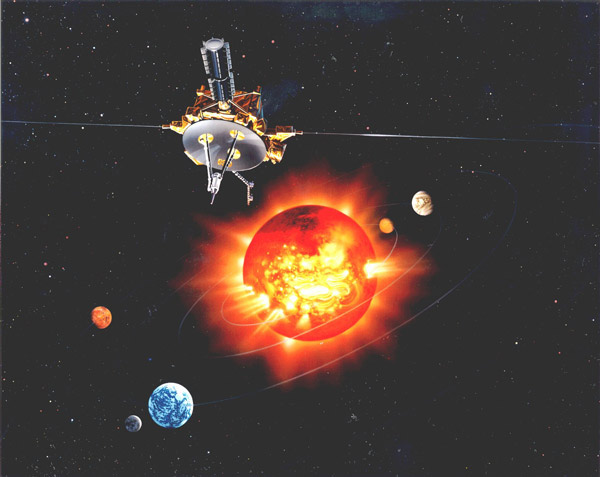
The Ulysses spacecraft today is making a rare flyby of the sun's north pole. Unlike any other spacecraft, Ulysses is able to sample winds at the sun's poles, which are difficult to study from Earth. Ulysses has flown over the sun's poles three times before, in 1994-95, 2000-01 and 2007. Last week, solar physicists announced the first indications of a new solar cycle. Visiting the pole at this time may lead to new insights about solar activity. "This is a wonderful opportunity to examine the sun's north pole within a transition of cycles," said Arik Posner, Ulysses program scientist at NASA Headquarters in Washington. "We've never done this before." Many researchers believe the sun's poles are central to the 11-year ebb and flow of solar activity. When sunspots break up, their decaying magnetic fields are carried poleward by vast currents of plasma. This makes the poles a sort of graveyard for sunspots. Old magnetic fields sink beneath the polar surface 200,000 kilometers deep (about 124,000 miles), all the way down to the sun's inner magnetic dynamo, which generates the solar magnetic field. There, dynamo action amplifies the fields for use in future solar cycles. "Just as Earth's poles are crucial to studies of terrestrial climate change, the sun's poles may be crucial to studies of the solar cycle," said Ed Smith, Ulysses project scientist at NASA's Jet Propulsion Laboratory, Pasadena, Calif. Each previous flyby revealed something interesting and mysterious. One puzzle has been the temperature of the sun's poles. In the previous solar cycle, the magnetic north pole was about 80,000 degrees Fahrenheit (more than 44,000 degrees Celsius), or 8 percent cooler than the south. The current flyby may help solve this puzzle because it comes less than a year after a similar south pole flyby in Feb. 2007. Mission scientists will be able to compare temperature measurements, north versus south, with hardly any gap between them. Ulysses also discovered the sun's high-speed polar wind. At the sun's poles, the magnetic field opens up and allows solar atmosphere to stream out at a million miles per hour. By flying around the sun, covering all latitudes in a way that no other spacecraft can, Ulysses has been able to monitor this polar wind throughout the solar cycle and has found that it is acting a bit odd. "Twelve years ago, just before the previous 'sea change' between solar cycles, the polar wind spilled down almost all the way to the sun's equator. But this time it is not. The polar wind is bottled up, confined to latitudes above 45 degrees, " said Posner. Launched in Oct. 1990 from the space shuttle Discovery, Ulysses is a joint mission of NASA and the European Space Agency.