
Luke_Wilbur
-
Posts
3,523 -
Joined
-
Days Won
3
Everything posted by Luke_Wilbur
-
 ew research, reported this week in the online early edition of the Proceedings of the National Academy of Sciences, finds that coal burning, primarily in North America and Europe, contaminated the Arctic and potentially affected human health and ecosystems in and around Earth's polar regions. The study, titled "Coal Burning Leaves Toxic Heavy Metal Legacy in the Arctic," was conducted by the Desert Research Institute (DRI), Reno, Nev. and partially funded by the National Science Foundation. Detailed measurements from a Greenland ice core showed pollutants from burning coal--the toxic heavy metals cadmium, thallium and lead--were much higher than expected. The catch, however, was the pollutants weren't higher at the times when researchers expected peaks. "Conventional wisdom held that toxic heavy metals were higher in the 1960s and ‘70s, the peak of industrial activity in Europe and North America and certainly before implementation of Clean Air Act controls in the early 1970s," said Joe McConnell, lead researcher and director of DRI's Ultra-Trace Chemistry Laboratory. "But it turns out pollution in southern Greenland was higher 100 years ago when North American and European economies ran on coal, before the advent of cleaner, more efficient coal burning technologies and the switch to oil and gas-based economies," McConnell said. In fact, the research showed pollutants were two to five times higher at the beginning of the previous century than today. Pollution levels in the early 1900s also represented a 10-fold increase from preindustrial levels. Continuous, monthly and annually averaged pollution records taken from the Greenland ice core dating from 1772-2003 produced the results. And although data showed heavy-metal pollution in the North Atlantic sector of the Arctic is substantially lower today than a century ago, McConnell and his research partner, Ross Edwards, an associate research professor at DRI, said there is still cause for concern. "Contamination of other sectors may be increasing because of the rapid coal-driven growth of Asian economies," they wrote in the report. They argued the consequence may be greater risk to the food chain as toxic heavy metals from industrial activities in Asian nations are transported through the atmosphere and deposited in the polar regions. Food chain contamination through toxic metal absorption from both the environment and from consumption of contaminated food sources could make its way to humans, who feed on long-lived land and marine animals such as caribou, seals and whale. "Impacts on human health in the Arctic region haven't been determined," said McConnell. But he suggested cleaner burning coal technologies, or better yet reduced reliance on coal burning, may head off the potential problem.
 -
“The massive wildfires raging in California this summer are symptomatic of a trend toward more fires burning larger areas in the Western United States over the past few decades,” said Dr. Amanda Staudt, climate scientist, National Wildlife Federation. “Global warming can explain part of this trend,” Dr. Staudt said, “because it is feeding longer fire seasons, drier conditions, and more lightning. According to recent studies, the fire season stretches about 78 days longer and individual fires last about 30 days longer.” Increased Risk of Catastrophic Wildfires: Global Warming’s Wake-Up Call for the Western United States details how: * Global Warming Makes Forests More Susceptible to Fire * Past Forest Management Makes Forests More Susceptible to Fire * Large Wildfires Put Unnatural Stress on Ecosystems * Large Fires Make Global Warming Worse * To Reduce Risks and Prepare for Future Fires Although fire is a natural and beneficial part of many forest ecosystems, the number and intensity of fires today is challenging fire managers and forest communities throughout the West. In 2007, for example, 3.2 million acres burned in the Great Basin region of Utah, Nevada, and Idaho, more than 1.1 million acres burned in the Northern Rockies, and a half million acres burned in Southern California. Combined with more than a million acres that burned in southeastern Georgia and northern Florida earlier that year, 2007 was the second busiest fire season since 1960, with more than 9 million acres burned. The increase in big wildfires comes with increased losses and escalating costs to fight these fires. Property losses from wildfires have averaged more than $1 billion over the past decade. Annual federal government expenditures on fire fighting in 2007 were $3 billion, up from about $1 billion in 1999, and typically less than half that for the 1970s, 1980s, and early 1990s. The U.S. Forest Service now spends 45 percent of its annual budget on fire prevention and suppression, up from 20 percent in 2000. Today’s new era of more frequent and intense fires demands new approaches to managing our forests and fire risk. “We must get at the root of the problem and reduce the global warming pollution that fuels more frequent and severe fires,” Dr. Staudt said. At the same time, it is critical to return our forests to more natural conditions and fire-cycles, step up protections for people and properties, and prepare to jumpstart new forest growth.
-
While Florida and Gulf Coast residents bear the brunt of Tropical Storm Fay, the latest science connecting hurricanes and global warming suggests more is yet to come: tropical storms are likely to bring higher wind speeds, more precipitation, and bigger storm surge in the coming decades. “As so many grapple with Tropical Storm Fay’s landfall in the United States, our thoughts and prayers are with those in harm’s way,” said Dr. Amanda Staudt, climate scientist, National Wildlife Federation. “Although no single weather event can be attributed to global warming, it’s critical to understand that a warming climate is supplying the very conditions that fuel the strongest storms,” Dr. Staudt said. “The big picture is that global warming is putting hurricanes on steroids. The latest science paints an alarming picture about what global warming has in store for the U.S. Gulf and Atlantic Coasts: stronger hurricanes, heavier rainfall, and rising sea level.” Increasing Vulnerability to Hurricanes: Global Warming’s Wake-Up Call for the U.S. Gulf and Atlantic Coasts details how: · Hurricanes Are Getting Stronger As Oceans Warm; · More Stormy Weather Lies Ahead; · Increasing Coastal Population and Development Puts People in Harm’s Way; · Hurricanes Affect Wildlife; · Wetlands Are The First Line of Defense Against Hurricanes; and · To Reduce Risks and Prepare for Future Hurricanes The destructive potential of tropical storms in the North Atlantic has increased by about 50 percent since the 1970s. This increase, which primarily reflects longer storm lifetimes and greater storm intensities, is correlated with an increase of 0.9-1.3°F in sea surface temperatures in the main development area for storms in the North Atlantic. In addition, the heights of big waves along the eastern United States have increased by 20 percent during hurricane season since the late 1970s, augmenting the overall storm-related hazards for coastal communities and habitats. Tropical storms are likely to bring higher wind speeds, more precipitation, and bigger storm surge in the coming decades. If global warming pollution continues unabated over the next century, tropical sea surface temperatures could increase another 3° Fahrenheit—three times the warming to date. Warming of the North Atlantic along with other climate changes underway point to increasing risks associated with hurricanes. It has long been known that coastal wetlands and barrier islands serve an important role in absorbing the destructive force of hurricanes, acting as the first line of defense. In particular, wetlands can reduce the amplitude of storm surge by inhibiting the formation and propagation of waves. Scientists have estimated that every mile of wetlands can trim three to nine inches off of a storm surge. However, wetland loss has been a persistent problem along the U.S. Gulf and Atlantic coasts, and will only be exacerbated by increasing sea level. Global warming presents new challenges for managing America’s coastal resources, especially along the Gulf of Mexico and Atlantic seaboard. “We must account for increasing storm activity and rising sea level when managing our coasts, especially by restoring and protecting coastal wetlands, lowlands, and barrier islands that provide crucial natural levees,” Dr. Staudt said. “To prevent the worst impacts of climate change and limit the impacts on communities and wildlife, we must reduce global warming pollution.”
-
he U.S. Food and Drug Administration today approved Nplate (romiplostim), the first product that directly stimulates the bone marrow to produce needed platelets in patients with a rare blood disorder that can lead to serious bleeding. The condition, which usually develops in adults, is known as chronic immune thrombocytopenic purpura (ITP), a disease that results in a low number of platelets, the blood components that help with clotting. In patients with chronic ITP, the immune system is believed to destroy platelets and the patient's bone marrow is often unable to compensate for this loss. "This product is important in that it offers a new approach to the treatment of patients with an uncommon blood disorder who are often very ill," said Janet Woodcock, M.D., director, Center for Drug Evaluation and Research, FDA. The estimated 140,000 people with chronic ITP are prone to bruising and at risk for life-threatening bleeding. Current medical treatment includes corticosteroids and immunoglobulin. Surgery to remove the spleen, a procedure known as a splenectomy, may help some patients. Nplate is approved only for patients with chronic ITP who do not respond sufficiently to current treatments. FDA based its approval on two randomized clinical trials of about 125 patients who had received at least one prior ITP treatment. One study enrolled patients who still had their spleen, the other enrolled patients who did not. During six months of treatment, patients who received Nplate had significantly higher platelet counts and maintained those higher counts compared to those who did not receive the drug. The response to Nplate was higher in those patients who still had their spleen than in those patients who had undergone a splenectomy. In those patients who did not receive Nplate, only one experienced a sustained increase in platelet counts. Safety concerns with Nplate include fibrous deposits in the bone marrow and the possibility that once Nplate is stopped, platelet counts could drop below what they were before beginning treatment. Additional risks include blood clots due to excessive increases in platelets and, if Nplate were given to patients with an abnormal blood condition known as myelodysplasia, a risk for a form of blood cancer known as acute leukemia. Myelodysplasia, which is associated with low platelet counts, predisposes some patients to leukemia. In a study of 44 patients who had myelodysplasia and received Nplate, four patients developed leukemia. Further clinical trials in patients with predisposing conditions for leukemia will be needed to determine whether the development of leukemia may relate to the use of Nplate. Nplate is approved only for use among patients with chronic ITP. A Risk Evaluation and Mitigation Strategy (REMS) has been developed to address the risks of Nplate therapy. Under the Food and Drug Administration Amendments Act of 2007, FDA has determined that a REMS is necessary for the benefits of Nplate to outweigh the risks of the product. The REMS will include a Medication Guide for patients and requires that all prescribers and patients enroll in a special program to track the long term safety of Nplate therapy. Nplate is manufactured by Amgen, Inc. of Thousand Oaks, Calif.
-
A new study by Oregon State University researchers shows that whole body vibration slows the acquisition of fat, and may also positively impact bone density. The publication can be found in the latest issue of the International Journal of Obesity, http://www.nature.com/ijo/journal/vaop/ncu...jo2008111a.html Researcher Gianni Maddalozzo with OSU’s Department of Nutrition and Exercise Science looked at the effects of whole body vibration on 7-month-old rats that were placed on vibration platforms at OSU’s Bone Research Laboratory. Both groups were fed the same diet and kept in a sedentary environment. One group was put on the vibration platform for 30 minutes a day, five days a week for 12 weeks. The other group was not put on the platform. “After 12 weeks, the whole-body vibration group weighed less, showed no changes in lean muscle mass, and had a lower overall percentage of body fat than the age-matched non-vibration group,” Maddalozzo said. “Over the course of the study the vibrated rats were healthy, tolerated the vibration well and exhibited no obvious signs of distress following adaptation to vibration.” Maddalozzo said prevention is often the key to preventing obesity in society. More than 50 percent of adults in the United States do not get enough physical activity. Recent studies suggest that whole-body vibration has been proposed as a potential alternative, or adjuvant, to exercise. Whole-body vibration has been reported to increase energy metabolism through an increased oxygen uptake to values comparable to moderate walking. “Vibration increases energy expenditure,” Maddalozzo said. “It’s equivalent to walking at moderate intensity.” While not a magic bullet solution to weight gain, Maddalozzo said that whole body vibration has promise as another tool that can be used to help keep weight off. And past studies at research institutions such as the Societa Stampa Sportiva in Rome and at Stony Brook University in New York have already shown that vibration platform regimes have a significant effect on bone formation and muscle strength. Building on that research, Maddalozzo is involved in a human study with older adults who have had hip replacement surgery. He plans to publish his results in 2009. “Vibration training has been shown to improve strength and balance in older women,” he said. “Vibration training may give you the same results as a moderate-intensity workout.”
-
Monday, August 25th. One of the most beloved movies in the history of Hollywood was released on this day 69 years ago — “The Wizard Of Oz.” Adapted from the classic children’s book by I. Frank Baum, the movie had both black-and-white and color sequences. It starred Judy Garland, Frank Morgan, Ray Bolger, Bert Lahr, and Jack Haley. The unforgettable witch was Margaret Hamilton. The movie was nominated for six Academy Awards and won two, one of them for best song — “Somewhere Over the Rainbow.” In 1939, when the classic was released, 180,000 people worked in the motion picture industry.
-
Scientists at the Smithsonian Institution have discovered a new species of bird in Gabon, Africa, that was, until now, unknown to the scientific community. Their findings were published in the international science journal Zootaxa today, Aug. 15. The newly found olive-backed forest robin (Stiphrornis pyrrholaemus) was named by the scientists for its distinctive olive back and rump. Adult birds measure 4.5 inches in length and average 18 grams in weight. Males exhibit a fiery orange throat and breast, yellow belly, olive back and black feathers on the head. Females are similar, but less vibrant. Both sexes have a distinctive white dot on their face in front of each eye. The bird was first observed by Smithsonian scientists in 2001 during a field expedition of the National Zoo’s Monitoring and Assessment of Biodiversity Program in southwest Gabon. It was initially thought, however, to be an immature individual of an already-recognized species. Brian Schmidt, a research ornithologist at the Smithsonian’s National Museum of Natural History and a member of the MAB program’s team, returned to Washington, D.C., from Gabon in 2003 with several specimens to enter into the museum’s bird collection. When he compared them with other forest robins of the genus Stiphrornis in the collection, Schmidt immediately noticed differences in color and plumage, and realized the newly collected birds might be unique. “I suspected something when I found the first bird in Gabon since it didn’t exactly match any of the species descriptions in the field guides,” Schmidt said. “Once I was able to compare them side by side to other specimens in our collections it was clear that these birds were special. You, of course, have to be cautious, but I was still very excited at the prospect of possibly having found a new species of bird.” To ensure that the specimens Schmidt collected were a new species, geneticists at the Smithsonian’s National Zoo compared the DNA of the new specimens to that of the four known forest robin species. The results clearly showed that these birds were in fact a separate and distinct species. Discovering an unknown mammal or bird species is far from a common event. Before the 20th century, the rate of discoveries was great—several hundred new species were being described each decade. Since then, however, the pace has slowed and new species of vertebrates are generally only found in isolated areas. Now officially recognized, the olive-backed forest robin brings Gabon’s number of known bird species to 753. Other than its existence, however, little is known to science about this newcomer. There is some knowledge about the species’ habitat choice since all of the birds seen and heard in the wild were found in dense forest undergrowth. Other facts such as specific diet, mating and nesting habits, and the species’ complete habitat range are all things that still need research. “This discovery is very exciting for us,” said Alfonso Alonso, who directs the Biodiversity Program in Gabon. The opportunity to study areas the tropics of Gabon allows scientists to learn about the organisms that live there and in turn develop plans to protect them in the future. “Finding the olive-backed forest robin strongly underscores the importance of our research. This helps us show the conservation importance of the area.” The MAB program is part of the Center for Conservation Education and Sustainability at the National Zoo. This particular study in the program is being conducted in the Gamba Complex of Protected Areas, a coastal region in southwestern Gabon containing the Loango and Moukalaba-Doudou National Parks with a restricted-access industrial corridor between them. Scientists in the program are assessing the species diversity of the region, conducting applied research on the impact of management and development and providing biodiversity education programs locally to guide the regional conservation strategy. The program has partnered with the Gabonese government and Shell Gabon to integrate biodiversity conservation into energy development. The partnership has produced the first in-depth study of rainforest biodiversity in this area of Central Africa, provided relevant scientific advancements on the effects of development on biodiversity and identified conservation strategies for the long-term management of the area. “Although finding an unknown species like the olive-backed forest robin was not the goal of the MAB project,” Schmidt said, “it is definitely a reminder that the world still holds surprises for us.”
-
A new image from NASA's Spitzer Space Telescope tells a tale of life and death, and reveals a rich family history. The striking infrared picture shows a colorful cosmic cloud, called W5, studded with multiple generations of blazing stars. It also provides dramatic new evidence that massive stars - through their brute winds and radiation - can trigger the birth of stellar newborns. "Triggered star formation continues to be very hard to prove," said Xavier Koenig of the Harvard Smithsonian Center for Astrophysics in Cambridge, Mass. "But our preliminary analysis shows that the phenomenon can explain the multiple generations of stars seen in the W5 region." Koenig is lead author of a paper about the findings in the December 1, 2008, issue of the Astrophysical Journal. The image is being unveiled today at the Griffith Observatory in Los Angeles as part of Spitzer's five-year anniversary celebration. Spitzer launched on August 25, 2003, from Cape Canaveral Air Force Station, Fla. The most massive stars in the universe form out of thick clouds of gas and dust. The stars are so massive, ranging from 15 to about 60 times the mass of the Sun, that some of their material slides off in the form of winds. The scorching-hot stars also blaze with intense radiation. Over time, both the wind and radiation blast away surrounding cloud material, carving out expanding cavities. Astronomers have long suspected that the carving of these cavities causes gas to compress into successive generations of new stars. As the cavities grow, it is believed that more and more stars arise along the cavities' expanding rims. The result is a radial "family tree" of stars, with the oldest in the middle of the cavity and younger and younger stars farther out. Evidence for this theory can be seen easily in pictures of many star-forming regions, such as W5, Orion and Carina. For example, in the new Spitzer picture of W5, the most massive stars (some of the blue dots) are at the center of two hollow cavities, and younger stars (pink or white) are embedded in the elephant-trunk-like pillars as well as beyond the cavity rim. However, it is possible that the younger stars just happen to be near the edge of the cavities and were not triggered by the massive stars. Koenig and his colleagues set out to test the triggered star-formation theory by studying the ages of the stars in the W5 region. They used Spitzer's infrared vision to peer through the dusty clouds and get a better look at the stars' various stages of evolution. The results show that stars within the W5 cavities are older than stars at the rims, and even older than stars farther out past the rim. This ladder-like separation of ages provides some of the best evidence yet that massive stars do, in fact, give rise to younger generations. "Our first look at this region suggests we are looking at one or two generations of stars that were triggered by the massive stars," said co-author Lori Allen of the Harvard-Smithsonian Center for Astrophysics. "We plan to follow up with even more detailed measurements of the stars' ages to see if there is a distinct time gap between the stars just inside and outside the rim." Millions of years from now, the massive stars in W5 will die in tremendous explosions. When they do, they will destroy some of the young nearby stars - the same stars they might have triggered into being. W5 spans an area of sky equivalent to four full moons and is about 6,500 light-years away in the constellation Cassiopeia. The Spitzer picture was taken over a period of 24 hours. The color red shows heated dust that pervades the region's cavities. Green highlights the dense clouds, and white knotty areas are where the youngest of stars are forming. The blue dots are older stars in the region, as well as other stars in the background and foreground. Other authors include Robert Gutermuth, now at Smith College in Northampton, Mass.; Chris Brunt of the University of Exeter, England; James Muzerolle, now at the Space Telescope Science Institute, Baltimore, Md.; and Joseph Hora of Harvard-Smithsonian Center for Astrophysics. NASA's Jet Propulsion Laboratory, Pasadena, Calif., manages the Spitzer mission for NASA's Science Mission Directorate, Washington. Science operations are conducted at the Spitzer Science Center at the California Institute of Technology, also in Pasadena. Caltech manages JPL for NASA. Headquartered in Cambridge, Mass., the Harvard-Smithsonian Center for Astrophysics (CfA) is a joint collaboration between the Smithsonian Astrophysical Observatory and the Harvard College Observatory. CfA scientists, organized into six research divisions, study the origin, evolution and ultimate fate of the universe.
-
I put up a consumer advisory warning of phony futures and options websites on WashDC. http://www.washdc.com/phony-futures-and-options-websites The scams all appear to operate in a similar fashion. A fraudulent website claiming to be a registered commodity broker solicits potential customers to invest in futures or options. The website also directs the potential customer to another fraudulent website claiming to be the Federal agency responsible for the oversight of the U.S. commodity markets. Once the customer agrees to invest, the broker directs the customer to open an account with a fictitious exchange, which falsely claims to be regulated by the United States government. The fictitious exchange then directs the customer to wire funds to a bank account for trading. Customers are led to believe that they have opened online trading accounts with the exchange when, in fact, their funds have been misappropriated. The websites are slick and professional looking, and the scams are particularly convincing because they appear to offer investors the assurances of industry and U.S. Federal government oversight. The websites even go so far as to allow potential investors to search regulator databases for registration status and to file complaints. The CFTC warns investors to do independent research before sending funds to a commodity firm. The official websites for the CFTC, the National Futures Association (the self-regulatory organization for the U.S. commodity industry), and the International Organization of Securities Commissions are: Commodity Futures Trading Commission (CFTC). Our website is at http://www.cftc.gov/. You'll find contact information for us on the CFTC website. National Futures Association (NFA). The Federal commodities laws require that virtually every commodity firm doing business with the U.S. public must be a member of the National Futures Association. You’ll find information on how the NFA registers and governs its member firms on its website at http://www.nfa.futures.org/. You can also check registration status of NFA member firms at the NFA website. International Organization of Securities Commissions (IOSCO). You'll find a list of international regulators on the International Organization of Securities Commissions website at http://www.iosco.org/.
-
Positive Stories About Iraq Reconstruction
Luke_Wilbur replied to Luke_Wilbur's topic in Middle East Politics
IA Medical and Dental Clinic Gets It Done CAMP TAJI — The doors opened up early at the Iraqi Army Troop Medical and Dental Clinic, but not until the clinic workers completed the daily task of picking up around the facility and conducting vehicle maintenance. By then, Iraqi Army Soldiers stationed on Taji start to trickle in - sick call slips in hand - to be seen by one of the military nurses for various medical reasons. “On average they see 60 to 70 patients a day,” said 1st Sgt. Timothy Baker, logistics training advisory team member, 152nd Cavalry Regiment, 1st Sustainment Brigade. “They have a very nice facility here and they do very good work.” Like any other military medical treatment facility, Iraqi Soldiers enter, check-in and take a seat in the waiting room. One by one they are called in to get their vital signs read and have their names entered into the medical database. Then they are either treated on the spot or referred to the emergency department on the other side of the building. When you enter the emergency department, you see the Iraqi Army nurses treating fellow Soldiers, doing everything from an intravenous injection, to reading an electrocardiogram, to administering an X-ray. These soldiers within the facility possess very critical and much needed skills that the Iraqi Army is in short supply of. For example, 1st Lt. Bahaa, is just the second dentist in the Iraqi Army, and sees approximately 10 to 15 Soldiers a day. Their needs range from fillings, tooth reconstruction, cleaning and sometimes emergency cases. “I am very proud to serve in the Iraqi Army,” said Bahaa. Another part of the clinic, the mortuary affairs department, just moved into a newly built facility next door where they also can facilitate up to 56 bodies, if needed, on any given day. What makes this so significant is that this specific department is the first one to be built in Iraq and serves the entire region. Their mortuary affairs department also operates a “Wounded Warriors” program that takes care of Iraqi Soldiers wounded or injured in combat. These Iraqi Army Soldiers of the Troop Medical and Dental Clinic prove on a daily basis that they are committed and ready for the challenges that lie ahead. They do their jobs and they do them very well. -
Hedge Fund Trader Paul Eustace and Philadelphia Alternative Asset Management Co. Ordered to Pay More Than $279 Million to Defrauded Customers and More than $20 Million in Civil Monetary Penalties in CFTC Action The U.S. Commodity Futures Trading Commission (CFTC) today announced that Paul Eustace of Ontario, Canada, was ordered to pay more than $279 million in restitution and a $12 million civil penalty, based on an order that resolves a CFTC enforcement action against him for defrauding commodity pool participants in four pools that he managed. The court also entered an order of default judgment against the commodity pool operator that Eustace controlled, the Philadelphia Alternative Asset Management Co. (PAAM), imposing permanent trading and registration bans, requiring payment of restitution of approximately $276 million, subject to offset by prior disbursements and payments by Eustace, and imposing an $8.8 million civil monetary penalty. The supplemental consent order, entered by the Hon. Michael M. Baylson of the U.S. District Court for the Eastern District of Pennsylvania on August 13, 2008, follows a July 13, 2007 consent order of permanent injunction against Eustace that enjoins Eustace from further violations, and imposes permanent trading and registration bans. “This concludes a successful effort by our Division of Enforcement to stop fraud in its tracks, return as much money as possible to defrauded investors, and to bring wrongdoers to justice,” said CFTC Acting Chairman Walter Lukken. The orders arise out of a CFTC complaint filed on June 21, 2005, and later amended, against Eustace and PAAM. (See CFTC Press Release 5091-05, June 29, 2005.) At the outset of the litigation, the CFTC’s action froze all the assets under the control of PAAM and Eustace and preserved more than $70 million for return to pool participants. The CFTC also obtained the appointment of a receiver to recover and distribute funds to defrauded participants. Through related receivership litigation, an additional $96 million has been obtained to date for the benefit of defrauded pool participants. Defendants’ restitution obligation shall be offset by any funds distributed through the receivership. As alleged in the amended complaint, and as the 2007 consent order found, from at least the spring of 2001 through June 2005, Eustace fraudulently operated four commodity pools: the Option Capital Fund LP (Option Capital Fund); and, through PAAM, the Philadelphia Alternative Asset Fund, L.P. (LP Fund); the Philadelphia Alternative Feeder Fund LLC; and the Philadelphia Alternative Asset Fund, Ltd., an offshore fund with over $250 million in assets. During this time, Eustace incurred losses of approximately $200 million trading commodity futures and options either in accounts held in the name of the funds or in his name. Eustace concealed those losses by issuing or causing to be issued, false account statements reflecting highly and consistently profitable trading results. Eustace also misappropriated assets of the Option Capital and LP Funds and received incentive and management fees through his fraudulent operation of the pools. Eustace was also charged with fraudulent solicitation and registration violations. In December 2007, the CFTC issued a related order filing and settling failure to supervise and recordkeeping charges against MF Global, Inc. (MFG), a registered futures commission merchant, and Thomas Gilmartin, a former associated person of MFG relating to their mishandling of certain trading accounts managed by Eustace and PAAM that sustained losses of approximately $133 million. MFG and Gilmartin paid collectively $2.25 million in civil monetary penalties and Gilmartin agreed never to seek registration with the Commission. (See CFTC Press Release 5427-07, December 26, 2007.) The following CFTC Division of Enforcement staff members are responsible for this case: Gretchen L. Lowe, Michael J. Otten, Kara Mucha, Glenn I. Chernigoff, Richard B. Wagner, and Vincent McGonagle. Here is more evidence that some crooked market manipulators not only hurt consumers, they hurt investors and employees as well.
-
What about Wesley Clark, Tom Ridge, and Joe Lieberman?
-
I spoke with Angela again today and she apoligized for not getting back with me and told me that she has spoken to the owner of the vacant property on 21 T Street. She also said that the Deputy Director is now involved in resolving the problem. When I asked what the name of the Deputy Director Angela would not give the name. She stated that her manager Pamala Payne is now taking handling this case. Hopefully, something will be resolved soon. It has been three months to get the District to do anything about this problem to our neighborhood.
-
The Bigfoot is claimed to have been found in the woods of northern Georgia by Matthew Whitton and Rick Dyer, and the claim is being supported by a Bay Area Bigfoot researcher Tom Biscardi DNA evidence and photo evidence of the creature will be presented in a press conference on Friday, August 15th from 12 Noon to 1:00pm at the Cabana Hotel-Palo Alto at 4290 El Camino Real in Palo Alto, California, 94306. The press conference will not be open to the public. It will only be open to credentialed members of the press. Here is the release Here is a picture of the bigfoot corpse http://www.searchingforbigfoot.com/
-
Hugo Chávez’s radical course and increasingly autocratic Bolivarian revolution are under growing pressure from former supporters alienated by government mismanagement, food shortages, inflation, public insecurity and corruption. Venezuela: Political Reform or Regime Demise?*, the latest report from the International Crisis Group, says there is mounting resistance to Chávez’s push to merge his coalition’s parties into a new United Socialist Party of Venezuela (PSUV), and concern about his foreign policy and further concentration of power in the president’s hands. If he fails to compromise and govern more transparently and inclusively, November municipal and regional elections could repeat the dramatic political setback Chávez suffered when his sweeping constitutional reform was defeated in a referendum last December. “The pro-Chávez movement is losing momentum. It has become bureaucratic, corruption is rampant, and the government’s capacity to manage the country is poor”, says Mauricio Angel Morales, Crisis Group’s Andean region Senior Analyst. “Regional and local grassroots are increasingly disappointed by the top-down style of the new PSUV party, which also is under mounting pressure from the smaller chavista groups”. Many Venezuelans are dissatisfied with Chávez’s foreign policy. Massive arms deals, generous cooperation with allies and intrusive diplomacy throughout Latin America, including support for radical armed groups such as the Colombian FARC, risk isolating the country internationally. Since his landslide second re-election in December 2006, Chávez has sought to accelerate implementation of his “socialism of the XXIst century”. The government-controlled National Assembly passed an “enabling law” (ley habilitante), which grants him full legislative powers until the end of July, and he proposed sweeping reform of the 1999 constitution. Had it been approved in the referendum, the latter would have removed limitations on presidential re-election as well as paved the way for centralised education; further politicisation of the military; recentralisation of government through a new territorial and political order; and strengthening of communal councils charged with administering the executive-led social welfare programs (misiones). “It is time for Chávez to change his radical course, regain the trust of a good part of his movement’s former social base, seek compromise with the democratic opposition and govern far more efficiently”, says Markus Schultze-Kraft, Crisis Group’s Latin America Program Director. “Only by ending attempts to drastically alter the 1999 constitution is Chávez likely to return Venezuela to democratic stability”.
-
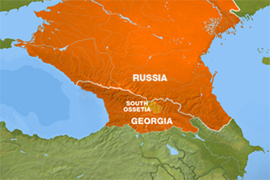
On August 7, 2008 Georgian forces entered South Ossetia in an attempt to bring the region under government control. On August 8, Russian military forces retaliated by entering South Ossetia and launching a series of airstrikes against Georgian forces. Due to the intensive war activity in South Ossetia there are controversial reports about the casualties on both sides, targets which have fallen under aerial attacks, troop movements and the current front line between the Georgian and Russian-Ossetian combat groupings. Here is Russian Governments position. Here is the Georgian Government's Position
-
Listen to the Mermen and get a new perspective on life. http://www.Mermen.net
-
There has been an advertisement running throughout the web. Who's To Blame For $4 Gas? VOTE NOW I clicked on the ad and was taken to http://www.moneyandmarkets.com/newsletter/default97.aspx When you enter your “Primary Email Address” below to vote, you’ll receive a complimentary report on “Investing In Oil” in your inbox. You’ll also receive Money and Markets daily e-letter, which brings you the latest news, analysis and insights that give you updates on today’s most exciting, and profitable investments and opportunities. I gave them my Name and Email to see the poll. Weiss Research gave me the following options: Who’s to blame for $4 gas? A. The falling dollar because oil is priced in US dollars. So when the dollar falls, it allows other countries to buy more oil which drives up demand and prices. B. No one. This is just the free market and the natural laws of supply and demand in effect. C. Emerging countries like China and India - whose need for oil has increased dramatically in just the last year or two. They are buying every barrel they can lay their hands on. D. OPEC and Big Oil - conspiring together so that they can rake in even bigger, record-breaking profits this year than ever before. E. We the consumer - who choose to buy gas guzzling SUV’s instead of using public transportation or buying a smaller, more fuel friendly car. Here are the results. A. The falling dollar because oil is priced in US dollars. So when the dollar falls, it allows other countries to buy more oil which drives up demand and prices. 23% (12000 votes) B. No one. This is just the free market and the natural laws of supply and demand in effect. 11% (5569 votes) C. Emerging countries like China and India - whose need for oil has increased dramatically in just the last year or two. They are buying every barrel they can lay their hands on. 20% (10547 votes) D. OPEC and Big Oil - conspiring together so that they can rake in even bigger, record-breaking profits this year than ever before. 32% (16909 votes) E. We the consumer - who choose to buy gas guzzling SUV’s instead of using public transportation or buying a smaller, more fuel friendly car. 14% (7265 votes) Total Votes: 52287 Money and Markets e-newsletter is published by Weiss Research, Inc. Weiss Research, Inc. is strictly a research publishing firm and does not provide individual investment advice to its subscribers. The information we publish is based on our opinions plus our statistical and financial data and independent research. Although we make every effort to provide the most accurate and updated information possible, our information cannot take into consideration your personal finances and goals, and therefore is not intended to be used as customized recommendation to buy, hold, or sell securities, or engage in any trading strategy. Such recommendations may only be made by a personal advisor or the broker you select. COLLECTION AND USE OF DATA Our site's registration form requires users to give us contact information (such as name and email address), unique identifiers, and demographic information (such as sex or age). We use this information to enhance the site so that it can offer you a more personalized experience. We also use the information to communicate information about our company, promotional material such as contests, questionnaires and surveys, and promotional material from some of our partners. Users may opt-out of receiving future mailings by using the tool explained in the "Updating and Removal of Data" section below. Unique identifiers are collected to verify the user's identity, for use as account numbers in our record system, and for other purposes. Demographic profile data is also collected at our site. We use this data to tailor the user experience, showing you content that is most likely to be of interest to you, and displaying the content according to your preferences. This information may be shared with our affiliates or third-party service providers such as fulfillment centers, mailing houses, event providers, and customer support organizations.
-
You are sooooo right. Thanks for that post. I am now understanding why the oil and natural gas companies are against excessive speculation betting that the price of oil will go down. This has to be one of the biggest gambles in history. SEMGROUP owes the following to each creditor: BP Oil Supply $159,004,586.33 Need to call Dan Rosen 630-836-4544 Sunoco Partners Marketing & Terminals, LP $88,894,558.05 Need to call Tony Gallo 215-977-6897 PIMCO $86,000,000.00 Need to call Mark Afrasiabi 949-720-6052 Valero, L.P. $79,256,580.33 Need to call Belinda Haecker 210-345-2064 Western Asset Management Company $77,000,00.00 Need to call Gibson Cooper 626-844-9672 ConocoPhillips $74,178,603.57 Need to call Craig Cooper 918-661-1559 Noble Energy, Inc. $60,606,785.99 Need to call Dan Cooper 281-876-8844 Plains All American Pipeline $59,810,094.61 Need to call Mike McBride 713-646-4178 Merrill Lynch Asset Management $55,000,000.00 Need to call Paul Sharkey 212-449-9208 National Refinery Association $53,733,667.49 Need to call Mary Minor 620-241-2340 Central Crude Corporation $52,196,576.53 Need to call Sally Phillips 316-337-8378 Husky Energy Marketing Inc $50,137,775.70 Need to call Steve Downing 403-298-6727 Crescent Point Energy Trust $42,528,684.71 Need to call Barb Berry 403-815-4839 Crude Marketing & Transportation $40,841,569.10 Need to call 9185856790 ChevronTexaco Corp. $37,239,527.96 Need to call Brian DePriest 8328545278 Alon USA, LP $36,455,472.13 Need to call Michael Dodson 9723673621 Eaton Vance Management $28,000,000.00 Need to call David Zimmerman 6175988107 Bain Capital / Sankaty $27,500,000.00 Need to call David Stein 6175162690 Apache Canada LTD. $27,150,273.21 Need to call John Chung 7132966615 Fountain Capital Management $27,000,000.00 Need to call Zachary Hamel 9133452766 Arc Energy Trust $26,248,628.22 Need to call 4035038600 Muzinich & Company $25,000,000.00 Need to call Anthony Iorfino 2122040092 Legal and General Investment Management $25,000,000 Need to call David North 442075286676 Teppco Crude Oil, LLC $24,872,655.56 Need to call Gary Yager 7133813639 Deutsche Capital $24,000,000.00 Need to call Angelo D'Urso 2122505843 Pioneer Natural Resources USA, Inc. $23,206,840.23 Need to call Jamie Fuselier 9729693671 Cimmaron Transportation $22,816,845.67 Need to call John Schmitz 9406654373 Nexen Marketing Inc. $22,348,620.93 Need to call Fred Pacione 4036994075 Cenral Kansas Crude, LLC $21,778,328.71 Need to call 6206729484 Royal Dutch Petroleum $17,492,528.71 Need to call Miguel Correa 7132305120 I listed all the contact names in hopes that some of you give them a call and get the whole story and what is their opinion of oil futures speculation. Also what dates was the future contract made with the creditor will be important.
-
I always love these spams. They are too funny to believe. When I hit reply I got the sender as j.irami@live.com
-
A recent independent study found that curriculum created by the Bill of Rights Institute increased student knowledge by more than 50% and is more effective than other comparable curriculum. The evaluation and analysis of Criminal Procedure Lessons from The Bill of Rights for Real Life was conducted by Evaluation Solutions through a grant from the Fred C. and Mary R. Koch Foundation. Teachers volunteered to teach from Criminal Procedure lessons from The Bill of Rights for Real Life curriculum or from other lessons. Students were given pre- and post-tests designed to measure specific knowledge of ideas and facts related to the Fourth, Fifth, and Eighth Amendments. Student test scores increased 52% after being taught with the Bill of Rights Institute lessons, indicating significant knowledge gain. Students went from a failing grade of 48% on the pre-test to an average grade of 73% on the posttest. The increased scores and knowledge gain from the Bill of Rights Institute lesson plans greatly exceeded the scores by students taught with other lessons. Students taught with other lesson plans only increased their scores by 34%. “This study is an important measure for the Bill of Rights Institute as it continues to provide teachers effective curriculum materials to educate the next generation of American citizens,” commented Victoria Hughes, President of the Bill of Rights Institute. The Bill of Rights Institute was founded in 1999 with a mission to educate young people about our country’s Founding principles articulated in our Founding documents, and how they continue to affect and shape a free society. http://www.billofrightsinstitute.org
-
So much for Walter Lukken and Goldman Sachs saying there is no manipulation in the futures market.
-
This is pretty scary. Russian energy majors have signed co-operation agreements with Venezuela's state-owned oil and gas company, PDVSA, during President Hugo Chavez's two-day visit to Moscow. Russia and Venezuela are working towards the formation of a strategic alliance in the energy sector, said Chavez after talks with Russian President Dmitry Medvedev. Moreover, Dmitry Medvedev and Hugo Chavez have promised to take personal control over the implementation of key joint oil and gas projects. To watch Hugo Chavez's summing up the results of his two-day visit to Moscow, please follow the link Energy deals The Russian-British oil venture TNK-BP and PDVSA have agreed on the joint study of the Ayacucho-2 area in the Orinoco oil belt in Venezuela. Russian energy giant Gazprom has signed a deal with PDVSA on the appraisal and certification of the Ayacucho-3 oil fields. Lukoil and PDVSA have signed a memorandum of understanding and an agreement on joint exploration in the Junin-3 area and also in the Orinoco oil belt. Medvedev commented that agreements signed by Gazprom, Lukoil and TNK-BP with Venezuela's PDVSA create "a serious base for massive investments to develop co-operation in all dimensions." He added Russia and Venezuela are making a considerable contribution to ensuring energy security, and plan to step up this co-operation for the good of all nations. "Russia and Venezuela are two large oil and gas nations. Energy security, in particular, depends on our co-ordinated actions. We will work together in a co-ordinated and correct manner," he said. Medvedev stressed that bilateral co-operation in this area "is not directed against any states." "It is mutually beneficial," he said. Arms co-operation No arms deals were signed this time round but since 2003 Venezuela has racked up contracts worth over $US 4 billion for Russian weapons and there are plans to buy more. Venezuela wants to equip its armed forces with Russian submarines, helicopters and anti-aircraft systems. The country has already bought over 50 combat helicopters, 24 Su-30MK2 fighters, and 100,000 Ak-103 rifles from Russia, and also holds a licence for their production. Global issues Dmitry Medvedev stated that both Russia and Venezuela have very similar positions on key international problems. "What’s also important is that the positions of our countries concerning the priority of international law and the central role of the UN in search of joint answers to the tough questions of today coincide," Medvedev stressed. Economic ties Dmitry Medvedev referred to the development of economic ties between the two countries, as well as the need to optimise Russian-Venezuelan trade turnover. "This is not the limit. We are talking about enriching our relations with good new projects," he said. Putin-Chavez meeting President Chavez also discussed political, economic and defence co-operation with the Russian Prime Minister at Putin's residence near Moscow. Putin said energy is one of their spheres of co-operation and both Russia and Venezuela are making a substantial contribution to the world energy market. "Russia-Venezuela relations have a solid foundation and are developing successfully," he added. "First and foremost, we co-operate in transport, space exploration, high technology and, certainly, in military-technical spheres," Putin said. Putin also said he would visit Venezuela. "I remember your invitation, and I will certainly pay a visit," he told Chavez. http://globalresearch.ca/index.php?context=va&aid=9680
-
Positive Stories About Iraq Reconstruction
Luke_Wilbur replied to Luke_Wilbur's topic in Middle East Politics
The U.S. share of reconstruction spending in Iraq dropped from 60% in 2003-2004 to about 50% in 2007. The GOI budgeted $13 billion for capital investment in 2008, and it now bears the burden for reconstruction spending in Iraq. Further progress on the reconstruction front in Iraq depends on the GOI’s capacity to execute its capital budgets. In 2007, Iraq’s ministries spent just over 50% of their capital budgets, while the provinces spent about 30%. We are moving forward. -
SEND THE NATIONAL GUARD INTO TRINIDAD, ETC.
Luke_Wilbur replied to Psycho's topic in District of Columbia Politics
Forget Iraq, the battle is several blocks from our United States Capitol building. Tonight, I went to my house located in Eckington and all the roads were blocked. I found out there was a third shooting this week. It is getting crazy here. The police officer said to me that this area is getting worse. Kids are using the darkness of McKinley Tech's grounds to go over and fight a rival gang on Todd Street. North Capitol is the dividing line between the two gangs. We need cameras in my neighborhood. Residents are getting very scared. Mayor Fenty and Council member Thomas need to step it up. The District should be a model city for our great nation. Instead it is becoming an embarrassment.