
Luke_Wilbur
-
Posts
3,523 -
Joined
-
Days Won
3
Everything posted by Luke_Wilbur
-
The question is whether an event is chaotic or cyclic. I believe that there are patterns in everything. Some are cyclic. Some are chaotic. The cyclic patterns are based on the laws of the known universe. The chaotic patterns are based on theories of what is not known. When a chaotic and cyclic patterns meet a cosmic event occurs. Size of the event depends on how much energy is dispersed. Some events are tracked and measured. Some events have been lost in the vastness of space and time. Faith gives me a reason to believe that God is the thread of all patterns. Recorded history helps us track its design.
-

Human Swine Influenza Outbreak Investigation - Symptoms
Luke_Wilbur replied to a topic in Infectious Diseases
As the threat of swine flu gains more public attention and media coverage, it’s likely that children will hear something about it on television or at school. Here are some tips to help you minimize your child’s fears while providing tips that can help him or her stay healthy. Flu Worries and Your Child's Mental Health Children are happiest when they can continue in the routines that make them feel comfortable and safe. Therefore, keeping your child inside and restricting social interactions with peers when flu rumors begin to circulate may be stressful for your child. By staying informed and teaching sensible precautions, you can keep life as normal as possible and help your child feel more secure. What to Say Find out what they know. Ask your child to tell you what he or she already knows about the topic. Having your child tell you what she or he has heard, instead of you telling them about it, lets you know what misconceptions or misunderstandings you may need to address. Explain the facts. Your child may have a lot of questions about swine flu. Clearing up your child’s confusion and providing the facts may make him or her less worried. Tailor the information to your child’s developmental level, using words you know he or she will understand. (see simple definitions below) For example, you may wish to explain that swine flu is a sickness that pigs can get and these germs that cause pigs to become ill can change over time to become a sickness that people can get and pass to each other. Be sure to explain that doctors and the government are working to protect everyone, and will be ready to treat children and families if the flu continues to spread quickly. Talk about hygiene. Having a discussion about flu provides an excellent opportunity to reinforce good hygiene practices, as they will not only help protect a child during a flu pandemic, but will also keep him or her healthier in general. Teach your child to wash hands frequently. The correct way to wash hands is to rub them vigorously together for 10 to 15 seconds using soap and water. Explain that hands pick up invisible little germs that can make people sick. The germs get inside when they touch their eyes, nose, or mouth. Washing with soap and water gets rid of the germs before they can make them sick. Another option is to use an alcohol-based hand sanitizer. Sanitizers with at least 70% isopropyl alcohol or 60% ethyl alcohol are effective. Teach your children to cover coughs and sneezes with tissues. Explain that the germs are caught in the tissue and can’t get out where they can make other people sick. Make sure they know that they should throw away the tissue in a garbage and then wash their hands. Since many children do not carry tissues, you may want to remind them that if they have no tissue, it is ok to sneeze or cough into their elbow, so their hands don’t get dirty and so the germs do not spread into the air. Teach your children to be careful not to get too close to others if he or she feels sick, or if the other person feels sick. Teach your child to practice good general health habits that help them stay healthy, like eating a balanced diet, exercising, and getting enough rest. Flu Vaccine If you take your child to get a yearly flu vaccine, he or she may wonder why everyone can’t simply be vaccinated to keep from getting swine flu. If your child asks, explain that scientists have just started to work on developing a vaccine, but it can take several months to create it and make sure it works against this flu. Containing the Flu It is important that you help your child understand the directions being given by the schools, health authorities, and government to help prevent further spread of the flu and why they are important. Understanding that everyone, including children, can play a role in helping to prevent further spread of the flu can assist your child in feeling like he or she is contributing and helping the community. If your child is not feeling well and seems to have symptoms of the flu, call your pediatrician. Follow your pediatrician’s recommendations, including guidance about when to stay home from school. Make a Plan If a pandemic flu does emerge, anticipate that your child’s routines may be interrupted. You may even find that authorities advise you to stay in your home to prevent the spread of the illness. Think about what you will need in the event that this occurs and make a plan for your family so that you are prepared. Stock up on food, water, and medications. Also have games, activities, and ways to communicate with friends (like over email) ready for your children to make the time spent confined at home less stressful. Providing developmentally appropriate art, play, and other expressive activities can assist your child to express how they feel and improve your communication with them while also providing entertainment or distraction while home. Stay informed of recent developments. Check http://www.pandemicflu.gov/ or the Centers for Disease Control and Prevention website at http://www.cdc.gov/ frequently for updates. Use national and local pandemic hotlines that will be established if there is a global influenza outbreak. Listen to radio and television, and read media stories about the pandemic and follow the instructions of your local health authorities. Common flu terms defined Pandemic A pandemic is a global disease outbreak. The disease spreads easily from person to person and can sweep across the country and around the world in very short time. Pandemic flu Human flu that causes a global outbreak of serious illness. This is different from the common flu because there is little natural immunity to this strain of the flu. This disease can spread easily from person to person. Seasonal (or common) flu A respiratory illness that can be transmitted person to person. Most people have some immunity, and a vaccine is available. Swine Influenza (swine flu) A respiratory disease of pigs caused by type A influenza viruses that cause regular outbreaks in pigs. People do not normally get swine flu, but human infections can and do happen. There is no human immunity and currently no vaccine is available, although scientists are working to develop one. -
Human Swine Influenza Outbreak Investigation - Symptoms
Luke_Wilbur replied to a topic in Infectious Diseases
FDA 1-888-INFO-FDA CDC 1-800-CDC-INFO cdcinfo@cdc.gov -
Human Swine Influenza Outbreak Investigation - Symptoms
Luke_Wilbur replied to a topic in Infectious Diseases
FDA is working to address human infection with the 2009 H1N1 flu virus as part of a team led by the Department of Health and Human Services. FDA is responding to this threat by: working with other government agencies and manufacturers on a series of issues related to antiviral medications growing the 2009 H1N1 flu virus and preparing to make vaccine seed lots, which may be used eventually to produce a safe and effective vaccine helping to prepare reagents needed for vaccine production and coordinating closely with other public health agencies for clinical development and testing accelerating access to new diagnostic tools for this 2009 H1N1 flu virus. -
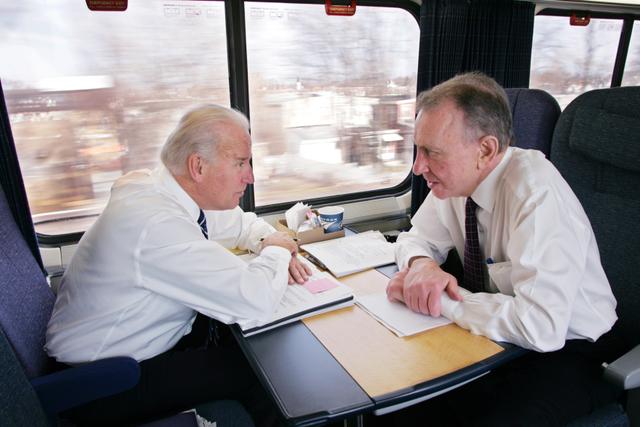
Senator Specter and the Vice President shared train ride to Philly. I am sure that politcal views and party support were discussed. Photo: Sharon Farmer
-
Coca-Cola today announced it is investing more than $60 million to build the world’s largest plastic-bottle-to-bottle recycling plant and support recycling in the U.S. These investments are part of a comprehensive goal to recycle or reuse 100 percent of the Company’s PET (polyethylene terephthalate) plastic bottles in the U.S. “We have set an ambitious goal to recycle or reuse all the plastic bottles we use in the U.S. market,” said Sandy Douglas, president Coca-Cola North America. “Our investments in recycling infrastructure, coupled with our work on sustainable package design, will help us reach this target.” World’s Largest Bottle-to-Bottle Recycling Plant The Coca-Cola Company and United Resource Recovery Corporation (URRC) will build the world’s largest plastic bottle-to-bottle recycling plant in Spartanburg, S.C. The plant will produce approximately 100 million pounds of food-grade recycled PET (polyethylene terephthalate) plastic for reuse each year – the equivalent of producing nearly two billion 20-ounce Coca-Cola bottles. “The long-term sustainability of our business depends on our ability to ensure the sustainability of our packaging,” said Mr. Douglas. “This new recycling facility represents a significant milestone as we work to advance recycling in the U.S. and ensure a strong end-market for our PET packaging.” The new 30-acre Spartanburg plant will open in 2008 and will be fully operational in 2009. It is part of a continuing effort by Coca-Cola to support recycling in key markets. Coca-Cola also has invested in recycling facilities in Switzerland, Mexico, Austria and the Philippines. Recycling plastic for reuse yields financial benefits, requires less energy than producing bottles with virgin materials, and reduces waste and greenhouse gases. Over the next ten years, the Spartanburg recycling plant is expected to eliminate the production of one million metric tons of carbon dioxide emissions – the equivalent of removing 215,000 cars from the road. Coca-Cola has been focused on PET recycling and reuse since introducing the first beverage bottle made with recycled material in 1991. Since then, Coca-Cola has worked with URRC and other partners to accelerate the development and commercialization of environmentally-efficient and sustainable recycling technologies throughout the world. Today, The Coca-Cola Company uses recycled content in more than 17 countries, including the United States. “Coca-Cola has staked a clear leadership position in its approach to sustainable packaging,” said Kate Krebs, executive director, National Recycling Coalition (NRC). “The new Spartanburg plant represents an end-to-end recycling model that is world class and that I hope other industries will follow.” For a video overview of the plant, visit http://www.eventstreams.com/recycling/ Coca-Cola Recycling While PET has a high value as a recyclable in the marketplace, not enough material is recovered to meet the increasing demand for recycled content. To help bridge this gap and ensure ready access to recycled material, Coca-Cola Enterprises, Inc., the largest Coca-Cola bottler in North America, and The Coca-Cola Company formed Coca-Cola Recycling LLC (CCR) in November 2006. CCR is dedicated to recovering and recycling Coca-Cola packaging materials used within the Coca-Cola system in the U.S. – including PET, aluminum, cardboard and plastic film. CCR will be developing cost-efficient solutions for reclaiming used beverage containers and will establish centralized recycling centers throughout the U.S. Expanded Partnership with RecycleBank Coca-Cola also continues to expand its relationship with curbside collection organizations. Today, the Company announced an expanded partnership and investment in RecycleBank. RecycleBank currently operates in southern New Jersey, Delaware and Pennsylvania and will be launching service in upstate New York, Vermont and Massachusetts in the fall of 2007. RecycleBank plans to be in 100,000 homes by the end of 2007. The additional investment will support a national rollout of the RecycleBank program by 2009. RecycleBank leverages new technology and innovative consumer incentives to substantially increase household recycling participation and rates. Since its launch in 2003, RecycleBank has driven recycling rates in Philadelphia from 15 percent to more than 50 percent, and household participation from 30 percent to 90 percent. “RecycleBank makes recycling easier and more convenient for consumers,” said Scott Vitters, director of sustainable packaging, The Coca-Cola Company. “While consumers reap the rewards of recycling through RecycleBank incentives, businesses also benefit through the increased collection of valuable, reusable materials like PET.” Recycled PET Merchandise Program Coca-Cola also has introduced a line of merchandise made out of recycled PET bottles. The products feature playful, pithy slogans such as “I’m wearing post-consumer waste,” and “My white t-shirt is green”, and is designed to inspire action by making every bottle count. Coca-Cola apparel and consumer products made with recycled PET are available online at www.cokestore.com and at the New World of Coca-Cola in Atlanta. The line will be available in retail locations across the United States later this year. Sustainable Package Design Coca-Cola has a long history of designing packages with the environment in mind. It commissioned the first study to examine whole environmental impact of a package in 1969 and introduced the first food grade plastic bottle made with recycled material in 1991. Since then, Coca-Cola has continued to improve the resource efficiency of its packages. For example: Aluminum cans, glass and plastic bottles have been reduced by 33 percent, 57 percent and 32 percent respectively since their introductions. In 2007, the DASANI bottle was redesigned to be lighter weight, reducing plastic use by 30 percent. The new 20-ounce contour bottle has been reduced by five percent across all Coca-Cola brands. Light weighting and bottle closure design efforts across all Coca-Cola products in PET packages will save 100 million pounds of plastic this year in the U.S. The majority of Coca-Cola packages are not only recyclable; they are among the most recycled in the world thanks to their high end-use value. The DASANI bottle has a cap that can be recycled and is a light blue color compatible with recycling. Approximately 70 percent of the primary packaging used to deliver the Company’s beverages in the U.S. is made from aluminum, PET plastic and glass – all of which are recyclable. The remaining 30 percent of beverage volume delivered is largely through highly efficient bulk packages such as refillable steel tanks or concentrated bag-in-box containers for fountain syrup. About The Coca-Cola Company The Coca-Cola Company is the world's largest beverage company. Along with Coca-Cola®, recognized as the world's most valuable brand, the Company markets four of the world's top five nonalcoholic sparkling beverage brands, including the Diet Coke®, Fanta® and Sprite® brands, and a wide range of other beverages, including diet and light beverages, waters, juices and juice drinks, teas, coffees, energy and sports drinks. Through the world's largest beverage distribution system, consumers in more than 200 countries enjoy the Company's beverages at a rate exceeding 1.4 billion servings each day. For more information about The Coca-Cola Company, please visit our website at www.thecoca-colacompany.com. About URRC United Resource Recovery Corporation (URRC), headquartered in Spartanburg, S.C., is a leader in PET recycling technology. In 1994, URRC completely revolutionized the PET recycling industry by developing and patenting the world renown Hybrid UnPET process for chemically super-cleaning PET flake for cost efficient food grade packaging. In 1996, the company entered into a 5-year development program with The Coca-Cola Company to commercialize the process by producing food-grade quality PET chip for bottle-to-bottle recycling. URRC provides manufacturing in the United States and offers licensing opportunities and engineering services for clients world wide. About RecycleBank RecycleBank is a rewards program that motivates people to recycle. It does this by quickly and easily measuring the amount of material each home recycles and then converting that activity into RecycleBank reward dollars that can be used at hundreds of local and national rewards partners. RecycleBank is simple to implement, market-driven and proven to work, saving municipalities money and rewarding citizens for their environmental stewardship. Visit www.recyclebank.com for more information.
-
One Hundred Eleventh Congress of the United States of America AT THE FIRST SESSION Begun and held at the City of Washington on Tuesday, the sixth day of January, two thousand and nine An Act Making supplemental appropriations for job preservation and creation, infrastructure investment, energy efficiency and science, assistance to the unemployed, and State and local fiscal stabilization, for the fiscal year ending September 30, 2009, and for other purposes. Be it enacted by the Senate and House of Representatives of the United States of America in Congress assembled, SECTION 1. SHORT TITLE. This Act may be cited as the ‘‘American Recovery and Reinvestment Act of 2009’’. SEC. 2. TABLE OF CONTENTS. The table of contents for this Act is as follows: DIVISION A - APPROPRIATIONS PROVISIONS TITLE I - AGRICULTURE, RURAL DEVELOPMENT, FOOD AND DRUG ADMINISTRATION, AND RELATED AGENCIES SEC. 3. PURPOSES AND PRINCIPLES. (a) STATEMENT OF PURPOSES. - The purposes of this Act include the following: SEC. 3. PURPOSES AND PRINCIPLES. ( a ) STATEMENT OF PURPOSES.—The purposes of this Act include the following: ( 1 ) To preserve and create jobs and promote economic recovery. ( 2 ) To assist those most impacted by the recession. ( 3 ) To provide investments needed to increase economic efficiency ( 4 ) To invest in transportation, environmental protection, and other infrastructure that will provide long-term economic benefits. ( 5 ) To stabilize State and local government budgets, in order to minimize and avoid reductions in essential services and counterproductive state and local tax increases. ( b ) GENERAL PRINCIPLES CONCERNING USE OF FUNDS.—The President and the heads of Federal departments and agencies shall manage and expend the funds made available in this Act so as to achieve the purposes specified in subsection ( a ), including commencing expenditures and activities as quickly as possible consistent with prudent management. SEC. 4. REFERENCES. Except as expressly provided otherwise, any reference to "this Act" contained in any division of this Act shall be treated as referring only to the provisions of that division. SEC. 5. EMERGENCY DESIGNATIONS. ( a ) IN GENERAL.—Each amount in this Act is designated as an emergency requirement and necessary to meet emergency needs pursuant to section 204(a) of S. Con. Res. 21 (110th Congress) and section 301( B )( 2 ) of S. Con. Res. 70 ( 110th Congress ), the concurrent resolutions on the budget for fiscal years 2008 and 2009. ( b ) PAY-AS-YOU-GO. - All applicable provisions in this Act are designated as an emergency for purposes of pay-as-you-go principles. DIVISION A—APPROPRIATIONS PROVISIONS That the following sums are appropriated, out of any money in the Treasury not otherwise appropriated, for the fiscal year ending September 30, 2009, and for other purposes, namely: TITLE I - AGRICULTURE, RURAL DEVELOPMENT, FOOD AND DRUG ADMINISTRATION, AND RELATED AGENCIES DEPARTMENT OF AGRICULTURE AGRICULTURE BUILDINGS AND FACILITIES AND RENTAL PAYMENTS For an additional amount for "Agriculture Buildings and Facilities and Rental Payments", $24,000,000, for necessary construction, repair, and improvement activities. OFFICE OF INSPECTOR GENERAL For an additional amount for "Office of Inspector General", $22,500,000, to remain available until September 30, 2013, for RURAL COMMUNITY FACILITIES PROGRAM ACCOUNT For an additional amount for the cost of direct loans and grants for rural community facilities programs as authorized by section 306 and described in section 381E( d )( 1 ) of the Consolidated Farm and Rural Development Act, $130,000,000. RURAL BUSINESS—COOPERATIVE SERVICE RURAL BUSINESS PROGRAM ACCOUNT For an additional amount for the cost of guaranteed loans and grants as authorized by sections 310B( a )( 2 )( A ) and 310B( c ) of the Consolidated Farm and Rural Development Act ( 7 U.S.C.1932 ), $150,000,000. RURAL COMMUNITY FACILITIES PROGRAM ACCOUNT For an additional amount for the cost of direct loans and grants for rural community facilities programs as authorized by section 306 and described in section 381E(d)(1) of the Consolidated Farm and Rural Development Act, $130,000,000. RURAL BUSINESS—COOPERATIVE SERVICE RURAL BUSINESS PROGRAM ACCOUNT For an additional amount for the cost of guaranteed loans and grants as authorized by sections 310B( a )( 2 )( A ) and 310B( c ) of the Consolidated Farm and Rural Development Act ( 7 U.S.C. 1932 ), $150,000,000. DISTANCE LEARNING, TELEMEDICINE, AND BROADBAND PROGRAM For an additional amount for the cost of broadband loans and loan guarantees, as authorized by the Rural Electrification Act of 1936 ( 7 U.S.C. 901 et seq. ) and for grants ( including for technical assistance ), $2,500,000,000: Provided, That the cost of direct and guaranteed loans shall be as defined in section 502 of the Congressional Budget Act of 1974: Provided further, That, notwithstanding title VI of the Rural Electrification Act of 1936, this amount is available for grants, loans and loan guarantees for broadband infrastructure in any area of the United States: Provided further, That at least 75 percent of the area to be served by a project receiving funds from such grants, loans or loan guarantees shall be in a rural area without sufficient access to high speed broadband service to facilitate rural economic development, as determined by the Secretary of Agriculture: Provided further, That priority for awarding such funds shall be given to project applications for broadband systems that will deliver end users a choice of more than one service provider: Provided further, That priority for awarding funds made available under this paragraph shall be given to projects that provide service to the highest proportion of rural residents that do not have access to broadband service: Provided further, That priority shall be given for project applications from borrowers or former borrowers under title II of the Rural Electrification Act of 1936 and for project applications that include such borrowers or former borrowers: Provided further, That priority for awarding such funds shall be given to project applications that demonstrate that, if the application is approved, all project elements will be fully funded: Provided further, That priority for awarding such funds shall be given to project applications for activities that can be completed if the requested funds are provided: Provided further, That priority for awarding such funds shall be given to activities that can commence promptly following approval: Provided further, That no area of a project funded with amounts made available under this paragraph may receive funding to provide broadband service under the Broadband Technology Opportunities Program: Provided further, That the Secretary shall submit a report on planned spending and actual obligations describing the use of these funds not later than 90 days after the date of enactment of this Act, and quarterly thereafter until all funds are obligated, to the Committees on Appropriations of the House of Representatives and the Senate. "( F ) LACK OF ACCESS. - Notwithstanding any other provision of this section, the Secretary may provide assistance under this section to eligible producers on a farm that: " ( i ) suffered a production loss due to a natural cause during the 2008 crop year; and "( ii ) as determined by the Secretary" "( I )( aa ) except as provided in item ( bb ), lack access to a policy or plan of insurance under subtitle A; or "( bb ) do not qualify for a written agreement because 1 or more farming practices, which the Secretary has determined are good farming practices, of the eligible producers on the farm differ significantly from the farming practices used by producers of the same crop in other regions of the United States; and ( II ) are not eligible for the noninsured crop disaster assistance program established by section 196 of the Federal Agriculture Improvement and Reform Act of 1996 ( 7 U.S.C. 7333 ).". ( 4 )( A ) not later than 90 days after the date of enactment of this paragraph; and "( ii )( I ) in the case of each insurable commodity of the eligible producers on the farm, excluding grazing land, agree to obtain a policy or plan of insurance under the Federal Crop Insurance Act ( 7 U.S.C. 1501 et seq. ) (excluding a crop insurance pilot program under that Act) for the next insurance year for which crop insurance is available to the eligible producers on the farm at a level of coverage equal to 70 percent or more of the recorded or appraised average yield. which a policy is available. "( B ) AMOUNT OF ASSISTANCE.—Eligible producers on a farm that meet the requirements of subparagraph ( A ) shall be eligible to receive assistance under this section as if the eligible producers on the farm— "( i ) in the case of each insurable commodity of the eligible producers on the farm, had obtained a policy or plan of insurance for the 2008 crop year at a level of coverage not to exceed 70 percent or more of the recorded or appraised average yield indemnified at 100 percent of the expected market price, or an equivalent coverage; and "( ii ) in the case of each noninsurable commodity of the eligible producers on the farm, had filed the required paperwork, and paid the administrative fee by the applicable State filing deadline, for the noninsured crop assistance program for the 2008 crop year, except that in determining the level of coverage, the Secretary shall use 70 percent of the applicable yield. "© EQUITABLE RELIEF.—Except as provided in subparagraph (D), eligible producers on a farm that met the requirements of paragraph ( 1 ) before the deadline described in paragraph (4)(A) and are eligible to receive, a disaster assistance payment under this section for a production loss during the 2008 crop year shall be eligible to receive an amount equal to the greater of— "( i ) the amount that would have been calculated under subparagraph ( B ) if the eligible producers on the farm had paid the appropriate fee under that subparagraph; or "( ii ) the amount that would have been calculated under subparagraph ( A ) of subsection ( b )( 3 ) if— "( I ) in clause (i) of that subparagraph, '120 percent’ is substituted for ‘115 percent’; and ‘‘(II) in clause (ii) of that subparagraph, '125' is substituted for '120 percent'. "( D ) LIMITATION. - For amounts made available under this paragraph, the Secretary may make such adjustments as are necessary to ensure that no producer receives a payment under this paragraph for an amount in excess of the assistance received by a similarly situated producer that had purchased the same or higher level of crop insurance prior to the date of enactment of this paragraph. "( E ) AUTHORITY OF THE SECRETARY. - The Secretary may provide such additional assistance as the Secretary considers appropriate to provide equitable treatment for eligible producers on a farm that suffered production losses in the 2008 crop year that result in multiyear production losses, as determined by the Secretary. "( F ) LACK OF ACCESS. -Notwithstanding any other provision of this section, the Secretary may provide assistance under this section to eligible producers on a farm that: "( i ) suffered a production loss due to a natural cause during the 2008 crop year; and "( ii ) as determined by the Secretary— "( I ) ( aa ) except as provided in item ( bb ), lack access to a policy or plan of insurance under subtitle A; or "( bb ) do not qualify for a written agreement because 1 or more farming practices, which the Secretary has determined are good farming practices, of the eligible producers on the farm differ significantly from the farming practices used by producers of the same crop in other regions of the United States; and "(II) are not eligible for the noninsured crop disaster assistance program established by section 196 of the Federal Agriculture Improvement and Reform Act of 1996 (7 U.S.C. 7333)".
-
ARRA Provisions in the National Energy Modeling System Weatherization, Assisted Housing, and Energy Efficiency and Conservation Block Grants ARRA allocates a total of $9.45 billion to weatherize and/or increase the energy efficiency of low-income housing and assist local governments in implementing energy efficiency programs. In NEMS, this increase in funding results in the weatherization of about three million homes over the next 2 years. Energy savings estimates for the increased investment in weatherization for heating and cooling are based on Oak Ridge National Laboratory’s analysis of the impacts of weatherization programs and their persistence for 20 years. The regional impact of the increase in funding is based on the Department of Energy’s State allocation formula.4 State Energy Program ARRA allocates $3.1 billion for States to implement or enhance energy efficiency programs. While the money can be spent on a variety of programs, the ARRA specifically mentions the adoption of building codes, specifically the International Energy Conservation Code (IECC) 2009. To account for the impact of this funding in NEMS, it is assumed that States will adopt and enforce the IECC 2006 code by 2011, while adopting and enforcing the IECC 2009 code by 2018. Likewise, States are assumed to adopt and enforce the ASHRAE 90.1-2007 standard by 2018 for non-residential construction. States and local governments are also assumed to use lower hurdle rates (specifically the 10-year Treasury bill rate) when purchasing energy-using equipment for government-owned facilities during years when ARRA funding is available. Plug-in Hybrid and Electric Vehicle Tax Credits ARRA contains several changes to the plug-in hybrid electric vehicle (PHEV) tax credit originally included in the Energy Improvement and Extension Act of 2008 that have been included in the updated reference case. For example, ARRA allows a $2,500 tax credit for the purchase of qualified PHEVs with a battery capacity of at least 4 kilowatthours. Starting at a battery capacity of 5 kilowatthours, PHEVs earn an additional $417 per kilowatthour battery credit up to a maximum of $5,000. The maximum total PHEV credit that can be earned is capped at $7,500 per vehicle. The PHEV tax credit eligibility and phase-out are specific to an individual vehicle manufacturer. The credits are phased out once cumulative sales of qualified vehicles reach 200,000 vehicles. The phase-out period begins two calendar quarters after the first date in which a manufacturer’s sales reach the cumulative sales maximum after December 31, 2009. The credit is reduced to 50 percent of the total value for the first two calendar quarters of the phase-out period and then to 25 percent for the third and forth calendar quarters before being phased out entirely thereafter. The credit applies to vehicles with a gross vehicle weight rating of less than 14,000 pounds. AARA also allows a tax credit of 10 percent against the cost of a qualified plug-in allelectric vehicle with a battery capacity of at least 4 kilowatthours. This credit is subject to the same phase-out schedule as PHEVs. Updated Tax Credits for Renewables Prior to the passage of ARRA, the production tax credit (PTC) for certain renewable technologies was to expire on January 1, 2010. ARRA extended this date to January 1, 2013, for wind and January 1, 2014, for all other eligible renewable resources. In addition, ARRA allows companies to choose an investment tax credit (ITC) of 30 percent in lieu of the PTC and allows for a grant in lieu of this credit to be funded by the U.S. Treasury. Under most circumstances for most technologies, the full PTC would appear to be more valuable than the 30 percent ITC; however, the difference is often small. A recent report from the National Renewable Energy Laboratory5 suggests that qualitative factors, such as the lack of partners with sufficient tax liability, may cause companies to favor the ITC grant option in the current economic environment. As a result, in this analysis it has been assumed that eligible renewable technologies will select the ITC grant option. Loan Guarantees for Renewables, Biofuels, and Transmission Projects ARRA provides $6 billion to pay the cost of guarantees for loans authorized by the Energy Policy Act of 2005. The purpose of these loan guarantees is to stimulate the deployment of conventional renewable and transmission technologies and innovative biofuels technologies. However, to qualify eligible projects must be under construction by September 30, 2011, meaning that longer-term projects that are not already progressing are unlikely to be able to qualify. The face value of the loans that may be guaranteed by this appropriation will depend on the subsidy costs assigned to the projects that are eventually selected. For example, if the average subsidy cost were 10 percent of the face value of the loans, the $6 billion appropriated would support loan guarantees on $60 billion worth of debt financing. This provision has been represented by lowering the cost of financing by 2 percentage points for all eligible renewable projects brought on by 2015. The 2015 date, 4 years after the September 30, 2011, start of construction cutoff date, was chosen to allow for the construction period associated with most renewable generating technologies. A different approach was taken to represent the possible impacts on innovative biofuel projects. It was assumed that the availability of loan guarantees would allow certain identified projects to be built that would otherwise not proceed under the current financial climate facing the industry. In the AEO2009 reference case, with assumptions developed prior to the current economic downturn, domestic cellulosic ethanol production was projected to reach 150 million gallons in 2012. However, a review of projects proceeding towards construction, suggests that, without assistance, only about 74 million gallons of domestic cellulosic ethanol production capacity will be built by 2012, because financing for these developers has become extremely difficult to obtain and some projects have been canceled. With the loan guarantees arising from the stimulus package, it is assumed that the 2012 production rises back to about 110 to 170 million gallons, with additional capacity additions occurring under the same financing structure as in AEO2009. Support for CCS ARRA provides $3.4 billion for additional research and development on fossil energy technologies. A portion of this funding is expected to be used to fund projects under the Clean Coal Power Initiative program, focusing on projects that capture and sequester greenhouse gases. To reflect the impact of this provision, the updated reference case assumes that an additional 1 gigawatt of coal capacity with CCS will be stimulated by 2017. Smart Grid Expenditures ARRA provides $4.5 billion for smart grid demonstration projects. While somewhat difficult to define, smart grid technologies generally include a wide array of measurement, communications, and control equipment employed throughout the transmission and distribution system that will enable real-time monitoring of the production, flow, and use of power from generator to consumer. Among other things once deployed, these smart grid technologies are expected to enable more efficient use of the transmission and distribution grid, lower line losses, facilitate greater use of renewables, and provide information to utilities and their customers that will lead to greater investment in energy efficiency and reduced peak load demands. The funds provided will not fund a widespread implementation of smart grid technologies. In July 20046 the Electric Power Research Institute (EPRI) estimated that full deployment would cost $165 billion. However, successful deployment of several demonstration projects could stimulate more rapid investment than would otherwise occur. Several changes were made throughout the NEMS to represent the impacts of the smart grid funding provided in ARRA. In the electricity module, it was assumed that line losses would fall slightly, peak loads would fall as customers shifted their usage patterns, and customers would be more responsive to pricing signals. In a 2008 report, EPRI7 estimated that smart grid technologies could reduce line losses in 2030 by between 3.5 and 28.0 billion kilowatthours.8 Historically, line losses, expressed as the percentage of electricity lost, have been falling for many years as utilities make investments to replace aging or failing equipment. This trend was incorporated in the AEO2009 reference case, which assumed that line losses would fall from roughly 6.9 percent in 2008 to 5.7 percent in 2030. In the updated reference case, it is assumed that the Federal expenditures on smart grid technologies will stimulate further efforts to lower losses, reducing them by an additional 10 to15 billion kilowatthours, roughly one-third the maximum EPRI estimate. In the same EPRI report, it was also estimated that smart grid technologies had the potential to reduce peak demand by 5 percent in 2030 through the increased deployment of demand response programs. In the updated reference case, it is assumed that the Federal expenditures on smart grid technologies will stimulate efforts that reduce peak demand in 2030 by 1 percent from what they otherwise would be. Load is shifted to offpeak hours, so net energy consumed remains largely constant. It was also assumed that increased investment in smart grid technologies, particularly smart meters on buildings and homes, would make consumers more responsive to electricity price changes. To represent this, the price elasticity of demand for residential and commercial electricity was increased for certain uses.
-
The United States better move fast. Other countries are not going quit the race. Japan is already breaking ground on their lithium-ion battery research facility. They also have the powertrain technology as well. I hope 2 Trillion is enough.
-
I was watching Frontline the other night and now I am no longer going to drink any water that comes from the Potomac River.
-
A little old new, but good insight nonetheless
-
The Department of Energy (DOE) announces its intent to issue a competitive Funding Opportunity Announcement (FOA) to solicit applications for grants for the Smart Grid Investment Grant Program (SGIG). The Smart Grid Investment Grant Program was originally authorized by Section 1306 of the Energy Independence and Security Act of 2007 (EISA; Public Law 110-140) and later modified by the American Recovery and Reinvestment Act of 2009 (Recovery Act; Public Law 111-5). The purpose of the program is to gain the improvements in cost and performance that will come from the deployment of smart grid technology. The program will provide federal assistance to cover up to fifty percent of investments by electric utilities and other entities for projects that promote the goal of deployment, including development of component technologies. These investments will help implement the necessary digital upgrades to the electric grid enabling it to work more efficiently, as well as making it capable to effectively integrate renewable and energy efficient technologies and demand management practices. In addition to promoting grid modernization, the program will also provide a stimulus to the nation with respect to expanding economic opportunities, creating jobs for American workers, and increasing worker skills. The Research and Development (R&D) Division within DOE’s Office of Electricity Delivery and Energy Reliability (OE) will implement the Smart Grid Investment Grant Program. The program will apply a competitive, merit-based approach for providing funds to organizations for qualifying smart grid investment projects to advance smart grid functions. In addition to providing funds for smart grid projects, DOE will allocate a portion of the funds for projects that deploy Phasor Measurement Unit (PMU) technology within the transmission system infrastructure. DOE desires to evaluate the cost-effectiveness and other benefits of deployed smart grid technology. Therefore, applicants will be required to collect data that will enable quantitative evaluation of the benefits of the technology. DOE will apply an analytical approach that will be further elucidated within the subsequent formal solicitation for this grant program. Wherever possible, the key variable should be applied using a randomized control trial design. For example, in the case of smart meters the most important data is hour by hour consumption. To determine differences based on pricing mechanisms, the pricing should be assigned randomly (e.g. by lottery); to compare real time usage will require smart meters for both experimental and control groups. Projects should endeavor to include commercial and industrial accounts. This will allow for a “gold standard” evaluation of whether projects achieve their stated goals.
-
DISTRICT OF COLUMBIA Prachee J. Devadas President & CEO Synergy Enterprises, Inc. and 8757 Georgia Avenue, Suite Silver Spring, MD 20910 (240) 485-1700 E-Mail: pdevadas@sei2003.com
-
Dodd, Schumer Call on Federal Reserve to Impose Emergency Freeze on Credit Card Rates Senators Urge Regulators to Speed Up Rule that Would Stop Companies from Hiking Rates on Existing Balances On the same day President Obama summoned the country’s major credit card issuers to the White House to discuss reforming their practices, U.S. Senators Charles E. Schumer (D-NY) and Senate Banking Chairman Christopher Dodd (D-CT) called on federal regulators to implement an emergency freeze on interest rates tied to existing balances on credit cards. In a letter to Federal Reserve Chairman Ben Bernanke and other regulators, Schumer and Dodd noted that the Fed has already issued a new regulatory rule that would ban the practice of retroactively raising the interest rates on existing credit-card balances. But the Senators noted that the rule is not scheduled to take effect until July 2010, giving companies more than a year to hike rates on consumers preemptively to get under the deadline. Both Senators said they have heard complaints from constituents who have seen their rates double or even triple almost overnight and without explanation. Schumer and Dodd said the Fed should invoke its emergency powers to make the rule effective immediately. "Over the past year, the Federal Reserve has cited the financial crisis as one of the reasons for acting quickly to implement new lending facilities and programs to protect financial institutions. It is long past time for the regulatory agencies to act with the same sense of urgency to protect consumers from the behavior of those same financial companies," the senators wrote. Under Dodd's leadership, the Senate Banking Committee has approved a strong credit card bill that would incorporate and go beyond many of the Fed’s planned rule changes and implement them sooner than currently proposed by the Fed. Rep. Carolyn Maloney has sponsored a related bill on the House side, where it won approval from the House Financial Services Committee earlier this week. A copy of Schumer and Dodd's letter appears below.
-
Leaders of national and Connecticut-based consumer organizations today lauded comprehensive legislation passed by the Senate Banking Committee to curb predatory credit card lending practices. The groups praised committee Chairman and bill sponsor Christopher Dodd for his strong efforts to enact the legislation. Introduced by Chairman Dodd and 18 co-sponsors, the Credit Card Accountability Responsibility and Disclosure (CARD) Act would ban a number of practices that credit card issuers have used to unjustifiably increase interest rates, fees and other charges. It passed the Senate Banking Committee yesterday, moving to the Senate Floor for a final vote. “We know that there is a battle ahead to preserve the strong consumer protection standards in this legislation, but we are ready for the challenge and grateful that Senator Dodd is with us in fighting the unfair, anti-consumer practices of credit card companies,” said Linda Sherry, director of national priorities for Consumer Action. “This is the first time ever the Senate has moved legislation to rein in abusive credit card practices,” said Travis Plunkett, legislative director of the Consumer Federation of America. “We applaud Senator Dodd for his efforts to pass this sweeping bill in the face of strong opposition from the credit card industry.” The Federal Reserve Board issued rules to stop unfair credit card practices, giving the industry until July 1, 2010, to implement the new practices. A number of major card issuers are now increasing fees and interest rates on millions of Americans before the new rules take effect. The House of Representatives passed legislation last year that was similar to the Federal Reserve Rules and is likely to do so again this year. The Credit CARD Act has a number of protections that extend beyond those of the Federal Reserve rules and House legislation. It requires credit card companies to stop: Applying unfair interest rate hikes retroactively to balances incurred under the old rate. Hitting consumers with high penalty fees that are not related to the costs that credit card companies incur. Assessing hidden and unjustified interest charges on balances already paid off. Piling on the debt that consumers owe by requiring them to pay off balances with lower interest rates before those with higher rates. Offering credit to students and young consumers without considering their ability to repay the loan. “Senator Dodd’s bill picks up where the Fed’s rules leave off, protecting all Americans from unjustified or excessive fees and stopping retroactive interest rate hikes that only bury struggling families in insurmountable debt,” said Lauren Saunders, Managing Attorney at the National Consumer Law Center. “This bill will put the force of law behind the Federal Reserve’s new rules, and will protect consumers by strengthening these reforms,” said Pam Banks, senior attorney for Consumers Union. “Credit card lenders are trying to take advantage of the fact that the Federal Reserve’s rules don’t go into effect until 2010 by maximizing short-term income from credit card interest payments, even if the consequences are harmful to their own customers.” “The CARD Act recognizes that credit card companies target unsuspecting college students for overpriced credit cards even when they don’t have jobs or an ability to repay,” said Ilicia Balaban of ConnPIRG. “The bill requires them to treat students like they are supposed to treat other consumers, fairly.”
-
Chairman Henry A. Waxman of the Energy and Commerce Committee and Chairman Edward J. Markey of the Energy and Environment Subcommittee announced that the Energy and Commerce Committee will hold four days of legislative hearings on the discussion draft of "The American Clean Energy and Security Act of 2009." This hearing was the first in of hold four days of legislative hearings on the discussion draft of “The American Clean Energy and Security Act of 2009.” The hearings will examine the views of the Administration and a broad range of stakeholders on the discussion draft.
-
RECOVERY: Construction Management Support Services, US Department of Homeland Security (DHS) Headquarters Program – St. Elizabeths Campus, Washington, DC Solicitation Number: GS11P09MKD0053 Agency: General Services Administration Office: Public Buildings Service (PBS) Location: Property Development Division (WPC) -------------------------------------------------------------------------------- Notice Type: Presolicitation Original Posted Date: March 23, 2009 Posted Date: April 21, 2009 Response Date: Jun 01, 2009 3:00 pm Original Response Date: Jun 01, 2009 3:00 pm Eastern Archiving Policy: Manual Archive Original Archive Date: - Archive Date: - Original Set Aside: N/A Set Aside: N/A Classification Code: R -- Professional, administrative, and management support services NAICS Code: 236 -- Construction of Buildings/236220 -- Commercial and Institutional Building Construction -------------------------------------------------------------------------------- Solicitation Number: GS11P09MKD0053 Notice Type: Presolicitation Synopsis: Added: Mar 23, 2009 8:02 pm Modified: Apr 07, 2009 4:49 pmTrack Changes American Recovery and Reinvestment Act Action Description: The General Services Administration announces an opportunity for Construction Management Support Services for the St. Elizabeths Campus Consolidation program, Southeast Washington, D.C. . GSA anticipates using funds from the pending FY 2009 Omnibus Appropriations Act and partial funding with funds from the American Recovery and Reinvestment Act ("Recovery Act") of 2009. Accordingly, the contract will be subject to unprecedented levels of transparency and accountability so Americans know where their tax dollars are going and how they are being spent. Mechanisms through special contract terms and conditions will be implemented to accurately track, monitor and report on taxpayer funds. The Recovery Act requires extensive reporting from the prime recipients of Federal funding. This may include special Buy American Act requirements, additional requirements for contractor reporting, and expanded Government Accountability Office (GAO) and Office of Inspector General (OIG) access to contractor records. Contracting Office Address: 7th and D Streets, S.W., Room 2002 Washington, District of Columbia 20407 Place of Performance: St. Elizabeths Campus 2700 Martin Luther King, Jr. Avenue, SE Washington, D.C. 20032 Washington, District of Columbia 20032 United States Primary Point of Contact.: Bonnie E Echoles, Contracting Officer bonnie.echoles@gsa.gov Phone: (202) 708-6190 Fax: (202)401-6075
-
Geismar High Rail 360 Crane Solicitation Number: RFP_ES9132R-RAM-RAIL Agency: Washington Metropolitan Area Transit Authority Office: Procurement and Materiels Location: PRMT-JGB -------------------------------------------------------------------------------- Notice Type: Combined Synopsis/Solicitation Posted Date: April 21, 2009 Response Date: Jun 05, 2009 2:00 pm Eastern Archiving Policy: Automatic, 15 days after response date Archive Date: June 20, 2009 Original Set Aside: N/A Set Aside: N/A Classification Code: 22 -- Railway equipment NAICS Code: 336 -- Transportation Equipment Manufacturing/336120 -- Heavy Duty Truck Manufacturing -------------------------------------------------------------------------------- Solicitation Number: RFP_ES9132R-RAM-RAIL Notice Type: Combined Synopsis/Solicitation Synopsis: Added: Apr 21, 2009 9:38 am The Washington Metropolitan Area Transit Authority (Authority) is soliciting proposals for the procurement of Geismar or approved equal High Rail 360 Cranes in accordance with RFP ES9132R/RAM. This is a technically acceptable, low price RFP. Proposals are due no later than 2:00 P.M., on Friday, June 5, 2009. The High Rail 360 Cranes are to be delivered within 90 calendar days from award. Please submit all questions to Ronald A. Michaelis, Contract Administrator, via e-mail at rmichaelis@wmata.com. For minor clarifications, he may be reached at 202-962-2717. A pre-proposal conference will be not be held. The solicitations is freely downloadable at wmata.com. Click on "Business with Metro" in the lower right corner then on "Solicitations" in the left side bar. Vendors are advised to revisit this site to check for amendments or other information. For e-mail announcements of amendments, please provide an e-mail contact to the Contract Administrator. WMATA is issuing this solicitation under the Federal Government’s “American Recovery and Reinvestment Act of 2009" (ARRA). Under ARRA, contractors doing business with the Federal Government or receiving ARRA funds must have a DUNS number issued by Dun and Bradstreet and register with the Central Contractor Registration (CRR) at www.CCR.gov. To qualify for an award, all vendors must be registered in the WMATA Vendors Registration System (VRS). To register, visit our website at http://www.wmata.com and click on “Business with Metro” on the lower right. For registration assistance only, please call Mr. Phillip Barrett, Jr. at (202)962-1408. Any contract award resulting from this solicitation is subject to availability of funds Contracting Office Address: 600 5th Street Washington, District of Columbia 20001 Place of Performance: WMATA-TSSM 3101 Eisenhower Avenue Alexandria, Virginia 22314 United States Primary Point of Contact.: Ronald A Michaelis, Contract Administrator rmichaelis@wmata.com Phone: (202) 962-2717 Fax: (20) 962-2038
-
4X4 Switch Production Tampers Solicitation Number: RFP_ES9133R-RAM-RAIL Agency: Washington Metropolitan Area Transit Authority Office: Procurement and Materiels Location: PRMT-JGB -------------------------------------------------------------------------------- Notice Type: Combined Synopsis/Solicitation Posted Date: April 21, 2009 Response Date: Jun 05, 2009 2:00 pm Eastern Archiving Policy: Automatic, 15 days after response date Archive Date: June 20, 2009 Original Set Aside: N/A Set Aside: N/A Classification Code: 22 -- Railway equipment NAICS Code: 336 -- Transportation Equipment Manufacturing/336510 -- Railroad Rolling Stock Manufacturing -------------------------------------------------------------------------------- Solicitation Number: RFP_ES9133R-RAM-RAIL Notice Type: Combined Synopsis/Solicitation Synopsis: Added: Apr 21, 2009 10:01 am The Washington Metropolitan Area Transit Authority (Authority) is soliciting proposals for the procurement of 4X4 Switch Production Tampers in accordance with RFP ES9133R/RAM. This is a technically acceptable, low price RFP. Proposals are due no later than 2:00 P.M., on Friday, June 5, 2009. The 4X4 Switch Production Tampers are to be delivered within 420 calendar days from award. Please submit all questions to Ronald A. Michaelis, Contract Administrator, via e-mail at rmichaelis@wmata.com. For minor clarifications, he may be reached at 202-962-2717. A pre-proposal conference will be not be held. The solicitation is freely downloadable at wmata.com. Click on "Business with Metro" in the lower right corner then on "Solicitations" in the left side bar. Vendors are advised to revisit this site to check for amendments or other information. For e-mail announcements of amendments, please provide an e-mail contact to the Contract Administrator. WMATA is issuing this solicitation under the Federal Government’s “American Recovery and Reinvestment Act of 2009" (ARRA). Under ARRA, contractors doing business with the Federal Government or receiving ARRA funds must have a DUNS number issued by Dun and Bradstreet and register with the Central Contractor Registration (CRR) at www.CCR.gov. The solicitation contains a DBE percentage goal. Proposed DBEs must be certified by WMATA before the proposal due date. For information concerning the DBE program, please contact Mr. Kory Gray at (202) 962-1854; kgray@wmata.com To qualify for an award, all vendors must be registered in the WMATA Vendors Registration System (VRS). To register, visit our website at http://www.wmata.com and click on “Business with Metro” on the lower right. For registration assistance only, please call Mr. Phillip Barrett, Jr. at (202)962-1408. Any contract award resulting from this solicitation is subject to availability of funds. Please consult the list of document viewers if you cannot open a file. RFP Type: Other (Draft RFPs/RFIs, Responses to Questions, etc..) Label: RFP Posted Date: April 21, 2009 4X4 Switch Production Tamper.pdf (1,088.85 Kb) Description: Solicitation RFP ES3133R/RAM-RAIL 4X4 Switch Production TampersContracting Office Address: 600 5th Street Washington, District of Columbia 20001 Place of Performance: WMATA Alexandria Yard CTM Office 3101 Eisenhower Avenue Alexandria, Virginia 22314 United States Primary Point of Contact.: Ronald A Michaelis, Contract Administrator rmichaelis@wmata.com Phone: (202) 962-2717 Fax: (20) 962-2038
-
Solicitation Number: F1D3269084A002 Notice Type: Presolicitation Synopsis: Added: Apr 21, 2009 10:03 am RECOVERY - THIS NOTICE IS PROVIDED FOR INFORMATION PURPOSES ONLY. THIS OPPORTUNITY IS AVAILABLE ONLY TO CONTRACTORS UNDER THE ROOFING INDEFINITE DELIVERY CONTRACT, FA4416-08-D-0006. The contractor shall Repair/Replace Roof at Hangar 1, Bldg 1914 on Andrews AFB. The work covered by these specifications consists of providing all plant, labor, equipment, appliances and materials in performing all operations required to repair/replace the existing roof at Building 1914. The contractor would Repair damaged sections of the existing barrel and built up roofs. This work is to be in accordance with the applicable specifications and clauses as indicated in the Repair Roofs Multi-Facilities Indefinite Delivery Requirement Contract Contracting Office Address: 1535 Command Drive Andrews AFB, Maryland 20762-6500 Place of Performance: Building 1914, Hangar 1 Andrews AFB, Maryland 20762 United States Primary Point of Contact.: Keisha K Dawkins, Contract Specialist keisha.dawkins@afncr.af.mil Phone: 301-981-1903 Fax: 301-981-1907Secondary Point of Contact: Kerry Callahan, Contracting Officer kerry.callahan@afncr.af.mil Phone: 301-981-1977 Fax: 301-981-1907
-
38--Renovation of Aberdeen Proving Ground Building 316 Solicitation Number: W91ZLK-09-B-0002 Agency: Department of the Army Office: Army Contracting Agency, North Region Location: ACA, Aberdeen Proving Ground -------------------------------------------------------------------------------- Notice Type: Solicitation Original Posted Date: February 20, 2009 Posted Date: April 21, 2009 Response Date: May 1, 2009 Original Response Date: April 27, 2009 Archiving Policy: Automatic, on specified date Original Archive Date: June 5, 2009 Archive Date: June 24, 2009 Original Set Aside: Total Small Business Set Aside: Total Small Business Classification Code: 38 -- Construction, mining, excavating & highway maintenance equipment NAICS Code: 236 -- Construction of Buildings/236220 -- Commercial and Institutional Building Construction RECOVERY - In compliance with the transparency and accountability requirements associated with the supplemental appropriations provided by the American Recovery and Re-Investment Act of 2009, Pub.L. 111-5, the Government intends to issue a solicitation for the Renovation of Building 316 in the Aberdeen Area of Aberdeen Proving Ground, Maryland. Contracting Office Address: ACA, Aberdeen Proving Ground, Directorate of Contracting, 4118 Susquehanna Avenue, Aberdeen Proving Ground, MD 21005-3013 Place of Performance: ACA, Aberdeen Proving Ground Directorate of Contracting, 4118 Susquehanna Avenue Aberdeen Proving Ground MD 21005-3013 US Point of Contact(s): maureen cameron, 410 278 0858
-
Entity Identifier: Buying Party (Purchaser) NAVFAC HAWAII DoD Identification: Department of Defense Activity Address Code (DODAAC) N62478 Address 1: A-E/Construction/FSC PCO Branch Address 2: 400 MARSHALL RD City/State/Zip: PEARL HARBOR, HI 96860-3139 Grounds Maintenance and Landscaping Services at Central/West Oahu, Hawaii The work includes providing all labor, supervision, quality control, safety prevention, tools, materials, equipment, and transportation necessary to provide grounds and tree maintenance services and other incidental work. The Contractor has full responsibility to perform the service using their own and industry best practices and processes to ensure that a specified outcome is achieved. Establish schedules and service frequencies based on criteria such as: soil analysis findings; species of vegetation; seasons of the year; climatic conditions; soil types; root competition; establishment and age of vegetation; and manufacturers’ directions relative to application of fertilizers, amendments, and pesticides. Buyer Name or Department: Sandy Sekiguchi Telephone: 808-474-3388
-
Grand Teton National Park Noxious Weed Treatment IDIQ Solicitation Number: Q1460090022 Agency: Department of the Interior Office: National Park Service Location: NPS - All Offices -------------------------------------------------------------------------------- Notice Type: Modification/Amendment Original Posted Date: March 10, 2009 Posted Date: April 7, 2009 Response Date: May 1, 2009 Original Response Date: May 1, 2009 Archiving Policy: Automatic, on specified date Original Archive Date: March 10, 2010 Archive Date: March 10, 2010 Original Set Aside: Total Small Business Set Aside: Total Small Business Classification Code: F -- Natural resources & conservation services -------------------------------------------------------------------------------- Solicitation Number: Q1460090022 Notice Type: Modification/Amendment Please consult the list of document viewers if you cannot open a file. Solicitation 1 Type: Solicitation Posted Date: April 7, 2009 http://ideasec.nbc.gov/j2ee/solicitationde...p;objId=3286621 Description: NOXIOUS WEED TREATMENTContracting Office Address: IMR - GRTE - Grand Teton National Park P.O. DRAWER 170 MOOSE WY 83012 Point of Contact(s): Martin D. Hauch Contract Specialist 3077393448 martin_hauch@nps.gov;
-
Aerial Watershed Restoration Solicitation Number: R6-18-09-258487 Agency: Department of Agriculture Office: Forest Service Location: R-6 Western Oregon ZAP, Willamette NF -------------------------------------------------------------------------------- Notice Type: Presolicitation Posted Date: April 15, 2009 Response Date: - Archiving Policy: Automatic, on specified date Archive Date: April 15, 2010 Original Set Aside: N/A Set Aside: Total Small Business Classification Code: F -- Natural resources & conservation services NAICS Code: 481 -- Air Transportation/481212 -- Nonscheduled Chartered Freight Air Transportation -------------------------------------------------------------------------------- Solicitation Number: R6-18-09-258487 Notice Type: Presolicitation Synopsis: Added: Apr 15, 2009 3:13 pm ***ESTIMATED ISSUE Date Electronically in FedBizOpps is April 27, 2009 **** The purpose of this contract is to secure a complete set of services to accomplish a river restoration project. The Contractor shall provide aerial services to transport trees, some with attached root wads, from a staging site to flagged destinations in the streams to be treated. The trees shall be placed in locations and oriented to enhance aquatic habitat. This project will involve 300 logs and root wads with optional line items to add an estimated additional 600 logs and root wads. The Contractor shall furnish all technical expertise, labor, equipment, supervision, transportation, operating supplies and incidentals necessary to complete the work required. This solicitation will be a Total Small Business Set Aside per FAR 19.502-2(a). For additional information contact Greg Landin, Middle Fork Ranger District at (541) 782-5216. The estimated start work date is September 21, 2009. Contracting Office Address: 3106 Pierce Parkway, Suite D Springfield, Oregon 97477 United States Primary Point of Contact.: F. Sheila Patterson, Contracting Officer sheilapatterson@fs.fed.us Phone: 541-225-6326 Fax: 541-225-6220Secondary Point of Contact: Jeri L Ledgerwood, Procurement Technician jledgerwood@fs.fed.us Phone: (541) 225-6475 Fax: (541) 225-6220
-
Oh yeah this is a gold mine