
Luke_Wilbur
-
Posts
3,523 -
Joined
-
Days Won
3
Everything posted by Luke_Wilbur
-
Develop New Heavy Lift Vehicle It is critical for exploration of the Moon and Mars for NASA to be authorized to continue past development of the Ares I to a new heavy lift vehicle. NASA currently has baselined the Ares V vehicle, a new development program which will possess the capacity to launch the payloads required for lunar surface exploration.
-
NSS Executive Director George Whitesides testified today at a Senate Committee hearing on the NASA Reauthorization bill. He emphasized member support for the goals of the Vision for Space Exploration, the Constellation program, and the use of commercial services, as well as potential national investments like Space Solar Power. The United States is facing an economic power shift by not properly funding and outsourcing our most coveted industry. This is a must a read. ------------------------------------------------------------ STATEMENT OF GEORGE T. WHITESIDES EXECUTIVE DIRECTOR NATIONAL SPACE SOCIETY BEFORE THE SUBCOMMITTEE ON SPACE, AERONAUTICS, AND RELATED SCIENCES COMMITTEE ON COMMERCE, SCIENCE, AND TRANSPORTATION UNITED STATES SENATE Hearing on “Reauthorizing the Vision for Space Exploration” May 7, 2008 Chairman Nelson, Ranking Member Vitter, and members of the subcommittee: Thank you for the opportunity to share with you the views of the National Space Society on the upcoming reauthorization of NASA. I serve as the Executive Director of the National Space Society (NSS). NSS is an independent, grassroots organization with over 20,000 members, founded with the goal of promoting space exploration and development. NSS communicates the excitement and benefits of space to the public, and represents the perspectives of the space-interested public to policymakers. Our members are citizens who live and work in every state in our great country. They include a wide swath of America, from teachers, to students, to business leaders, to elected officials, to even a few astronauts. Most, however, are simply everyday citizens without ties to the space industry, citizens who understand the importance of space to our nation and its future. I am proud to represent the voices of our members to you today. In preparation for this testimony, we solicited their views on these issues, in addition to those of our board and policy committee, and the members responded with eloquent and nuanced comment on future space activities. I will share some of their words with you as part of this statement. NSS was founded over 30 years ago by a group of leading Americans that included Wernher von Braun and Hugh Downs. Their vision, and that of our current governors, such as John Glenn, Tom Hanks, and Buzz Aldrin, continues to inspire us today. The ultimate vision of the society is: While the first part of that vision emphasizes exploration and settlement of space, the second emphasizes how the resources of space can be used to improve life on Earth. These are both crucial, as Iwill discuss in more detail below, for they hold the key to the long-term future of the agency and its mission. A . The value and importance of U.S. space exploration from economic and strategic perspectives: We live in a new age of discovery, in which we learn on a regular basis of new oceans under the crust of distant moons, new planets around distant stars, and new possibilities for life beyond Earth. Our astronauts regularly perform heroic feats on orbit, as they build the International Space Station, the largest and most complex science project in history. Meanwhile, a new generation of space entrepreneurs is emerging, with plans to transform the space sector with new services and lower costs. It is an exciting time. It has been said that a thousand years in the future, our era will be remembered most for the birth of spaceflight, the moment in human history when we developed the ability to travel to space. It is humanity’s ultimate destiny to explore the universe, to develop the ability to live for extended periods off planet Earth, and eventually, to build communities in space. I firmly believe that the individuals who have advanced the space frontier during these early years will be remembered as among the greatest heroes of our era, as those who recognized the historical importance of space to our nation and the world. But we live in the present, and together we must confront three interlinked groups of challenges of our time: • Education, competitiveness, innovation and our economy; • Energy, resources, climate, and environmental protection; • Security, diplomacy, and peace. My primary message to you today is that space is a key part of the solutions to all of these presentday, national challenges. That fact is something that we do not hear enough of today, and it is critical to ongoing public support for future space activities. What America must understand is that the full breadth of NASA’s skills, people and technologies will be required to meaningfully respond to and solve the biggest challenges of our time. Our great country must apply its full abilities to solve these serious tests over the coming years: • We must inspire and educate our young people to become the scientists, engineers and innovators of tomorrow. Nothing inspires children towards the study of science and engineering like an ambitious space program that matters to our country’s future. At a time when our education system is falling behind, we must do all we can to motivate children to enter STEM careers, and to offer them jobs once they enter the workforce. • We must maintain and build our industrial base, and create innovations which build prosperity. NASA’s spaceflight capabilities are a strategic asset of the country, and its engineers and contractors have long driven critical technological advances that drive our economy. The space sector has grown to a quarter-trillion dollar global industry, and is one of the few in which the US maintains a positive balance of trade. • We must maintain and build our industrial base, and create innovations which build prosperity. NASA’s spaceflight capabilities are a strategic asset of the country, and its engineers and contractors have long driven critical technological advances that drive our economy. The space sector has grown to a quarter-trillion dollar global industry, and is one of the few in which the US maintains a positive balance of trade. We must protect the Earth’s environment, and seek to forestall rapid climate change. NASA is the world’s foremost climate science agency. Going forward, its world-class system engineering capabilities could help design solutions for climate change on a national and global scale. We must forge new alliances with allies and competitors, and strengthen our economic and national security. As space becomes increasingly important for the global economy and global security, America must lead to establish a new system for lasting peace and stability in space and on Earth. NASA can be the keystone to the future, critical to the great challenges of the present, central to solving the issues that Americans care most about. But only if we can put forward a bold program that links the needs of Earth with the potential benefits of space. The Vision for Space Exploration provides the foundation for such a bold program, and as such, it should be reauthorized by the Congress. Endorsed with bipartisan support, the Vision sets out an inspiring path towards human habitation of the Moon, Mars and other destinations in the solar system. It builds on the hard-won wisdom following the Columbia accident: that the risk faced by American astronauts deserves a worthy goal, that of exploration of the solar system. Under the Vision, an official path for human exploration beyond low earth orbit was set out for the first time in at least a decade. We would recommend that two themes within the general direction of the Vision be explicitly directed by Congress within the Authorization: • To link the work of human and robotic exploration more closely with the response to the pressing needs of planet Earth, particularly those issues related to climate and energy; • To recommit to engaging, building and using commercial space services as the preferred option for NASA’s needs whenever available. The first theme anchors the Vision to the real challenges facing America today, creating real sustainability. That, in turn, will help build public understanding and support for NASA’s mission. The second utilizes the full powers of the American entrepreneur, creating dynamics that over time will grow our economy, lower the cost of space access, and enable NASA to focus its own efforts and funds on exploration of the frontiers. Both themes will ultimately support the sustainable expansion of our civilization outward to the Moon, Mars and beyond, and the expansion of the Earth’s economic sphere to include those bodies. Ultimately, space is the main path forward to resolving the great humanitarian and environmental challenge of our time – the global disparity between rich and poor. One of our members, James Martin of Springfield Virginia, captured the real scope of the issue at hand: B . The Implications and Consequences of Any Gaps in the Nation’s Space Capabilities Curtis Schroeder of Atlanta, Georgia, wrote to me, in preparation for this testimony, Perhaps the most urgent space issue our nation faces in the next few years is the human spaceflight gap between the retirement of the Space Shuttle and the start of Constellation Program operations. This gap, right now estimated to be five and a half years, will be about as long as the gap the nation experienced between the retirement of the Apollo hardware and the launch of the Space Shuttle. Our nation’s space program survived that gap, but the environment was much different then. Where we once had a single competitor in space, we now have several. Where before we faced competition in orbital operations rather than lunar adventures, today there are three other nations orbiting hardware around the Moon, with Russia and China both expressing interest in sending humans there, possibly before Constellation’s target date of 2020. We are running the risk of falling behind in space, even if no “space race” has been declared. The consequences of the gap, as seen during the transition between Apollo and Shuttle, are well known and ominous. Loss of funding translates into a loss of NASA’s most critical assets: the knowledge, corporate memory, and hands-on skills of its people. With a loss of jobs comes a loss of economic vitality in communities like Brevard County, Florida, and New Orleans, Louisiana, as people move away to look for jobs and take their money and families with them. Once those people are gone, restoring diminished capabilities and communities will not be as simple as issuing a call-back after a brief layoff. Jerry Carr, Commander of the final Skylab flight – a man who knows about such issues firsthand – wrote me the following comments: Over 20 years ago, a prescient report came out following the Challenger accident, The Report of the National Commission on Space. It made a similar observation then, and today the situation is significantly more pressing: Another gap is indeed upon us. NSS believes that this committee should make that gap as short as possible, and should use multiple means of doing so. Fund Acceleration of the Constellation Program NASA and its contractor team are well on their way toward development of the Ares I launch vehicle and Orion capsule. Starting over or even stopping to re-evaluate the designs would further extend the gap. Therefore, we believe NASA should receive the resources it needs to develop the Ares/Orion architecture as it now stands. With an additional $2 billion a year, NASA could close the gap to three and a half years. This would also reimburse the agency for the expenses it sustained in adding safety systems to the Shuttle following the Columbia accident. However, many of the processes needed to develop the new Ares launch vehicles and Orion crew exploration vehicle are linear in nature and cannot be hurried along by additional money or resources. NSS asks Congress to fully fund these development efforts to meet their best-case schedules. Authorize and Fund COTS Option D In addition to supporting NASA’s current efforts to reduce the gap, NSS favors providing additional funding for commercial development of crew transportation to the International Space Station. In recent letters addressed to the Senate and House Appropriations Committees, Gary Barnhard, NSS Executive Board Chairman, and Greg Allison, Executive Committee Chairman, argued for additional funding of Part D of the Commercial Orbital Transportation Services (COTS) program. We support COTS Part D because we believe that it could: • Shorten the “gap” in U.S. human space access after the Space Shuttle is retired; • Foster technological diversity and competition among the companies providing these capabilities, which also can be used to support other operations; • Allow innovative providers to use their best practices to develop and provide needed capabilities, outside traditional Government organizational or procurement channels; • Add budgetary flexibility to NASA’s ISS servicing efforts, potentially at a lower cost than NASA could do otherwise; and • Attract outside investment, if the program is properly structured. Improve Opportunities and Incentives for Commercial Space Activities As the COTS program matures, Congress can further both commercial development of space transportation systems and provide productive uses for the International Space Station after its scheduled defunding in 2016. This can be done by encouraging NASA to buy services for ISS, to conduct spacebased research, and to develop space-based education opportunities where it can to help stimulate services where none exist today. A combination of Space Act agreements and traditional contract vehicles could increase demand for commercial transportation services, fund new space ventures, and serve as a bridge between ISS’s status as a government laboratory and its future as a commercial outpost. The American taxpayer wants to know that the efforts made and money spent to complete the Station have been worth it. One NSS member, Mr. James Grosbach, wrote to me in an email: Almost as distressing as the upcoming “gap” is the projected date of 2016 as the retirement date of the ISS. My God, we’ll no sooner have the thing built than we’ll be looking at abandoning it. Funds should be made available to upgrade and refurbish ISS systems to keep it usable well into the third decade of the century! In short, NSS members believe that it is both good and proper for the nation to continue funding and using ISS as a lab for productive science and commercial ventures—either through NASA, the private sector, or a combination of the two.
-
Dad, We have a healthy son. Mom is happy again.
-
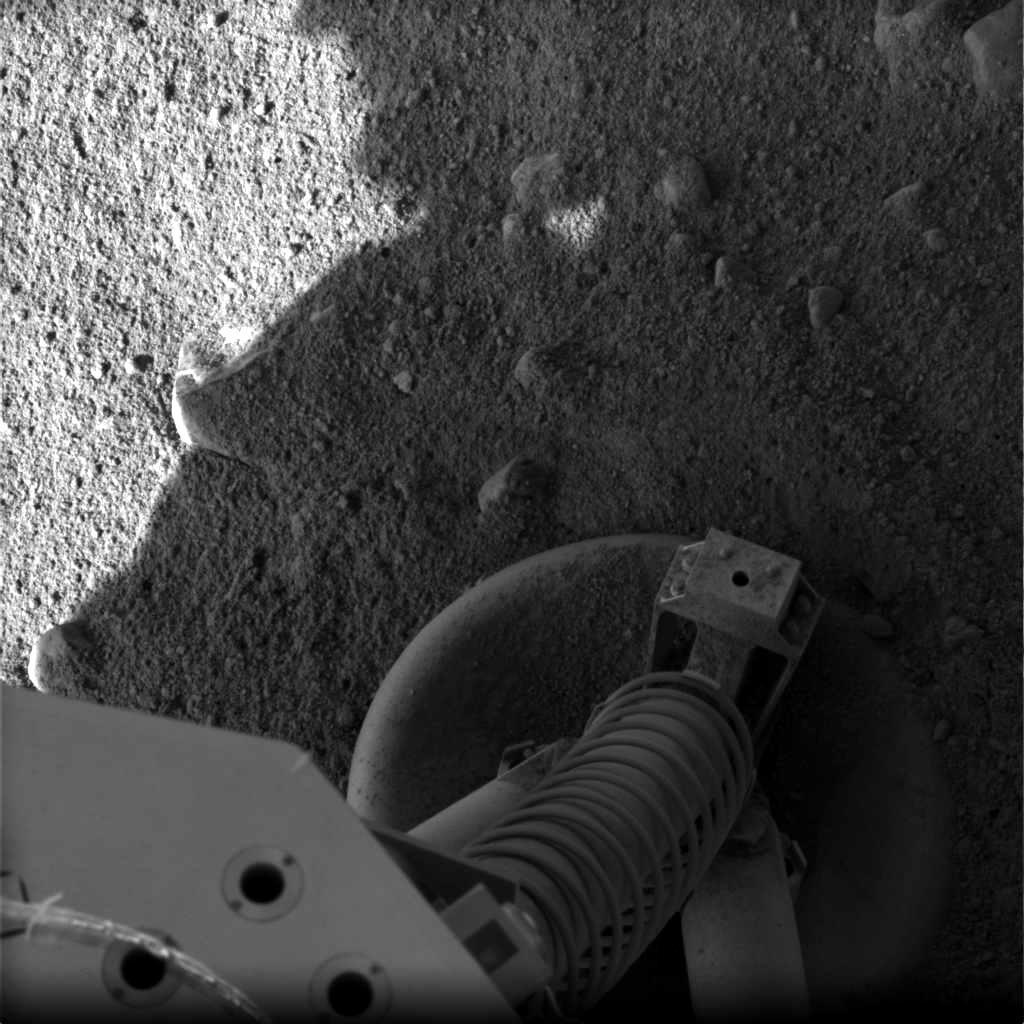
THE PHOENIX HAS LANDED!!!! Radio signals received at 4:53:44 p.m. Pacific Time (7:53:44 p.m. Eastern Time) confirmed the Phoenix Mars Lander had survived its difficult final descent and touchdown 15 minutes earlier. The signals took that long to travel from Mars to Earth at the speed of light. Mission team members at NASA's Jet Propulsion Laboratory, Pasadena, Calif.; Lockheed Martin Space Systems, Denver; and the University of Arizona, Tucson, cheered confirmation of the landing and eagerly awaited further information from Phoenix later tonight. Among those in the JPL control room was NASA Administrator Michael Griffin, who noted this was the first successful Mars landing without airbags since Viking 2 in 1976. "For the first time in 32 years, and only the third time in history, a JPL team has carried out a soft landing on Mars," Griffin said. "I couldn't be happier to be here to witness this incredible achievement." During its 422-million-mile flight from Earth to Mars after launching on Aug. 4, 2007, Phoenix relied on electricity from solar panels during the spacecraft's cruise stage. The cruise stage was jettisoned seven minutes before the lander, encased in a protective shell, entered the Martian atmosphere. Batteries provide electricity until the lander's own pair of solar arrays spread open. "We've passed the hardest part and we're breathing again, but we still need to see that Phoenix has opened its solar arrays and begun generating power," said JPL's Barry Goldstein, the Phoenix project manager. If all goes well, engineers will learn the status of the solar arrays between 7 and 7:30 p.m. Pacific Time (10 and 10:30 p.m. Eastern Time) from a Phoenix transmission relayed via NASA's Mars Odyssey orbiter. This image was acquired at the Phoenix landing site on day 1 of the mission on the surface of Mars, or Sol 0, after the May 25, 2008, landing. The surface stereo imager left acquired this image at 17:07:41 local solar time. The camera pointing was elevation -63.4431 degrees and azimuth 39.9232 degrees.
-
It is finally happening http://abcnews.go.com/Technology/story?id=4888310&page=1 Rural Rock Port, Mo., looks like just about any small farm town -- with mostly cattle pastures and cornfields. But there is something remarkable on the horizon. A progressive Midwest town need not worry about rising electric costs.Peeking out above the rooftops and the tree line stand four towering windmills. The sleek 40-story turbines spin like pinwheels in the afternoon breeze, harvesting Rock Port's newest crop, wind-generated electricity. The turbines now power every computer, every appliance and every light in town -- even the only traffic light on Main Street -- making this city of 1,300 the first and only in the nation to run completely on wind power.
-
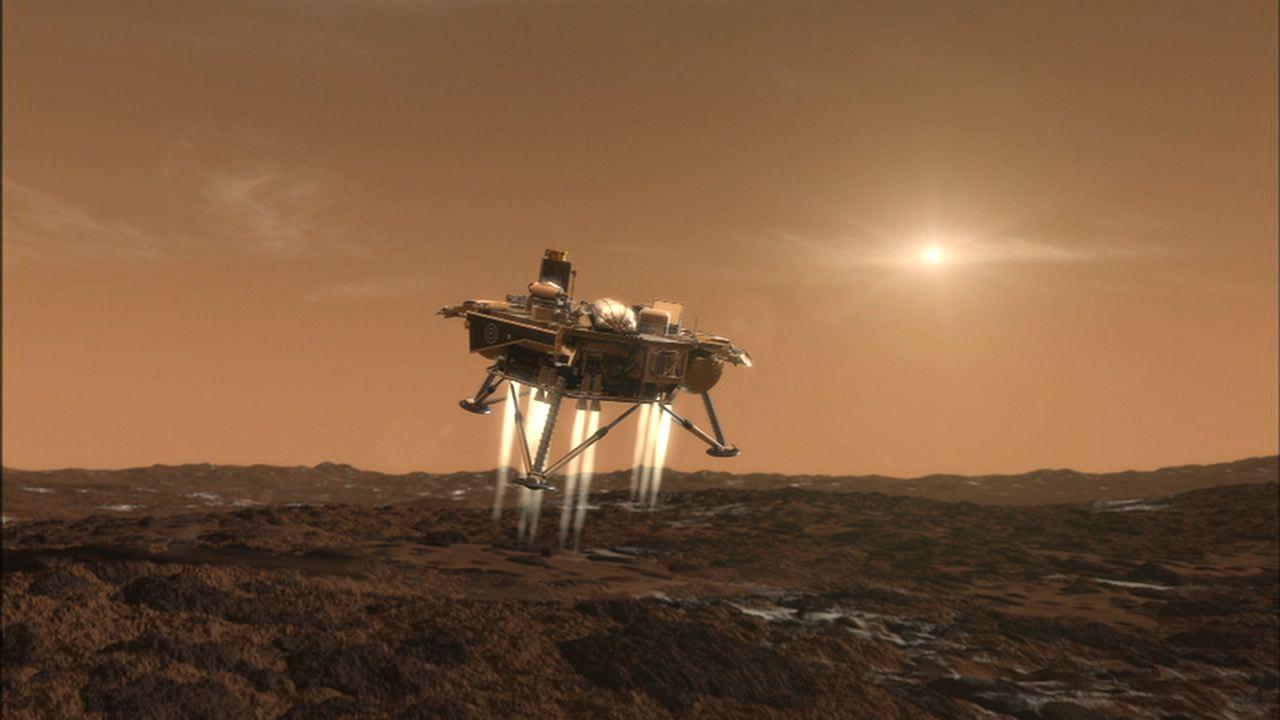
This artist's conception depicts NASA's Phoenix Mars Lander a moment before its touchdown on the arctic plains of Mars. Pulsed rocket engines control the spacecraft's speed during the final seconds of descent. This illustration is part of an animation that can be found at http://www.nasa.gov/mission_pages/phoenix/.../animation.html . The Phoenix Mission is led by the University of Arizona, Tucson, on behalf of NASA. Project management of the mission is by NASA's Jet Propulsion Laboratory, Pasadena, Calif. Spacecraft development is by Lockheed Martin Space Systems, Denver.
-
Objective 1: Study the History of Water in All its Phases Currently, water on Mars' surface and atmosphere exists in two states: gas and solid. At the poles, the interaction between the solid water ice at and just below the surface and the gaseous water vapor in the atmosphere is believed to be critical to the weather and climate of Mars. Phoenix will be the first mission to collect meteorological data in the Martian arctic needed by scientists to accurately model Mars' past climate and predict future weather processes. Liquid water does not currently exist on the surface of Mars, but evidence from Mars Global Surveyor, Odyssey and Exploration Rover missions suggest that water once flowed in canyons and persisted in shallow lakes billions of years ago. However, Phoenix will probe the history of liquid water that may have existed in the arctic as recently as 100,000 years ago. Scientists will better understand the history of the Martian arctic after analyzing the chemistry and mineralogy of the soil and ice using robust instruments. Objective 2: Search for Evidence of Habitable Zone and Assess the Biological Potential of the Ice-Soil Boundary Recent discoveries have shown that life can exist in the most extreme conditions. Indeed, it is possible that bacterial spores can lie dormant in bitterly cold, dry, and airless conditions for millions of years and become activated once conditions become favorable. Such dormant microbial colonies may exist in the Martian arctic, where due to the periodic wobbling of the planet, liquid water may exist for brief periods about every 100,000 years making the soil environment habitable. Phoenix will assess the habitability of the Martian northern environment by using sophisticated chemical experiments to assess the soil's composition of life-giving elements such as carbon, nitrogen, phosphorus, and hydrogen. Identified by chemical analysis, Phoenix will also look at reduction-oxidation (redox) molecular pairs that may determine whether the potential chemical energy of the soil can sustain life, as well as other soil properties critical to determine habitability such as pH and saltiness. Despite having the proper ingredients to sustain life, the Martian soil may also contain hazards that prevent biological growth, such as powerful oxidants that break apart organic molecules. Powerful oxidants that can break apart organic molecules are expected in dry environments bathed in UV light, such as the surface of Mars. But a few inches below the surface, the soil could protect organisms from the harmful solar radiation. Phoenix will dig deep enough into the soil to analyze the soil environment potentially protected from UV looking for organic signatures and potential habitability.
-
 When a gigantic star blows up, astronomers call it a "supernova." Over the past 100 years, astronomers have observed thousands of these explosions. But in every case, they were seeing the star after the explosion took place. They were seeing the hot debris from the explosion racing outward. It would be like seeing fireworks a few seconds after they go off, when the colorful lights are shooting away from the puff of smoke that mark the locations of the actual explosion. Now, thanks to NASA’s Swift satellite, astronomers have seen a star actually blow up. The discovery is due to Swift’s capabilities and some alert astronomers, but also a bit of good luck. On January 9, 2008, Alicia Soderberg and Edo Berger of Princeton University, in Princeton, N.J., were using Swift’s X-ray Telescope to observe a distant spiral-shaped galaxy known as NGC 2770. Suddenly, at 9:33 in the morning Eastern Time, the telescope picked up a powerful burst of X-rays coming from the galaxy. The burst lasted 5 minutes before it faded away. Astronomers were fortunate that Swift happened to be looking at the right place at the right time when the burst occurred, but the great French biologist Louis Pasteur once said, "Chance favors the prepared mind." Soderberg and Berger immediately realized that Swift had made an important observation, so they quickly organized a plan to use telescopes in space and on Earth to follow-up Swift’s discovery. Over the next few weeks, observations made by NASA’s Hubble Space Telescope and Chandra X-ray Observatory, along with Swift and other major telescopes, showed beyond a shadow of a doubt that the January 9 X-ray burst signaled the actual explosion of a giant star. For the first time, astronomers had seen a star blow up in real time! The X-rays were due to a powerful blast wave bursting through the star’s outer layers, and blowing it to “Kingdom Come.” The blast wave itself was triggered deep inside the star, when the nuclear engine at the center ran out of fuel and collapsed. For decades, astronomers have been hoping to see such an explosion. And now, for the first time, they have actually seen what happens when a star goes supernova. "For years we have dreamed of seeing a star just as it was exploding, but actually finding one is a once in a lifetime event," says Soderberg." This newly born supernova is going to be the Rosetta stone of supernova studies for years to come." "It was a gift of nature for Swift to be observing that patch of sky when the supernova exploded. But thanks to Swift's flexibility, we have been able to trace its evolution in detail every day since," adds Swift lead scientist Neil Gehrels of NASA’s Goddard Space Flight Center in Greenbelt, Md.
 -
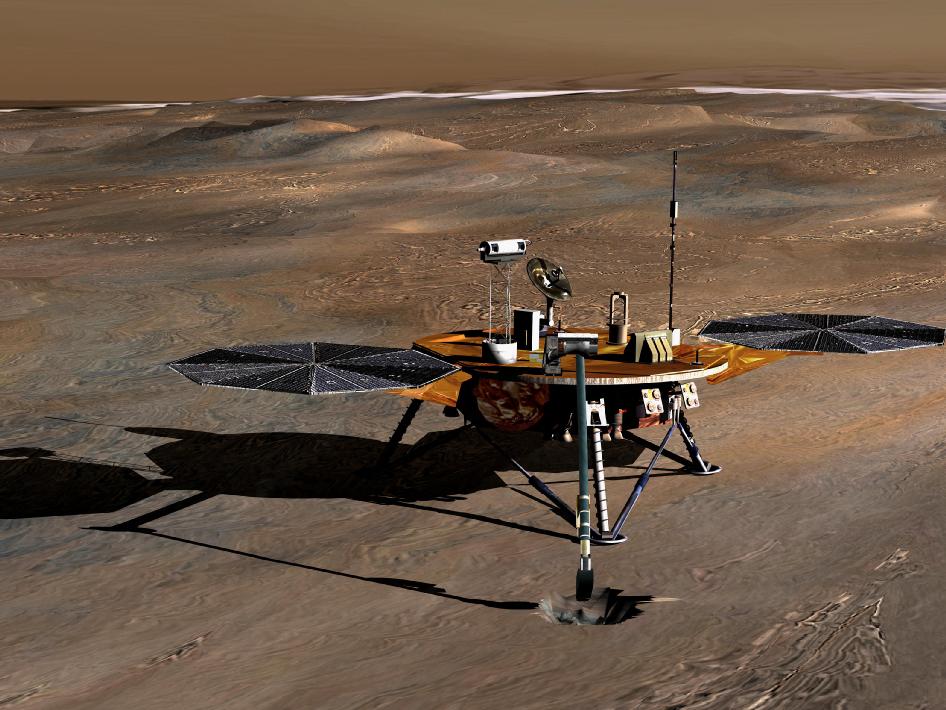
The Phoenix Mars Lander, which launched in August 2007, is the first project in NASA's Mars Scout missions. The mission's plan is to land in icy soils near the north polar permanent ice cap of Mars and explore the history of the water in these soils and any associated rocks, while monitoring polar climate. Phoenix is slated to land on the Red Planet on Sunday, May 25, 2008. You can watch the landing on NASA TV by clicking: http://www.nasa.gov/multimedia/nasatv/inde...ml?param=public Overview Mars is a cold desert planet with no liquid water on its surface. But in the Martian arctic, water ice lurks just below ground level. Discoveries made by the Mars Odyssey Orbiter in 2002 show large amounts of subsurface water ice in the northern arctic plain. The Phoenix lander targets this circumpolar region using a robotic arm to dig through the protective top soil layer to the water ice below and ultimately, to bring both soil and water ice to the lander platform for sophisticated scientific analysis. The spacecraft and its instruments are designed to analyze samples collected from up to a half-meter (20 inches) deep using its robotic arm. The arm extends forward in this artist's concept of the lander on Mars. Phoenix Landing Events Schedule NOTE: The times below for the Phoenix spacecraft events on May 25 are for a nominal scenario. Remaining navigational adjustments before May 25 could shift the times by up to about half a minute. In addition, the times for some events relative to others could vary by several seconds due to variations in the Martian atmosphere and other factors. For some events, a "give or take" range of times is given, covering 99 percent of possible scenarios from the atmospheric entry time. For events at Mars, times are listed in "Earth-receive time" (ERT) rather than "spacecraft event time" (SCET). This means the listed time incorporates the interval necessary for radio signals traveling at the speed of light to reach Earth from Mars. On landing day, May 25, the two planets are 275 million kilometers apart (171 million miles), which means it takes the signal 15 minutes and 20 seconds to reach Earth. For some spacecraft events, engineers will not receive immediate radio confirmation. -- Trajectory correction maneuver opportunity (TCM6X), 8:46 a.m. -- News briefing, noon -- Begin non-commentary live television feed from JPL control room, 3 p.m. -- Begin commentated live television feed from JPL control room, 3:30 p.m. -- Propulsion system pressurization, 4:16 p.m. -- Begin "bent-pipe" relay relay (continuous transmission of Phoenix data as it is received) through NASA's Mars Odyssey spacecraft to Goldstone, Calif., Deep Space Network station, 4:38 p.m. -- Green Bank, W. Va., radio telescope listening for direct UHF from Phoenix, 4:38 p.m. -- Cruise stage separates, 4:39 p.m. -- Spacecraft turns to attitude for atmospheric entry, 4:40 p.m. -- Spacecraft enters atmosphere, 4:46:33 p.m. -- Likely blackout period as hot plasma surrounds spacecraft, 4:47 through 4:49 p.m. -- Parachute deploys, 4:50:15 p.m., plus or minus about 13 seconds. -- Heat shield jettisoned, 4:50:30 p.m., plus or minus about 13 seconds. -- Legs deploy, 4:50:40 p.m., plus or minus about 13 seconds. - - Radar activated, 4:51:30 p.m. -- Lander separates from backshell, 4:53:09 p.m., plus or minus about 46 seconds. -- Transmission gap during switch to helix antenna 4:53:08 to 4:53:14 p.m. -- Descent thrusters throttle up, 4:53:12 p.m. -- Constant-velocity phase starts, 4:53:34 p.m., plus or minus about 46 seconds. -- Touchdown, 4:53:52 p.m., plus or minus about 46 seconds. -- Lander radio off 4:54:52 p.m., plus or minus about 46 seconds. -- Begin opening solar arrays (during radio silence) 5:13 p.m. -- Begin NASA's Mars Reconnaissance Orbiter playback of Phoenix transmissions recorded during entry, descent and landing, 5:28 p.m. However, data for analysis will not be ready until several hours later. -- Begin Europe's Mars Express spacecraft playback of Phoenix transmissions recorded during entry, descent and landing, 5:30 p.m. However, data for analysis will not be ready until several hours later. -- Post-landing poll of subsystem teams about spacecraft status, 5:30 p.m. -- Mars Odyssey "bent-pipe" relay of transmission from Phoenix, with engineering data and possibly including first images, 6:43 to 7:02 p.m. Data could take up to about 30 additional minutes in pipeline before being accessible. If all goes well, live television feed from control room may show first images as they are received. The first images to be taken after landing will be of solar arrays, to check deployment status. -- News briefing, 9 p.m. Monday, May 26 -- News briefing, 11 a.m. Tuesday, May 27, through Friday, May 30 Daily news briefings at 11 a.m. Anticipated pace of Mars surface operations -- If operations proceed relatively smoothly, the first eight to 10 days after landing will be a "characterization phase" of checking out and understanding the performance of the spacecraft's power and thermal systems, as well as the robotic arm and other instruments. -- At the end of the characterization phase (date tba), the first sample of surface soil will be delivered to the Thermal and Evolved-Gas Analyzer onboard Phoenix. -- Analysis of soil from the surface in both the Thermal and Evolved-Gas Analyzer and in the Microscopy, Electrochemistry and Conductivity Analyzer will likely take 10 to 15 days if all processes go well. After that, each additional sampling cycle will reach a deeper subsurface level, in increments of about two to three centimeters. At each different layer, collecting and analyzing samples is expected to take 10 to 15 days, barring operational difficulties. -- How soon the digging reaches the expected icy layer will depend on how far below the surface that layer lies. Estimates in advance of landing range from two to five centimeters. If the ice is at the deeper end of that range, the first analysis of an icy sample could be in July or later. In the continental United States, NASA Television's Public, Education and Media channels are carried by MPEG-2 digital C-band signal on AMC-6, at 72 degrees west longitude, Transponder 17C, 4040 MHz, vertical polarization. They're available in Alaska and Hawaii on an MPEG-2 digital C-band signal accessed via satellite AMC-7, transponder 18C, 137 degrees west longitude, 4060 MHz, vertical polarization. A Digital Video Broadcast compliant Integrated Receiver Decoder is required for reception. Analog NASA TV is no longer available.
-
The nation’s Hispanic population increased 1.4 million to reach 45.5 million on July 1, 2007, or 15.1 percent of the estimated total U.S. population of 301.6 million. National and state estimates by race, Hispanic origin, sex and age released today by the U.S. Census Bureau also show that the Hispanic population exceeded 500,000 in 16 states. Hispanics remained the largest minority group, with blacks (single race or multiracial) second at 40.7 million in 2007. The black population exceeded 500,000 in 20 states. Blacks were the largest minority group in 24 states, compared with 20 states in which Hispanics were the largest minority group. California (13.2 million) had the largest Hispanic population of any state as of July 1, 2007, followed by Texas (8.6 million) and Florida (3.8 million). Texas had the largest numerical increase between 2006 and 2007 (308,000), followed by California (268,000) and Florida (131,000). In New Mexico, Hispanics comprised the highest proportion of the total population (44 percent), with California and Texas (36 percent each) next in line. The Hispanic population in 2007 had a median age of 27.6, compared with the population as a whole at 36.6. Almost 34 percent of the Hispanic population was younger than 18, compared with 25 percent of the total population. Robert Bernstein Public Information Office 301-763-3030/3762 (fax) 301-457-1037 (TDD)
-
It looks like Clinton is going to blowout Obama in Kentucky and Obama will take Oregon. Only one-third of Clinton Supporters in Kentucky said they would vote for Obama if he wins the nomination, while 41 percent said they would vote for Republican John McCain, 23 percent said they would stay home, and 3 percent said they would support other candidates. Hillary has done better with more conservative voters, Barack with those who are more liberal. Senator Barack Obama hasn’t publicly said he’s writing off Kentucky, the way he did in West Virginia. But his efforts here have been less than maximum. He made a couple of stops in Louisville and his wife is making last minute swings around the state. Obama has concentrated his efforts on Oregon, where he turned out nearly 80,000 people at one weekend rally.
-
For the District Bell Multicultural is ranked 76 Woodrow Wilson is ranked 129 Banneker is ranked is ranked 149 Virginia H-B Woodlawn is ranked 16 Langley is ranked 55 George Mason is ranked 58 Washington-Lee is ranked 64 You can find how you specific school did by going to http://www.newsweek.com/highschools/?q=2008/state/1/
-
Hey Buddy, The Nationals are on a roll. Finally
-
I liked his Ignition Remix.
-
He is going to have a hard battle. He is in my prayers.
-
I wanted to report 21 T Street NE. The yard is a jungle full of poisen ivy and its spreading all over the place.
-
I asked Nader and all the candidates what is their stance on Executive Privilege. Obama's camp was the only one that replied. I wish Nader and McCain would give their position.
-
I thought the history of Amen was quite interesting. And after researching what was posted I somehow found a connection to Nebsoni, the scribe mentioned in the Book of the Dead. But, I am not sold on the Moses being either Thurmose III or Senenmut. Also, how is this symbology connected to Nostradamus? I do not think that Thumose III was Moses. His mummy was discovered in the Deir el-Bahri Cache above the Mortuary Temple of Hatshepsut in 1881. Katalin Kreszthelyi of Hungary suggested that a Unknown Man C mummy found in the Deir el Bahri Cache was Senenmut. The mummy had been treated in the exact same manner as kings of the 18th Dynasty. Others believe that the Unknown Man C was the high and scribe Nebseni (also known as Nibsoni). His name is mentioned in the papyrus of Ani. I found little information about Nibsoni on the web. But, I did find a book "Guide to the Cairo Museum" By Cairo (Egypt).bal-Matḥaf al-Miṣrī, Matḥaf al-Miṣrī, Gaston Maspero, Pirie Quibell As a high priest Nibsoni job was to take care of the gods and their needs and serve political advisor to the Pharaoh.
-
Dubai Innovative Projects Are Going to Change the World
Luke_Wilbur replied to Luke_Wilbur's topic in Economy
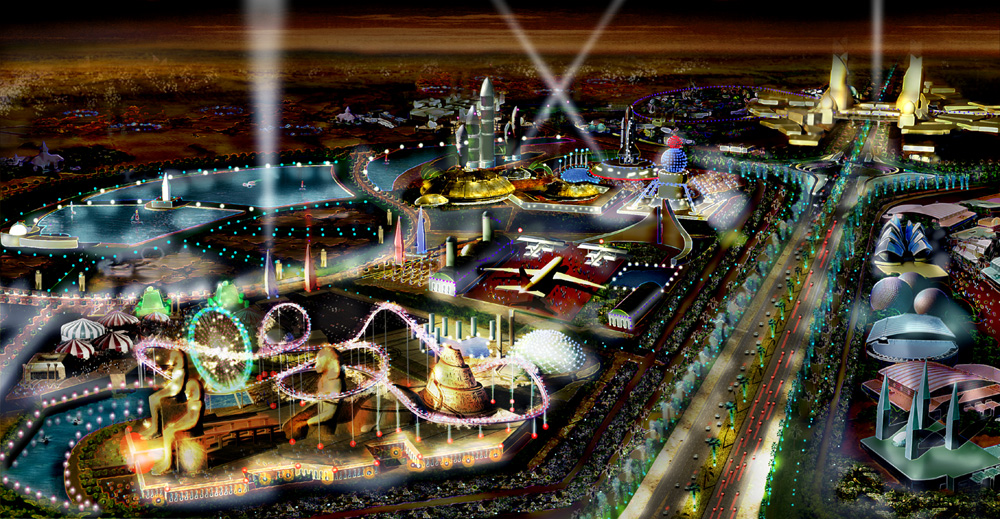
DUBAILAND DUBAILAND the world’s most ambitious Leisure, Tourism and Entertainment destination with over 3 Billion square feet of world class theme Parks, Culture, well being, Sports, Shopping, Hospitality and Entertainment set to launch its first phase in December 2010. A number of DUBAILAND projects are currently up and running including Al Sahra Resort, Dubai Sports City and the Dubai Autodrome, with a host of other projects currently in their final stages to be underway very soon. Dubai Holding, announced a strategic alliance with US-based Six Flags Inc. (NYSE: SIX), the world's largest theme park company, to develop Six Flags DUBAILAND, a five million square feet multi-billion dirham theme park within the world’s largest tourism, leisure and entertainment destination. The first Six Flags project to be developed outside of North America, the theme park comes as part of Tatweer’s tactical contribution to Dubai Strategic Plan 2015, which aims to develop the emirate into a leading global hub for tourism and leisure. Featuring its signature line-up of thrill and themed adventure rides and attractions, Six Flags DUBAILAND will boast world renowned entertainment franchises such as the children's musical group Wiggles and professional skateboarder Tony Hawk. Dubai Holding has formed a strategic alliance with US-based DreamWorks Animation SKG, Inc. (NYSE: DWA) to develop the world’s first DreamWorks Animation branded theme park in Dubai. The outlay at the 5 million sq feet theme park project is a multi-billion AED investment. The venture will bring to life the much-loved characters from DreamWorks Animation films, including Shrek, the upcoming Kung Fu Panda and several others, to create adventures and attractions in a first of its kind development for the studio. The Tiger Woods Dubai, broke ground on its private residential golf community and resort that will include Al Ruwaya, the world’s first golf course designed by Tiger Woods, the world’s leading golfer. Surrounding Al Ruwaya’s golf course will be a professionally staffed golf academy; an iconic clubhouse; a suite boutique hotel with private bungalows; a well-being spa; a fine-dining restaurant; high-end luxury residences and relevant upscale community services for residents and guests. The unique desert course will feature streams and over 100 feet of elevation change throughout. http://www.dubailand.ae/project_details.html -
Dubai Innovative Projects Are Going to Change the World
Luke_Wilbur replied to Luke_Wilbur's topic in Economy
THE HYDROPOLIS The Hydropolis Underwater Hotel and Resort is a planned hotel which will be the world's first underwater luxury resort. It's situated 66 feet below the surface of the Persian Gulf, just off Jumeira Beach in Dubai. Reinforced by concrete and steel, its Plexiglas walls and bubble-shaped dome ceilings will enable guests to see fish and other sea creatures. It is basically divided into three sections: the land station, where guests will be welcomed; the connecting tunnel, which will transport people by train to the main area of the hotel; and the 220 suites within the submarine leisure complex. It will cover an area of 260 hectares, about the size of London's Hyde Park, and will cost an estimated £300 million. It is self-acclaimed to be a 10-star hotel. http://www.crescent-hydropolis.com/ -
Dubai Innovative Projects Are Going to Change the World
Luke_Wilbur replied to Luke_Wilbur's topic in Economy
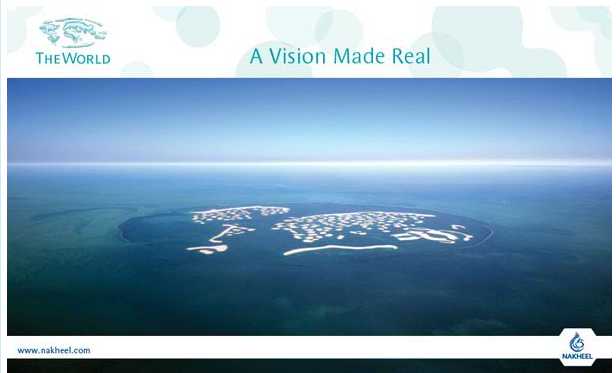
THE WORLD The World is a man-made archipelago of 300 islands constructed in the shape of a world map and located 4 kilometres (2.5 miles) off the coast of Dubai, United Arab Emirates. The World is one of several artificial island projects being constructed in Dubai, others being the Palm Islands. Like the other artificial island projects, The World is built primarily using sand dredged from the sea. It was developed by Nakheel Properties and was originally conceived by Sheikh Mohammed bin Rashid Al Maktoum, the ruler of Dubai. Each island in the archipelago ranges from about 14,000 m² (150,000 square feet) to 42,000 m² (450,000 square feet). The distance between each island will be an average of 100 metres (328 feet). The entire development covers an area of 9 km in length and 6 km in width, surrounded by an oval breakwater. Roughly 232 km (144 miles) of shoreline has been created. The overall development cost of The World was estimated as 14 billion USD. As for the individual islands, prices range between 15 and 50 million USD. One island is still for sale at a price of 250 million USD. Nakheel places last rock on breakwater to finalize first phase of development Nakheel laid the final stone on the breakwater for The World. The last rock was one of 34 million tonnes of rock that were used to construct the 27 km breakwater which surrounds the 300 man-made islands that make up The World. The World team was on hand as the last rock was placed at 8:00am this morning by Director Hamza Mustafa. This historic moment marked the completion of the first phase of one of Dubai's most talked about landmarks, which included land reclamation requiring 320 million cubic meters of sand dredged from the sea and the creation of the breakwater that surrounds the 9km wide and 7kms long island destination. The next phase involves handing over islands to developers for construction and building of infrastructure. http://www.theworld.ae -
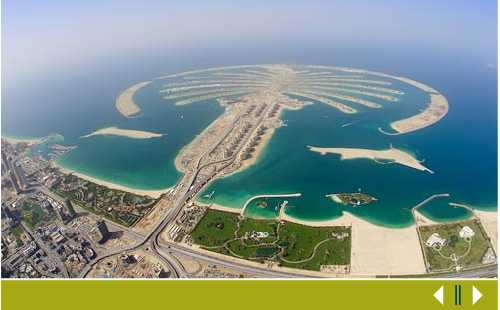
A building boom in the emirate has led to a whole host of chart breakers, in categories including highest apartment, biggest mall, and one of the world's most unique resorts. PALM ISLANDS The Palm Islands are artificial islands in Dubai, United Arab Emirates on which major commercial and residential infrastructure will be constructed. The islands are the largest land reclamation projects in the world and will result in the world's largest artificial islands. They are being constructed by Nakheel Properties, a property developer in the United Arab Emirates, who hired the Dutch dredging and marine contractor Van Oord, one of the world's specialists in land reclamation. The islands are The Palm Jumeirah, The Palm Jebel Ali and The Palm Deira. Many know The Palm as an international icon, but few realise it was created help solve Dubai's beach shortage. The Ruler of Dubai drew a sketch of a palm tree, realising its fronds would provide more beach frontage than a traditional circular island. From this insight, the idea of The Palm was born and the trilogy of islands envisioned. Nakheel - the world’s largest privately-held property developer - has reiterated its commitment to helping to make Dubai and the Middle East a global yachting destination.Nakheel and Cirque du Soleil will jointly design and build a 1,800-seat theatre on The Palm Jumeirah that will be home to the first ever Cirque resident show to be staged outside of the USA and Japan. The two companies have signed an initial 15-year deal with the new show expected to open during the last quarter of 2010. http://www.thepalm.ae/
-
Persian Gulf Nations Hold Half the World's Wealth
Luke_Wilbur replied to Luke_Wilbur's topic in Economy
Mover of Disney, Dubailand is a massive new theme park being built in Dubia, United Arab Emirates. Dubailand is the vision of Dubai's current ruler Sheikh Mohammed bin Rashid Al Maktoum. The development is expected to be a full featured city divided into seven theme worlds. The short range goal of the Dubailand is to attract 15 million tourists to Dubai by 2010. Developers expect to accomplish this goal by creating a tourism, entertainment, and leisure destination that will attract visitors not only from surrounding countries but also from Europe and Asia. The venture is expected to attract approximately 200,000 visitors daily and cost $20 billion. Many believe Dubailand is a long-term plan to phase out the city's dependence on oil revenues, though 95% of Dubai's annual GDP comes from non-oil sectors such as tourism. When complete the project will be five times the size of Manhattan and include multiple parks. Themed attractions will include Universal Studios, Dreamworks Animation, Legoland, Six Flags, SeaWorld, Aquatica, Discovery Cove, and Busch Gardens. It's rumored that money is no object on these projects. It's no wonder Disney is having problems finding enough talent to revamp their California Adventure. Who likes being on billion dollar budget? Will Dubia be the new family vacation mecca? I am sure Dan "the Man" Snyder will make some serious money off the deal. http://www.dubailand.ae/ -
Hillary Clinton Wins Big in West Virginia Primary
Luke_Wilbur replied to Luke_Wilbur's topic in Campaigns and Elections
I really take offense to that comment. West Virginians are the most resourceful people that I have ever met. They have been kind and show me how to take care of things. I have a friend that may not be cash rich, but he owns land and is building his home with his own hands. When you speak out of ignorance it frames you as a thoughtless individual that speaks only by his emotions. -
While most of us sit in front of screens typing and searching, Independent Presidential Candidate Ralph Nader still types out his prose on a manual Underwood typewriter. On Monday, Mr. Underwood traveled to Google headquarters in Mountain View, California. Nader is not easily dazzled by technological wonders. Throughout his career, Nader has confronted head-on the downside of nuclear, automobile, genetic engineering and other industrial advances. And now he's questioning the enormous amount of time we spend in front of our computers. Has Google and the information revolution that it leads made our society better? Or is it just another mass diversion from the reality of the corporate takeover of our democracy? At Googleland, Nader took questions for an hour. And then sat down for an eight-minute interview with Youtube. Nader/Gonzalez is confronting head-on the reality of the corporate takeover of our democracy. Watch the Video